

Hohenzollern Castle
Hohenzollern Castle, located atop Mount Hohenzollern in Baden-Württemberg, Germany, has origins dating back to the early 11th century. The first fortress was built around 1100 by the counts of Zollern, serving as a strategic stronghold in the Swabian Alps. Over the centuries, the castle symbolized the power and prestige of the noble family that would later become the Prussian royal dynasty. Its early history is marked by feudal conflicts and the castle's role as a military bastion controlling vital trade routes.
Throughout the 12th and 13th centuries, Hohenzollern Castle played a significant role in regional power struggles. The Hohenzollern family expanded their influence, engaging in battles with rival noble families and defending their territory from encroaching neighbors. During this period, the castle was expanded and fortified, becoming a formidiable fortress that reflected the militaristic culture of medieval Germany. The Hohenzollerns' increasing prominence laid the groundwork for their future imperial ambitions.
In 1423, the original Hohenzollern Castle was destroyed during a conflict with the Swabian League, a coalition of cities and nobles opposed to the Hohenzollern ambitions. The castle was burned down and left in ruins for centuries as the family retreated and rebuilt their power elsewhere. This destruction marked a turning point, fueling the desire for a new, more impressive fortress to symbolize their authority and resilience.
In the mid-15th century, the Hohenzollerns decided to rebuild atop the original site, resulting in the construction of the second castle in the late 1400s. This newer fortress served as a defensive stronghold and residence, but it also reflected the castle's evolving role as a symbol of noble prestige rather than mere military strength. Despite ongoing conflicts, the castle remained a center of regional influence for the Hohenzollern family.
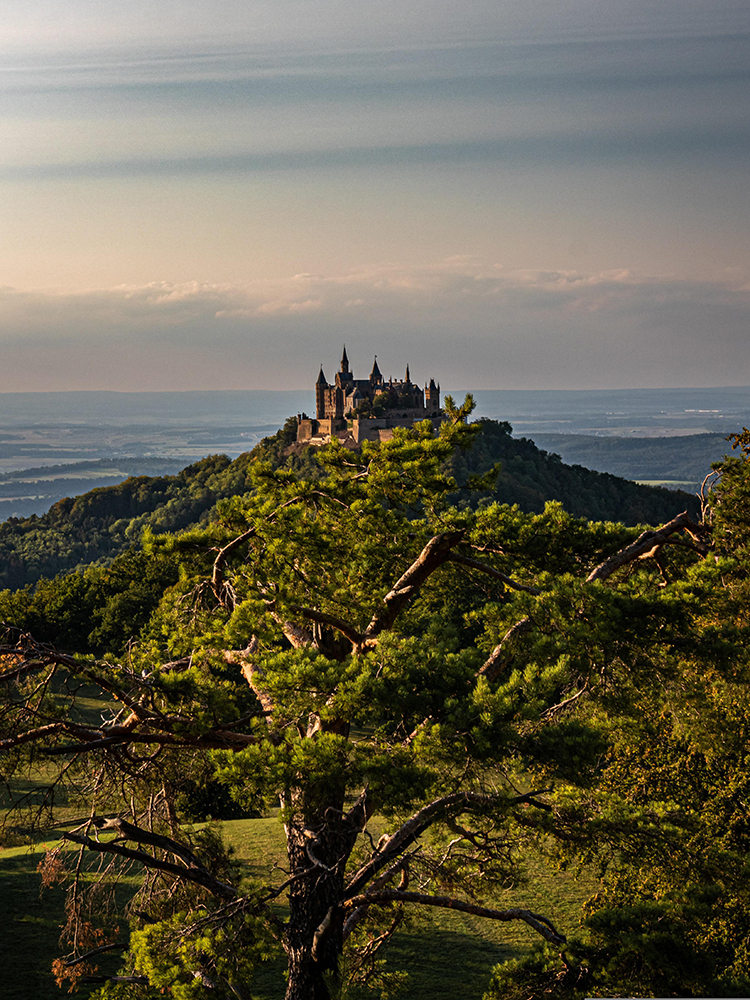
By the 19th century, the older structure was deteriorating, and the Hohenzollern family, now rulers of Prussia and later the German Empire, envisioned a grander palace that would symbolize their heritage and power. In the mid-1800s, under King Frederick William IV, plans were made to build a new castle — the present-day Hohenzollern Castle as we see it today. The construction combined medieval Revival architecture with grandeur, symbolizing national pride and stability.
The new Hohenzollern Castle became a cultural and political symbol of Prussia and Germany. It was a site of national gatherings, celebrations, and political events, especially during the rise of national consciousness in the 19th century. The castle's dramatic silhouette and commanding position on the mountain made it a symbol of unity and strength amid the tumult of European history.
While the current castle was never directly besieged in its modern form, its history includes numerous conflicts. During the German Peasants' War of 1525, the castle was involved in local unrest, although it largely withstood the upheaval. Its strategic location meant it was a target during various regional disputes, including conflicts with neighboring states and during the upheavals of the Thirty Years' War, although it did not fall into enemy hands.
In the 20th century, Hohenzollern Castle served as a symbol of monarchy and aristocracy during turbulent times, particularly during the fall of the German Empire at the end of World War I. Although it was not a battlefield during World War II, the castle's commanding presence and association with the former royal house symbolized the end of an era of imperial Germany, and it became a site of reflection on German history.
Today, Hohenzollern Castle stands as a well-preserved monument to medieval architecture and history, attracting millions of visitors annually. It hosts exhibitions, cultural events, and serves as a reminder of the nobility and power struggles that shaped German history. Its stories of battles, resilience, and national symbolism continue to captivate visitors and historians alike.
Hohenzollern Castle's rich history continues to fuel legends and stories—ranging from tales of knights and battles to the romantic legends of how it survived centuries of upheaval. As a symbol of resilience, heritage, and architectural grandeur, Hohenzollern Castle remains one of Germany's most iconic fortresses—standing proudly as a testament to the enduring legacy of the Hohenzollern family and the turbulent history of the region.