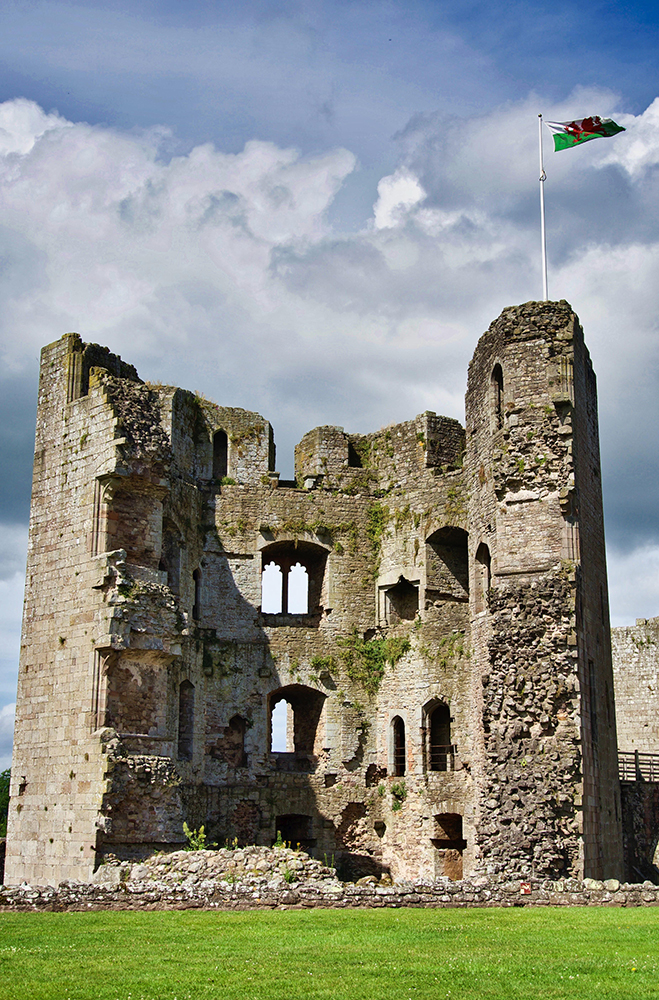


Raglan Castle
Raglan Castle, located in Monmouthshire, Wales, is a magnificent medieval fortress with a rich and storied history. The castle was originally built in the late 14th century by Sir William ap Thomas, the powerful Marcher Lord. It was later expanded and fortified by his son, William Herbert, who became the first Earl of Pembroke. The castle's unique design showcases elements of both military fortress and elegant Renaissance architecture, making it a fascinating site to explore.
Throughout its existence, Raglan Castle played a significant role in several major conflicts. During the Wars of the Roses, the castle was held by Sir William Herbert, who initially supported the Yorkists but later switched his allegiance to the Lancastrians. This decision led to a siege in 1461, during which the castle was captured by Edward, Duke of York (later King Edward IV).
In the early 17th century, the Herbert family undertook a grand transformation of Raglan Castle, turning it into a lavish residence fit for a royal court. This renovation included the addition of extravagant Renaissance features, such as a stunning Great Tower and a fountain court. The castle's opulent accommodations attracted influential figures, including King Charles I, who visited Raglan in 1645 during the English Civil War.
The English Civil War brought about a brutal and prolonged siege of Raglan Castle. Due to its strategic position, the castle became an important stronghold for the Royalist forces. However, after a lengthy siege in 1646, the Parliamentarians led by Thomas Morgan managed to breach the walls, resulting in the surrender of the castle. The cannons used during the siege left significant damage to the once grand structure.
After the war, the castle was partially dismantled, rendering it uninhabitable. Many of its stones were repurposed for other building projects in the local area. Despite this loss, the ruins of Raglan Castle still exude an air of grandeur and offer visitors a glimpse into its former glory. The towering Great Tower, the picturesque moat, and the extensive ivy-covered walls evoke an atmosphere of medieval majesty.
Today, Raglan Castle is managed by Cadw, the Welsh heritage body responsible for its preservation and conservation. The site welcomes tourists who are eager to discover its fascinating history and architectural significance. Visitors can explore the castle's various rooms, including the Great Hall and the impressive Long Gallery, which boasts stunning views of the surrounding countryside.
Guided tours, audio guides, and information boards are available to provide visitors with insights into the castle's history and the battles fought there. One can learn about the complexities of medieval warfare, experience the remnants of the civil war, and gain an appreciation for the resilience and significance of Raglan Castle in Welsh history.
In recent years, efforts have been made to revive the castle through extensive restoration projects. These endeavors aim to reconstruct and preserve key areas of the castle, allowing visitors to envision its former grandeur. The care and dedication put into preserving Raglan Castle ensure that future generations can continue to marvel at its architectural beauty and learn about its pivotal role in Wales' past.
With its fascinating history, breathtaking architecture, and picturesque surroundings, Raglan Castle stands as a testament to the tumultuous events that shaped Wales and the enduring spirit of its people. A visit to this historic site offers a captivating journey through time, immersing visitors in the rich heritage of one of Wales' most iconic castles.