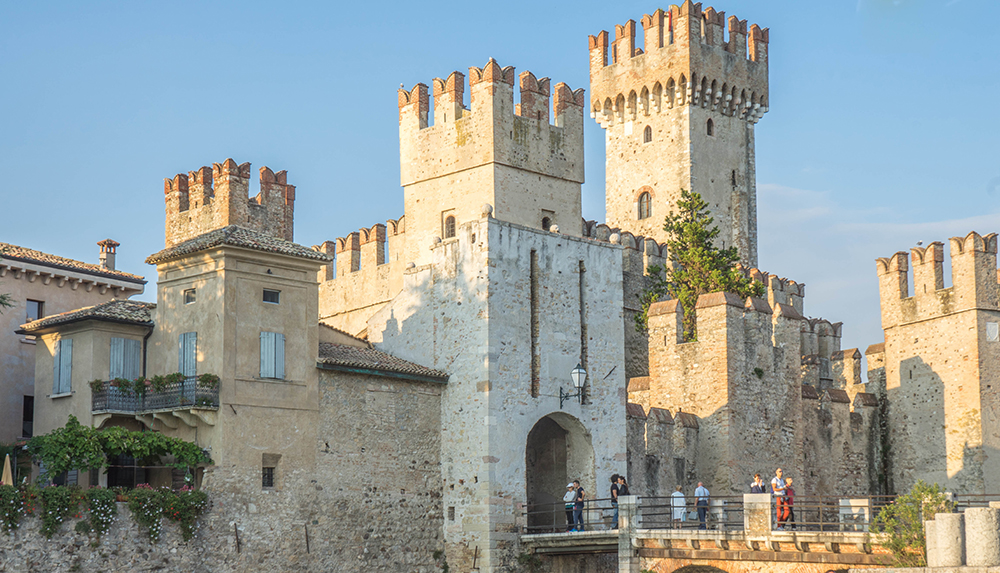


Scaliger Castle
Scaliger Castle, known as Castello Scaligero in Italian, is a remarkable historical fortress located in the town of Sirmione, on the southern tip of Lake Garda in northern Italy. Its history dates back to the 13th century when it was constructed by the Della Scala family, a noble dynasty that ruled over Verona and its surrounding territories. The castle epitomizes the architectural and military prowess of the Scaliger family, who utilized it as a defensive stronghold against rival factions as well as a residence for their noble lineage.
The Della Scala family rose to prominence in the 13th century during a time of political instability in northern Italy. With their expertise in military strategies and diplomacy, they expanded their influence, and Sirmione became a key asset due to its strategic location along the shores of Lake Garda. Construction of Scaliger Castle began around 1255 under the direction of the influential lord, Alberto della Scala. The castle was designed not only as a military fortress but also as a symbol of the family's power and prestige.
The architectural style of Scaliger Castle is a fine example of medieval military desgin, characterized by its robust stone walls, imposing towers, and fortified gates. The castle features a unique layout with a combination of walls and water, providing excellent defense capabilities against potential invaders. Its location was strategic, allowing the lords to monitor activity on Lake Garda and control trade routes. The castle has a unique double moat system, further enhancing its defensive properties.
Over the centuries, Scaliger Castle underwent various modifications and renovations. The castle was not solely a fortress; it also served as the residence for the Scaliger family and as an administrative center. The interior spaces were adorned with elegant frescoes and furnished with luxurious items. The castle's design reflects both its military purpose and its role as a noble residence, creating a fascinating blend of functionality and aesthetic appeal.
Despite its defensible nature, Scaliger Castle saw periods of conflict and turmoil during the late Middle Ages. The decline of the Scaliger family's power began in the late 14th century when they faced increasing competition from other noble houses and external threats. In 1387, the castle and surrounding territory passed into the hands of the Visconti family of Milan, which marked the end of direct Scaliger rule. This transition brought about significant changes in governance and control of the region.
During the Renaissance, Scaliger Castle continued to play a notable role in Sirmione's history. The Visconti family maintained the fortress, but it also became a place of cultural significance, attracting artists and scholars. The castle served as a backdrop for various historical events and the backdrop to many stories, contributing to its rich cultural legacy. This period saw a blending of military and cultural elements, with the castle functioning as both a fortificationi and a site for social gatherings.
In the 19th century, Scaliger Castle became a symbol of romanticism as tourists and artists flocked to the picturesque surroundings of Lake Gardad. Its imposing structure and captivating history inspired numerous writings and paintings. Restoration efforts began during this period to preserve and maintain the castle's historical significance, and by the 20th century, it had become a popular tourist attraction. The romantic imagery associated with the castle helped to solidify its place in Italian cultural heritage.
Today, Scaliger Castle stands as one of Sirmione's most famous landmarks, attracting thousands of visitors each year. Visitors can explore the castle's impressive towers, walk along the ramparts, and take in breathtaking views of Lake Garda. The site also hosts various cultural events and exhibitions, highlighting its historical importance while promoting its role as a center for arts and culture in the region. Guided tours provide insight into it architecture, history, and the intriguing stories of those who lived there.
In conclusion, Scaliger Castle is not merely a beautiful structure but a testament to the power dynamics, cultural influences, and historical significance of its era. From its origins as a formidable fortress for the Della Scala family to its current status as a celebrated cultural landmark, the castle encapsulates the rich tapestry of Italian history. Its presence on the shores of Lake Garda continues to inspire awe and fascination among visitors, serving as a reminder of the enduring legacy of the medieval past.