

< Back
Neuschwanstein Castle
Castle History
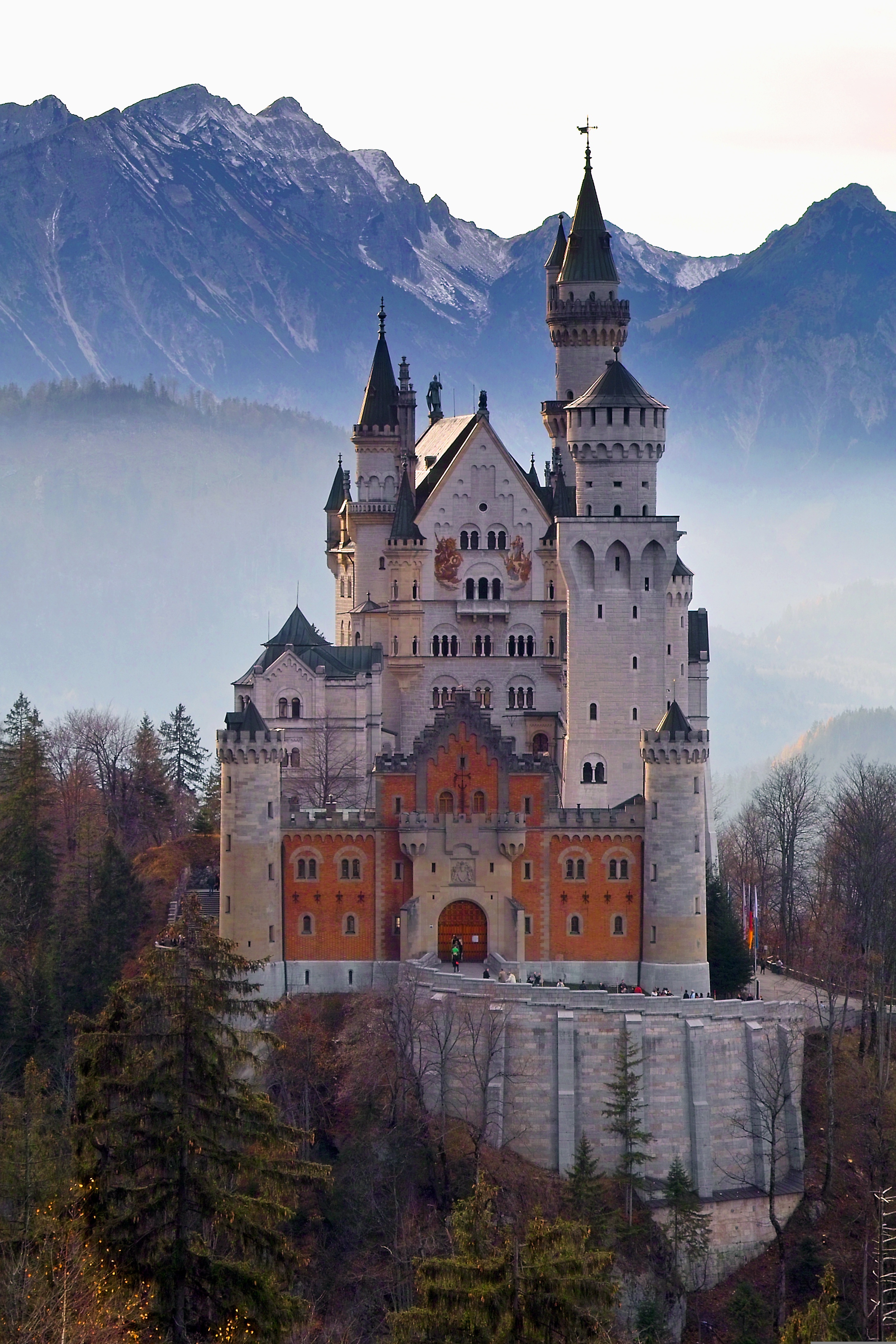
Perched high above the Bavarian countryside, Neuschwanstein Castle is one of the most iconic and romantic castles in the world. It was commissioned in 1869 by King Ludwig II of Bavaria, who envisionied it as a personal retreat inspired by myth, music, and medieval legend. The castle's design drew heavily from the operas of Richard Wagner, whose heroic tales deeply influenced Ludwig's imagination. Its soaring towers, ornate balconies, and dramatic clifftop setting create a dreamlike silhouette recognizable across the globe. Despite its medieval appearance, Neuschwanstein was built with advanced 19th-century technology, including running water, central heating, and telephones. Ludwig intended the castle to be a sanctuary where he could withdraw from political pressures and immerse himself in fantasy. Tragically, he lived in the completed sections for only a few months before his mysterious death in 1886. Soon after, the castle was opened to the public, inviting visitors into the king's unrealized dream. Its interior features lavish murals depicting scenes from German legends such as "Tannhäuser" and "Lohengrin." The Throne Hall, inspired by Byzantine churches, stands as one of its most breathtaking rooms despite never receiving a throne. The Singers' Hall, decorated with mythic battle scenes, reflects Ludwig's passion for chivalry and heroic sagas. Neuschwanstein's spectacular setting in the Alps enhances its fairy-tale charm, especially when mist gathers around the cliffs. Over time, the castle has become a global symbol of fantasy architecture, inspiring countless stories and even Disney's Cinderella Castle. Today, Neuschwanstein stands not only as a monument to Ludwig's visionary spirit but also as one of Germany's most visited and magical landmarks.