

< Back
Lebenberg Castle
Castle History
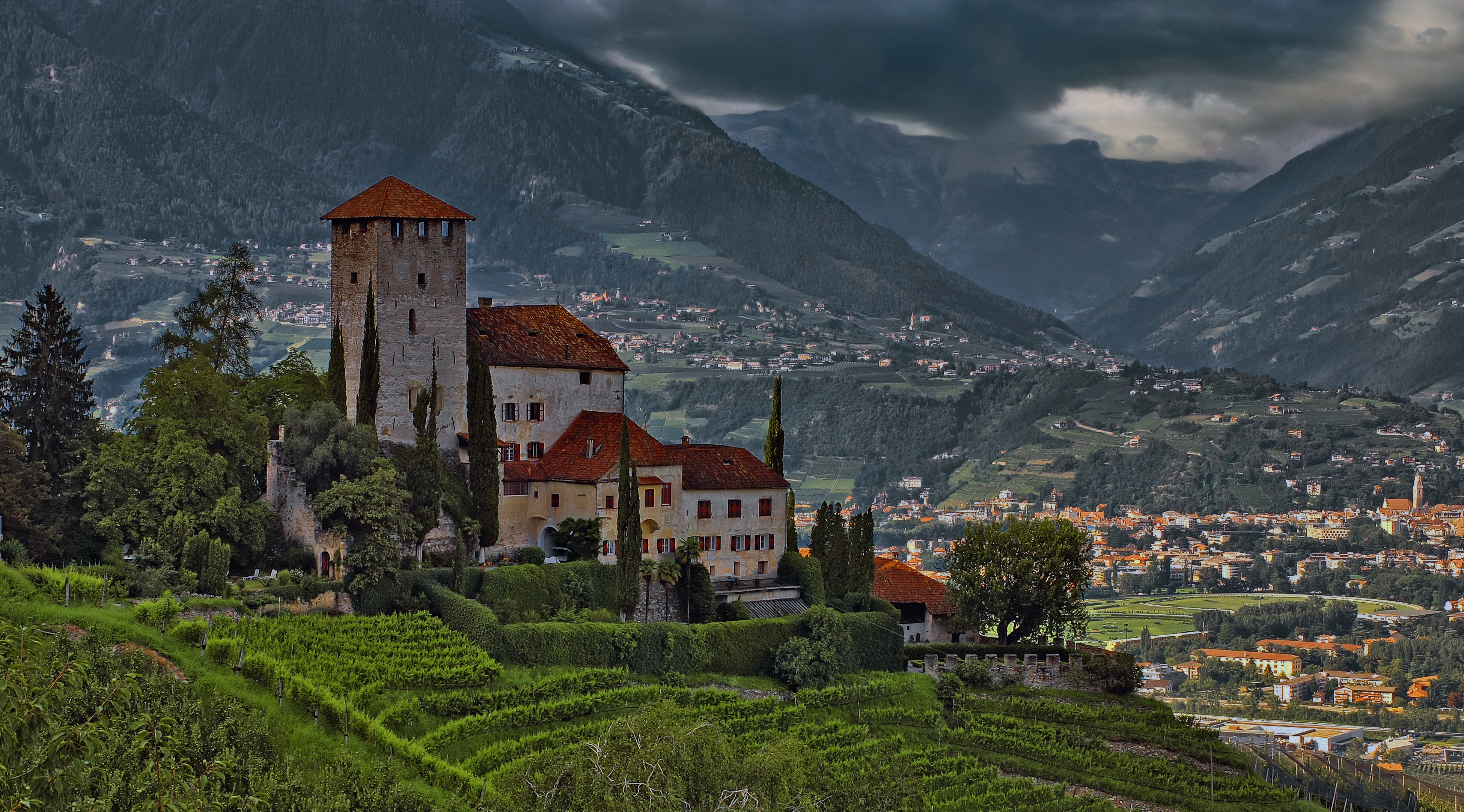
Rising above the vineyards and orchards of South Tyrol, Lebenberg Castle commands sweeping views of the Adige Valley below. Its origins date to the 13th century, when it was established as a fortified residence for local nobility. A strategic hilltop position allowed control over important trade and travel routes through the Alps. The earliest structures were designed primarily for defense, with thick walls and a strong central keep. Over the centuries, successive owners expanded and refined the complex. Gothic elements were added first, followed later by Renaissance features that softened its military appearance. By the early modern period, the castle had evolved into a comfortable noble residence rather than a frontline stronghold. Elegant living quarters and representative halls reflected changing lifestyles and political stability. One of its most remarkable features is an exceptionally long frescoed arcade, among the longest preserved in the region. The artwork offers rare insight into medieval decorative styles and daily life. Unlike many fortresses, the castle was never destroyed in major conflicts. Its continuous use helped preserve both structure and interiors. During the 19th and 20th centuries, careful restoration ensured historical authenticity. The surrounding gardens and terraces further enhance its picturesque setting. Today, visitors can walk through rooms that reveal centuries of architectural evolution. Lebenberg Castle stands as a rare example of a South Tyrolean fortress that seamlessly blends defense, art, and long-term habitation.