


< Back
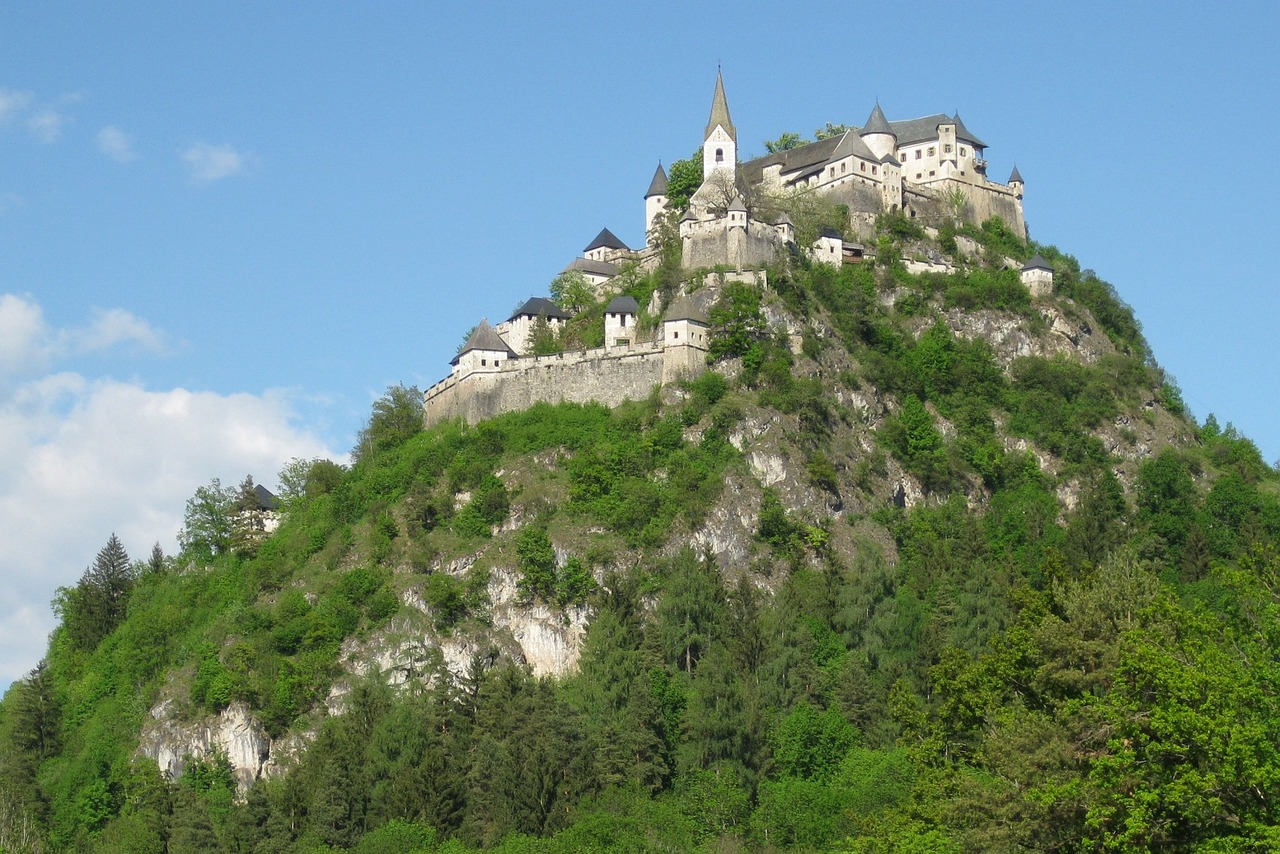
Hochosterwitz Castle
Castle History
Rising dramatically atop a 160-meter-high limestone cliff, this formidable fortress dominates the surrounding Carinthian landscape. Hochosterwitz Castle's origins date back to at least the 9th century, when early fortifications were established to protect the region from invading forces. Over the centuries, the castle was expanded and strengthened, evolving into one of Austria's most secure medieval strongholds. Strategically positioned along trade and military routes, it served as both a defensive bastion and a symbol of local authority. A series of fourteen gates, each with defensive features, winds up the steep path to the main keep, making assaults nearly impossible. During the 16th century, Count Gabriel von Khevenhüller undertook major renovations, reinforcing walls and adding living quarters suited for noble residence. The castle withstood numerous sieges and attacks without ever being captured, cementing its reputation as virtually impregnable. Architectural modifications over the centuries blended Gothic, Renaissance, and Baroque elements while preserving its defensive integrity. Its towers, bastions, and battlements offer panoramic views of the surrounding valleys and mountains, illustrating its strategic significance. Throughout history, the fortress served as a center for local governance, justice, and administration. It also housed military garrisons that protected the region during periods of conflict and unrest. Restoration efforts in the 20th century preserved both the historic fabric and its dramatic cliffside setting. Today, visitors can explore courtyards, chapels, and richly decorated interiors that reflect centuries of noble life. Hochosterwitz Castle stands as a striking testament to Austrian medieval engineering, strategic foresight, and enduring resilience in the face of warfare and time.