

< Back
Matsumoto Castle
Castle History
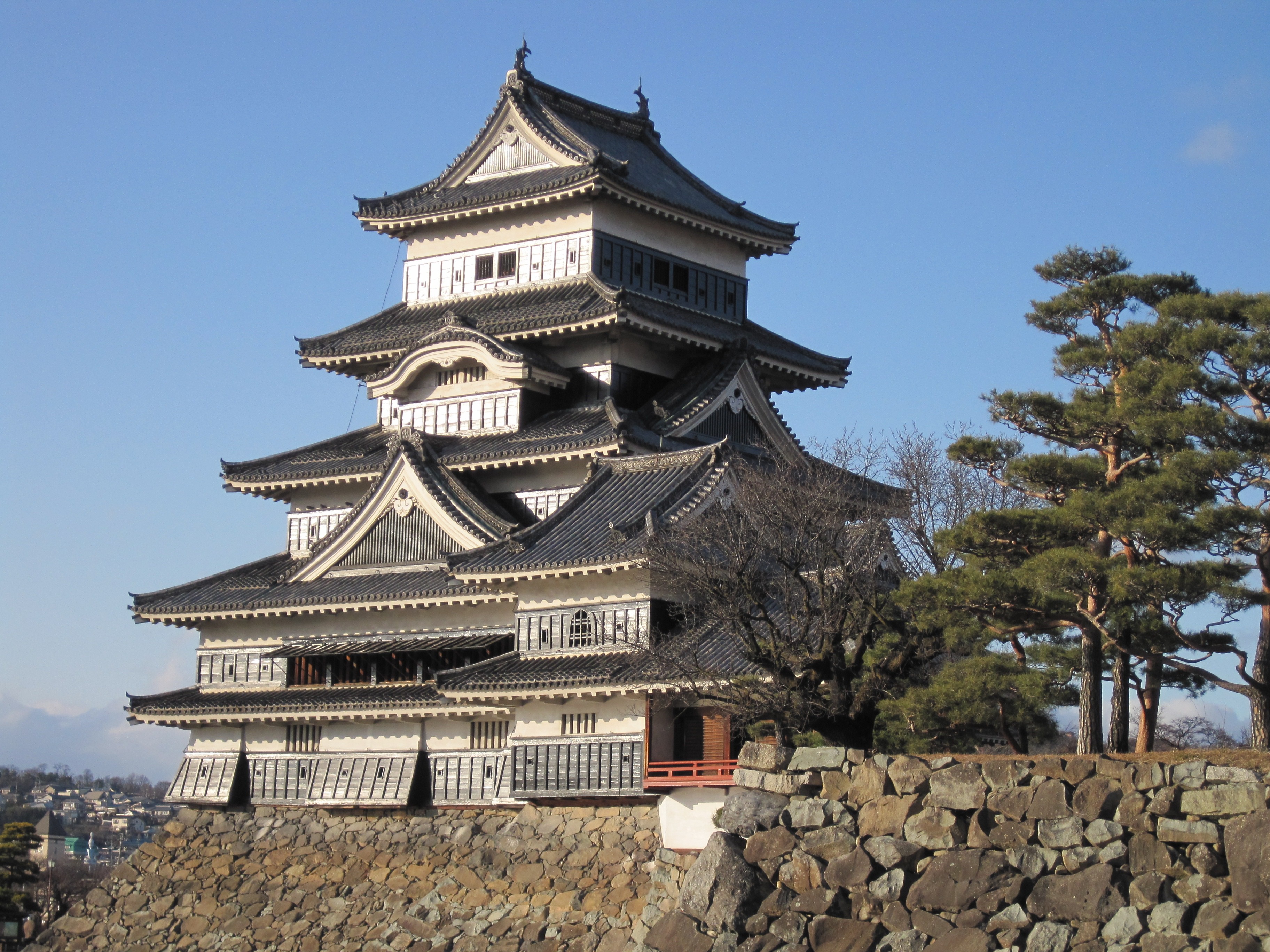
Rising stark and elegant against the Japanese Alps, this black-walled stronghold is one of Japan's most striking surviving feudal castles. Matsumoto Castle's origins reach back to the late 15th century, when a fortified residence was first established on the site. The castle took its present form in the late 16th century during a period of intense warfare between rival daimyō. Unlike many Japanese castles built on hills, it was constructed on flat land and relied on moats for defense. Wide water barriers and steep stone walls made direct assault extremely difficult. The dark exterior earned it the nickname "Crow Castle," a contrast to the white castles elsewhere in Japan. A complex system of gates, corridors, and hidden defensive features confused attackers once inside. The main keep rises through multiple levels, each designed with a specific defensive purpose. Narrow windows doubled as arrow and gun ports, reflecting the growing use of firearms in Japan. Despite its military strength, the structure also symbolized authority and prestige. During the peaceful Edo period, the castle served as the administrative center of the surrounding domain. As warfare declined, its military role faded but the structure remained intact. In the Meiji era, many castles were demolished, yet local citizens fought to preserve this one. Early preservation efforts saved it from destruction and decay. Later restorations focused on maintaining traditional construction methods. Seasonal scenery, from cherry blossoms to winter snow, enhances its dramatic silhouette. The interior now functions as a museum showcasing armor, weapons, and history. Today, Matsumoto Castle stands as a rare, authentic survivor of Japan's samurai age, blending beauty, strategy, and resilience.