


< Back
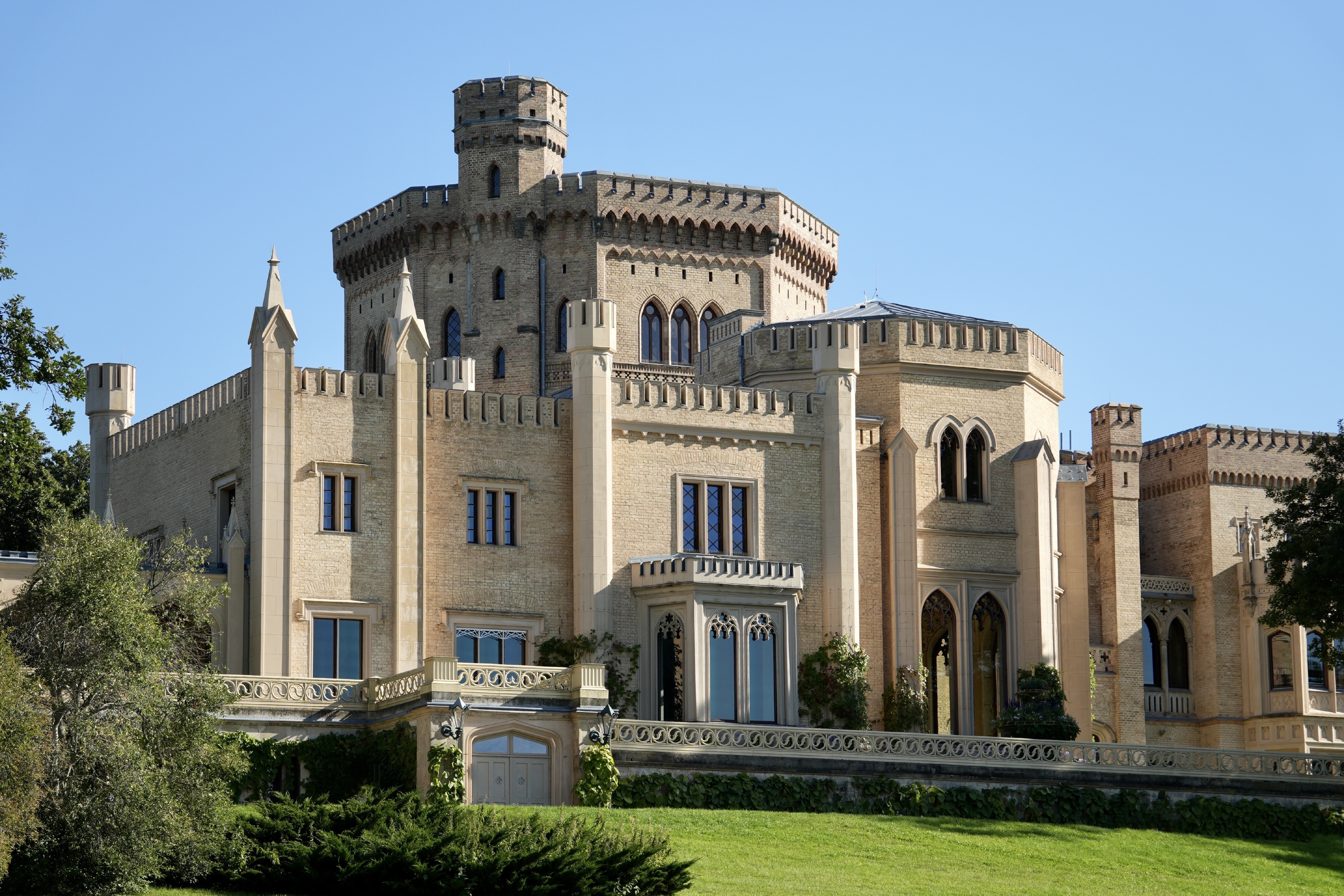
Babelsberg Castle
Castle History
Overlooking the Havel River near Potsdam, this romantic palace reflects the changing tastes of 19th-century Prussia. Babelsberg Castle's origins lie in the early 1830s, when it was commissioned as a summer residence for Prince Wilhelm of Prussia, the future German emperor. Rather than a medieval fortress, it was designed as a picturesque castle inspired by English Gothic Revival architecture. Renowned architects Karl Friedrich Schinkel and later Ludwig Persius shaped its early form. Subsequent expansions introduced towers, battlements, and asymmetrical silhouettes to enhance its romantic character. The surrounding park was carefully landscaped in the English style to complement the building. From its terraces, sweeping views stretch across water, lawns, and wooded hills. The castle became a private retreat rather than a center of power. Its interiors reflected aristocratic leisure and refined domestic life. Political changes in the late 19th and early 20th centuries altered its use. After the fall of the monarchy, the property passed into state ownership. War and division left lasting marks on the estate during the 20th century. The castle stood near the path of the Berlin Wall during the Cold War. Restoration efforts in recent decades have revived both the structure and its parkland. Today, visitors encounter a carefully preserved vision of Romantic-era idealism. The building illustrates how castles could evolve into symbols of imagination rather than defense. It contrasts sharply with older fortresses built purely for war. Babelsberg Castle endures as a reminder that history is shaped not only by conflict, but also by art, landscape, and personal retreat.