

< Back
Olavinlinna Castle
Castle History
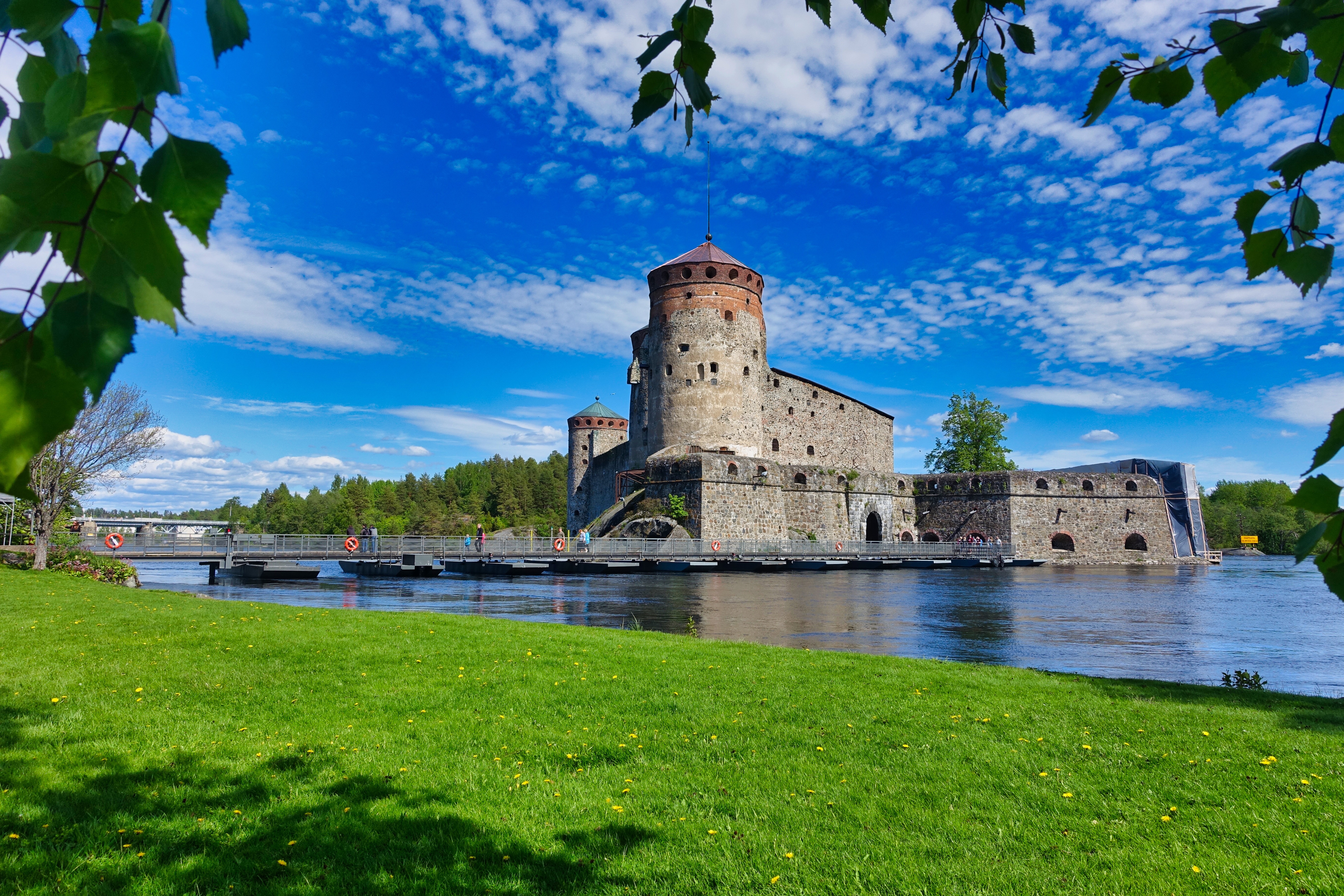
Rising from a cluster of rocky islands where narrow waterways meet, Olavinlinna Castle occupies one of the most unusual defensive sites in Europe. It was founded in 1475 by the Swedish knight Erik Axelsson Tott to secure the eastern frontier against Novgorod and later Muscovite forces. The surrounding water acted as both a natural moat and a strategic barrier in a landscape dominated by lakes. Built almost entirely of stone, the structure was designed to endure harsh winters and prolonged sieges. Its thick walls and round towers reflected the growing influence of artillery warfare. The castle quickly became a focal point of regional power struggles between Sweden and Russia. Several sieges tested its defenses, yet it repeatedly resisted capture. During the 16th and 17th centuries, it was modernized to accommodate cannons and new military tactics. As borders shifted, its strategic importance gradually declined. The fortress eventually transitioned from frontline defense to administrative use. Fires and neglect caused periods of decay in the following centuries. In the 19th century, renewed interest in national heritage sparked restoration efforts. These restorations aimed to preserve its medieval character while stabilizing the structure. The dramatic setting contributed to its growing symbolic value in Finnish history. Today, the castle hosts museums that explore border conflicts and medieval life. Its courtyards and towers echo with stories of soldiers, nobles, and prisoners. Each season transforms its appearance, from summer reflections on the water to winter ice encasing the walls. Olavinlinna Castle endures as a powerful reminder of Finland's role at the crossroads of northern European empires.