

< Back
Lews Castle
Castle History
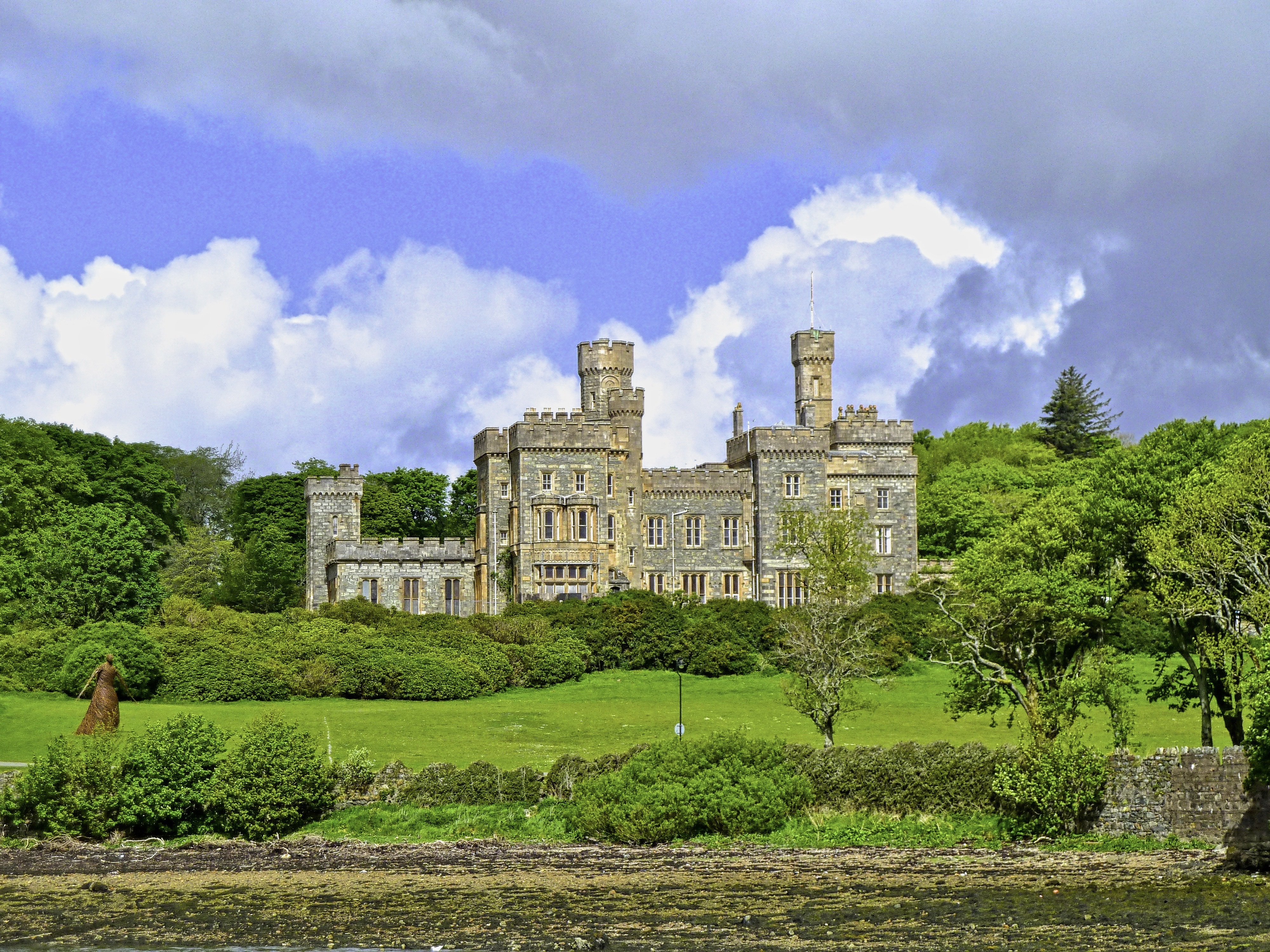
Rising from the rugged coastline of the Isle of Lewis, this grand residence dominates the surrounding landscape with its imposing silhouette. Lews Castle's construction began in the mid-19th century, commissioned by Sir James Matheson, who made his fortune in the Chinese opium trade. The castle reflects Victorian ambition, blending Gothic Revival architecture with Scottish baronial elements. Thick stone walls and corner towers evoke a sense of medieval fortification, despite its purely residential purpose. Sir James envisioned the estate as a way to bring employment and prosperity to the island after the Highland Clearances. The surrounding grounds were landscaped extensively, incorporating gardens, pathways, and carriage drives to complement the building. After Matheson's death, the castle passed to his heirs but was gradually abandoned during the 20th century. For decades, the structure suffered from neglect and harsh coastal weather, leaving interiors and roofs in ruin. Despite decay, its exterior still commands attention, standing as a symbol of Victorian ambition and the social history of the Hebrides. Efforts in recent years have focused on restoration, preserving both architectural details and the character of the estate. The castle's location offers sweeping views of the North Atlantic and the rugged island landscape, emphasizing its dramatic setting. Visitors and historians alike are drawn to its mixture of grandeur and melancholy, imagining the life of a 19th-century industrialist on a remote Scottish isle. Archaeological surveys and conservation projects continue to reveal insights into Victorian construction techniques and local labor history. The building serves as a reminder of how wealth, power, and isolation can combine to create monumental architecture. Today, Lews Castle stands as a testament to ambition, resilience, and the layered history of Scotland's northern isles.