


< Back
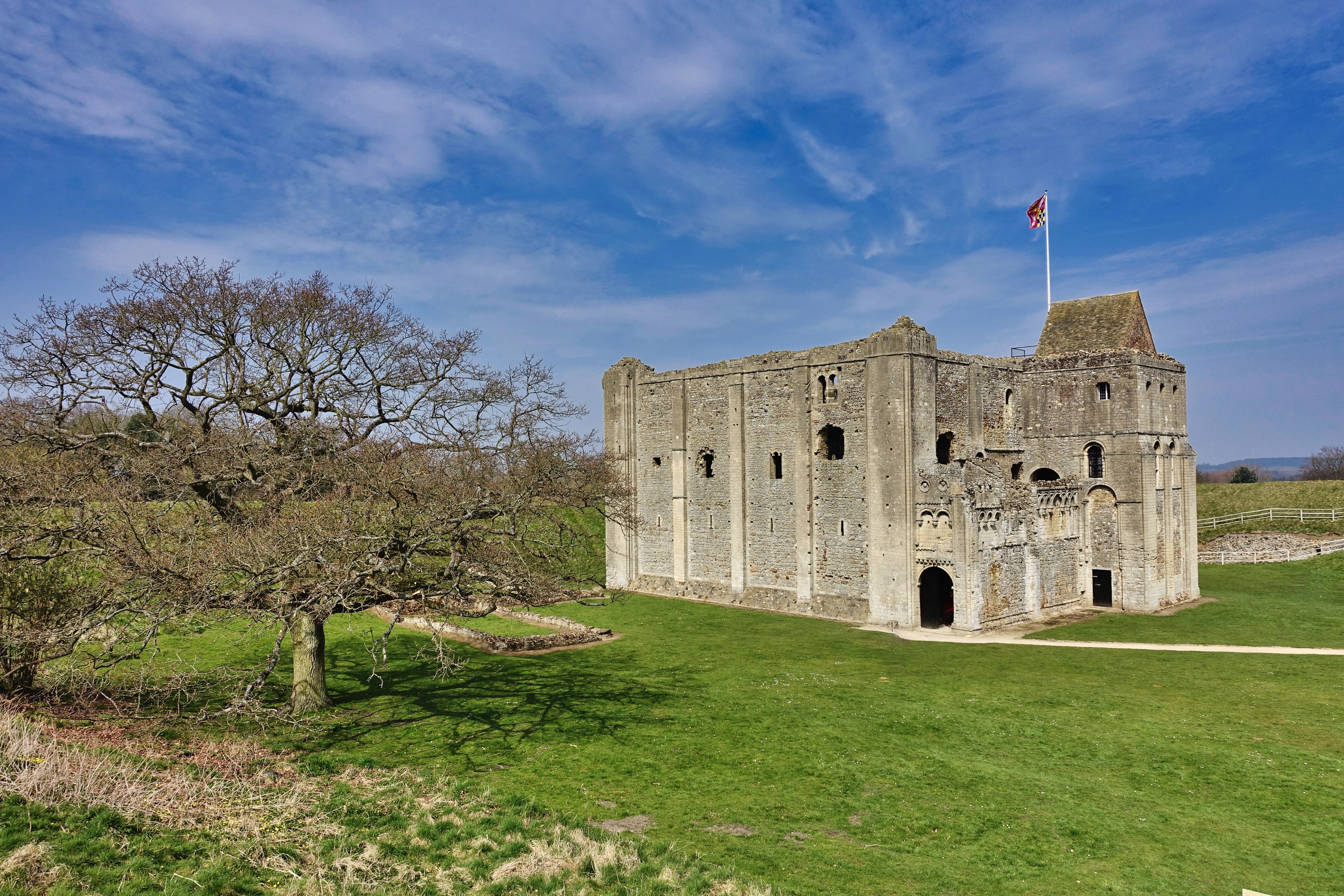
Castle Rising Castle
Castle History
Rising from the flat marshlands of Norfolk, this massive earthwork fortress appears almost surreal against the open sky. Castle Rising's construction began in the 12th century under William d'Aubigny, a powerful noble closely connected to the Norman kings of England. Unusually for its time, the site was designed more as a symbol of authority than as a purely defensive stronghold. The great stone keep, still largely intact, is among the finest surviving examples of Norman military architecture. Encircling earth ramparts and a deep moat added layers of protection while also magnifying its visual dominance. Lavish carved stonework inside the keep hints at a residence intended for status and ceremony, not constant warfare. The fortress became a favored royal residence during the reigns of Henry II and his successors. Royal guests would have experienced impressive halls, private chambers, and commanding views across the surrounding wetlands. During the Middle Ages, the site served as both a noble household and an administrative center. Its fortunes changed dramatically in the 14th century when it became the enforced home of Queen Isabella, widow of Edward II. Here she lived in comfortable confinement after helping to overthrow her husband's rule. As political priorities shifted, the castle gradually lost its strategic relevance. The surrounding settlement declined, leaving the fortress isolated from major centers of power. Unlike many castles, it was never heavily altered to suit later military technology. This spared the structure from drastic modification but left it vulnerable to neglect. Centuries of exposure transformed Castle Rising into a romantic ruin admired by antiquarians and artists. Today, the towering keep and vast earthworks offer a rare glimpse into the ambition and pageantry of Norman England.