

< Back
Calton Hill
Castle History
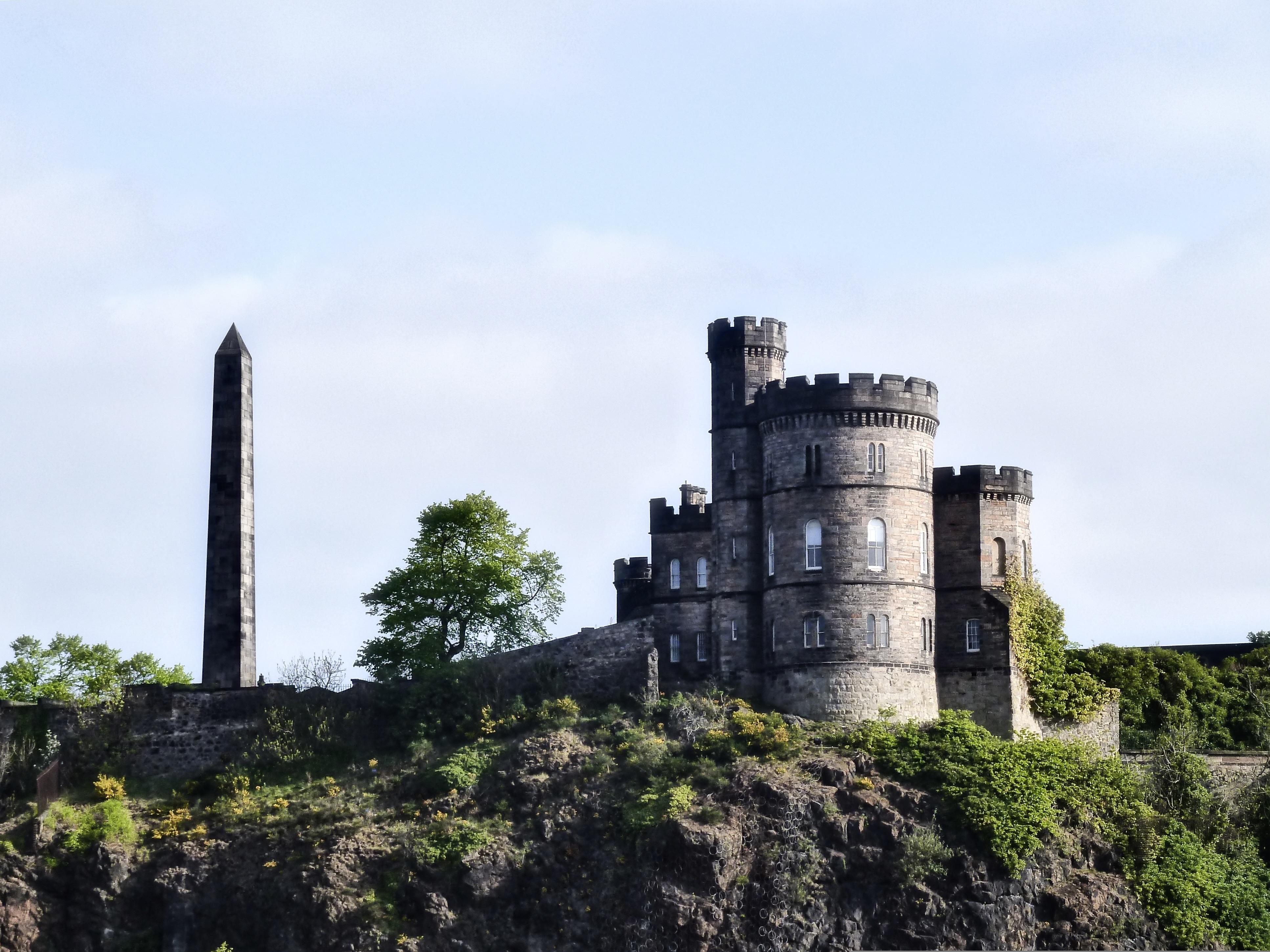
Rising above Edinburgh's eastern skyline, this rocky hill has long served as a stage where history, politics, and ambition converge. Calton Hill's name is thought to derive from an old settlement or woodland, hinting at human presence long before stone monuments appeared. In medieval times, the slopes were used for grazing, quarrying, and public gatherings tied to the life of the city below. The hill gained national significance in the early 19th century when it became a canvas for grand architectural symbolism. A bold plan emerged to crown it with monuments that would celebrate Scotland's intellectual and military achievements. The most famous of these, inspired by the Parthenon in Athens, was intended to honor Scottish soldiers who died in the Napoleonic Wars. Lack of funding halted the project, leaving the structure famously unfinished and earning it the nickname "Scotland's Disgrace." Nearby, the Nelson Monument was completed in 1816 to commemorate Admiral Horatio Nelson's naval victories. A time ball installed on the monument later helped ships in the Firth of Forth synchronize their chronometers. The hill also hosts the City Observatory, reflecting Edinburgh's Enlightenment-era devotion to science and learning. Over time, the site became a focal point for civic pride and public ceremony. Its open slopes have witnessed protests, celebrations, and moments of quiet reflection. The hill's classical monuments helped shape Edinburgh's reputation as the "Athens of the North." Artists and writers have long been drawn to its dramatic silhouettes and sweeping views. From its summit, the city's medieval Old Town and elegant New Town unfold in striking contrast. Today, Calton Hill remains both a historical landmark and a living public space, where past ambition and modern life coexist.