

< Back
Ruthven Barracks
Castle History
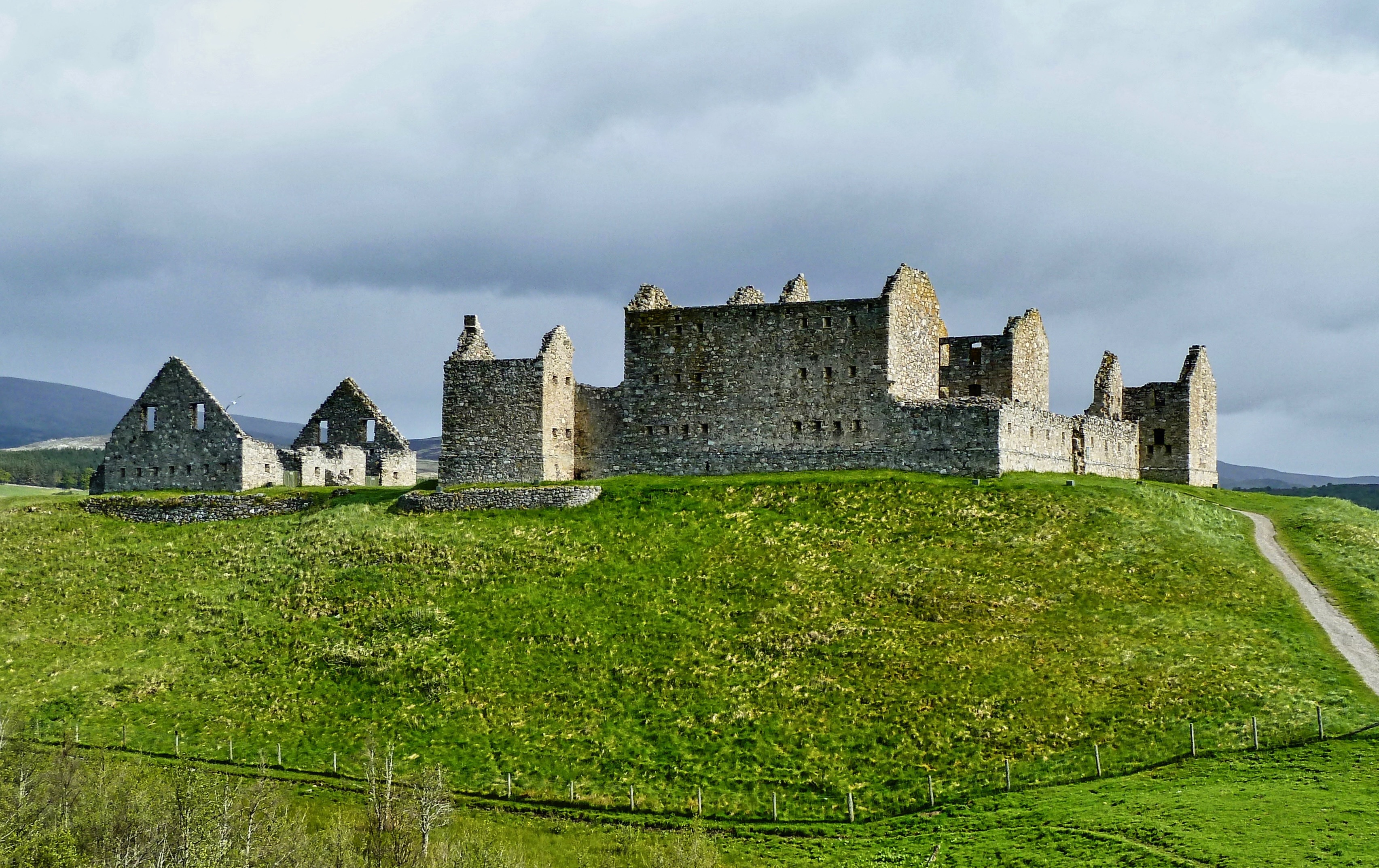
Standing starkly above the Highland village of Kingussie, this austere stone complex tells a story shaped more by rebellion than royalty. Ruthven Barrack's origins lie in an earlier medieval castle that once belonged to the powerful Clan Comyn. That original stronghold was destroyed during the Wars of Scottish Independence, leaving the site temporarily abandoned. In the early 18th century, the government chose the location for a very different purpose. A barracks was constructed to house troops tasked with controlling the restless Highlands after Jacobite uprisings. Designed for discipline rather than comfort, the structure emphasized strength, order, and surveillance. Thick walls and elevated ground allowed soldiers to dominate the surrounding landscape. The barracks played a direct role in suppressing Jacobite resistance during the 1715 rebellion. Ironically, it later fell into Jacobite hands during the 1745 rising. Prince Charles Edward Stuart's forces occupied the site briefly, turning the government's own stronghold against it. After the Jacobite defeat, the barracks lost its military importance. Harsh weather and neglect gradually reduced the building to a roofless ruin. Despite its decay, the site remained a potent symbol of state power imposed on Highland culture. Its isolated setting adds to the sense of tension and control that once defined its purpose. Archaeological remains reveal how soldiers lived in an unforgiving environment far from home. Today, Ruthven Barrack's stark ruins stand as a reminder of Scotland's turbulent struggle between rebellion and authority.