


< Back
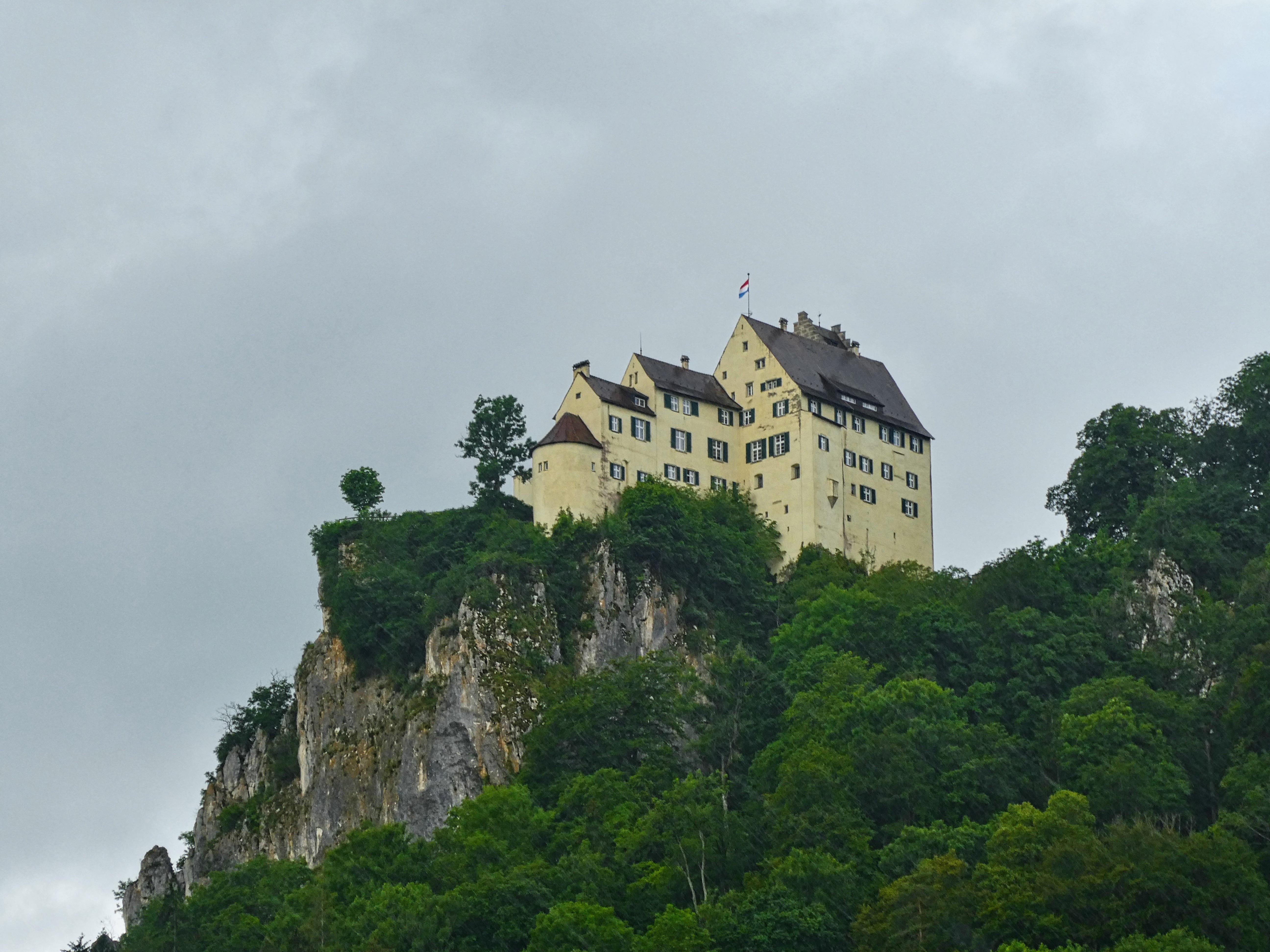
Werenwag Castle
Castle History
Rising above a dramatic bend of the Upper Danube, this imposing stronghold has long dominated one of southern Germany's most striking landscapes. Werenwag Castle's origins reach back to the 12th century, when a fortified seat was established to control movement through the narrow river valley below. Rather than fading into decay, the castle evolved continuously as power, taste, and technology changed. Early medieval defenses were gradually expanded into a substantial noble residence. Steep cliffs on several sides provided natural protection, allowing architecture to focus as much on prestige as on defense. Over the centuries, the complex passed through influential aristocratic hands. The Fürstenberg family later transformed it into a refined seat reflecting Baroque and historicist ideals. Rebuilding campaigns in the 17th and 19th centuries reshaped its appearance while preserving its medieval core. A massive keep still anchors the complex, recalling its original military purpose. Chapels, halls, and residential wings reveal its long transition from fortress to stately home. Fires and natural disasters caused damage, but each crisis led to restoration rather than abandonment. Its commanding silhouette became known as the "Pearl of the Danube Valley." The castle's position made it a symbol of authority rather than mere surveillance. Surrounding forests and river views enhance its sense of seclusion and grandeur. Though privately owned and not open to the public, Werenwag Castle remains a living historical structure. Today, it stands as a rare example of a medieval castle that survived by adapting instead of collapsing into ruin.