

< Back
Riegersburg Castle
Castle History
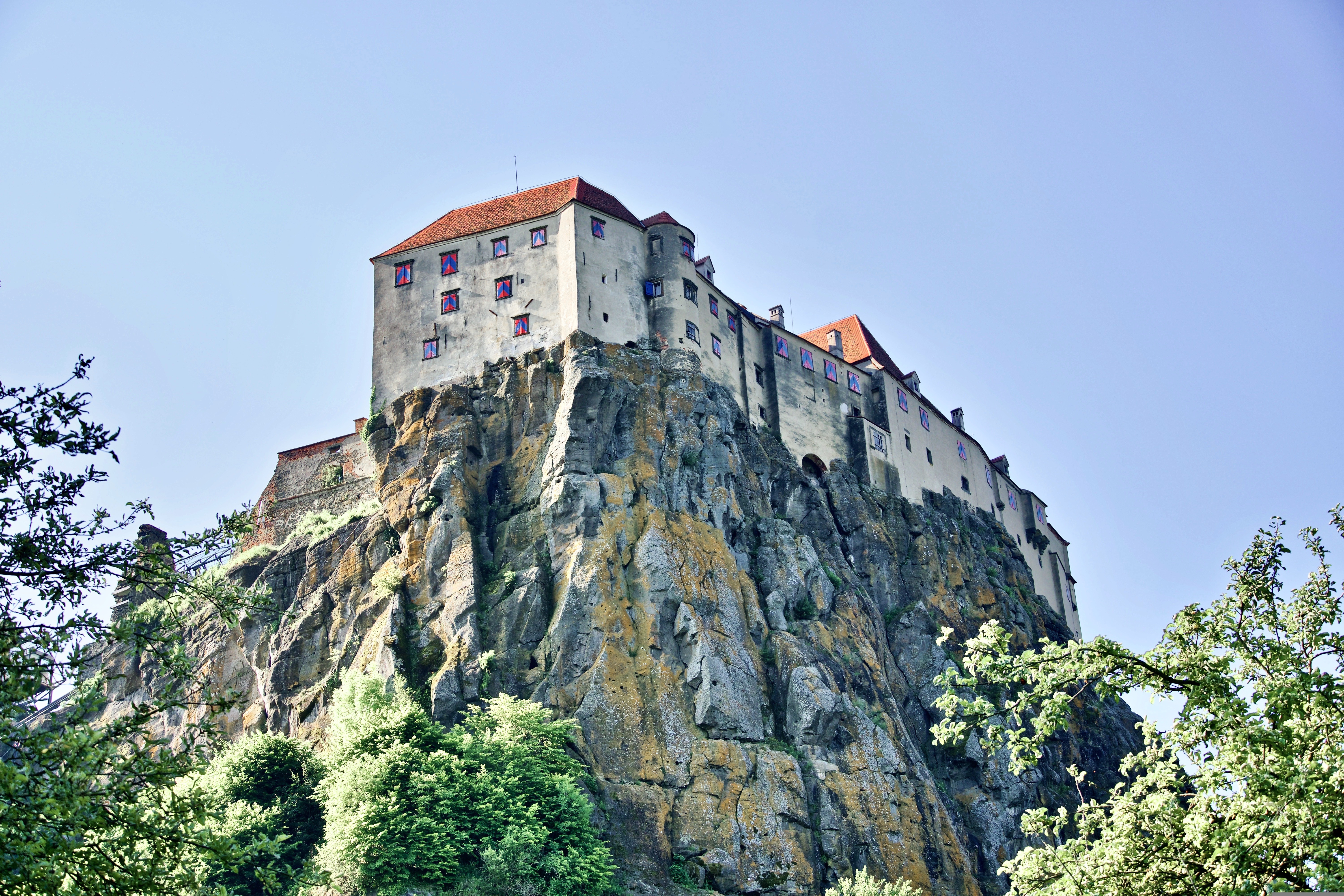
Rising dramatically on a volcanic cliff in Styria, Riegersburg Castle commands one of the most striking defensive positions in Austria. Its origins date back to the 11th century, when a small fortification was first established on the lava rock. Over the centuries, the complex grew into an almost impregnable stronghold thanks to its sheer height and natural defenses. Multiple layers of walls, gates, and bastions were added to protect the castle from invading forces. The fortress became especially important during the 16th and 17th centuries, when the region faced repeated Ottoman incursions. Local rulers invested heavily in strengthening its defenses, turning it into a key bastion on the Styrian frontier. The powerful Lords of Stadl and later the Souches family played central roles in shaping its formidable structure. Elisabeth von Liechtenstein, known as one of the castle's most influential residents, transformed it into a seat of wealth, culture, and security. Despite numerous conflicts, the stronghold was never successfully conquered—earning a reputation for being nearly unbeatable. Its extensive system of drawbridges, fortified gates, and steep pathways offered unparalleled protection. Inside, richly decorate rooms, chapels, and halls reveal the lifestyle of the noble families who once lived there. With the decline of military threats, the castle gradually transitioned into a noble residence and later a heritage site. Modern restoration efforts have preserved both the defensive architecture and the elegant interiors. Standing high above surrounding vineyards and villages, Riegersburg Castle remains one of Austria's most awe-inspiring testaments to medieval engineering and resilience.