

< Back
Alquézar Castle
Castle History
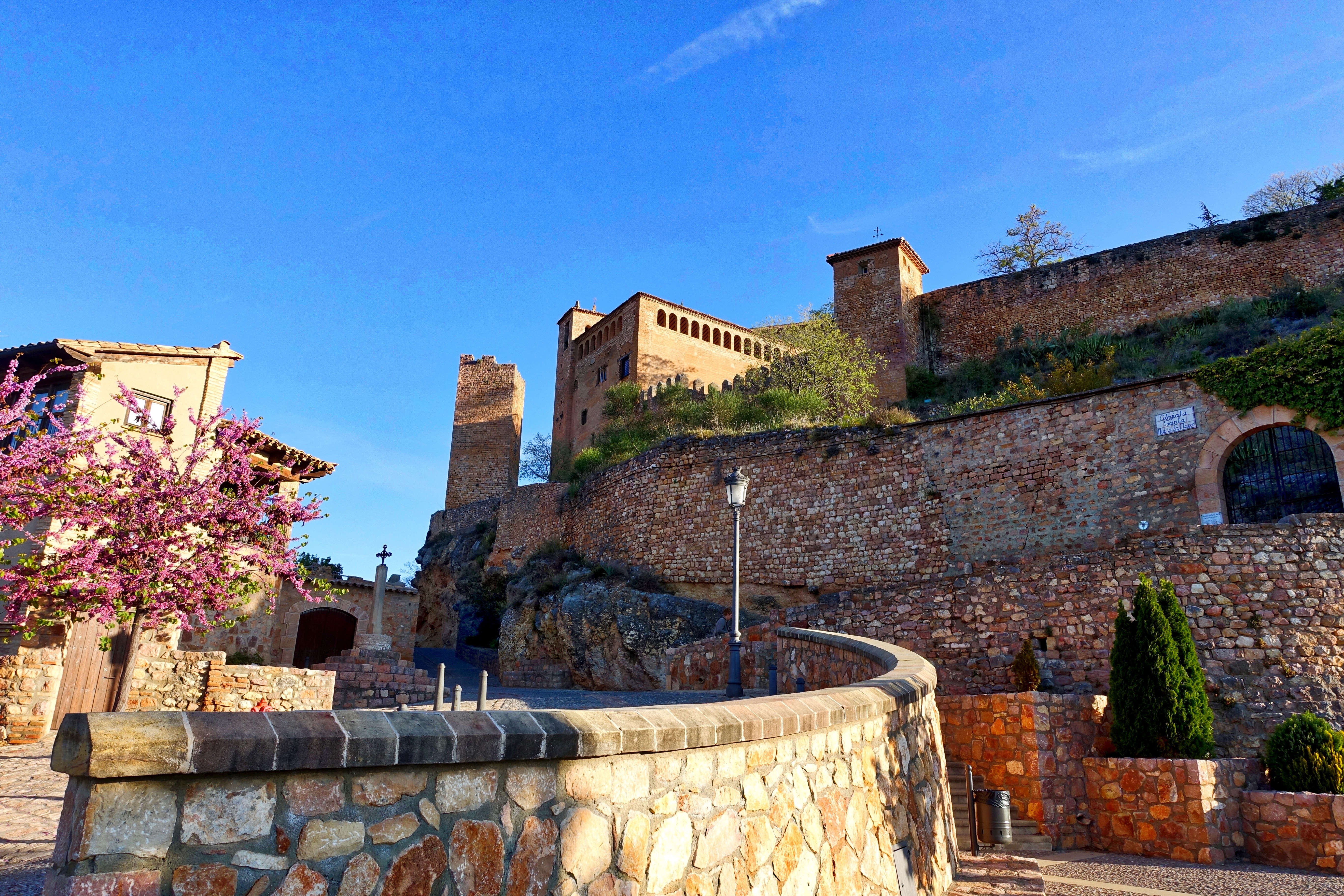
Rising dramatically above the Vero River canyon, this formidable fortress commands sweeping views of Aragón's rugged landscape. Alquézar Castle's origins trace back to the 9th century, when it was established as an Islamic stronghold guarding the northern frontier of Al-Andalus. The name itself derives from the Arabic "al-qasr", meaning "the fortress," a reminder of its strategic beginnings. During the Reconquista, the site was captured by Christian forces under King Sancho Ramírez in the late 11th century. Following its conquest, the complex was transformed into a collegiate church while retaining many defensive features. Romanesque architecture gradually replaced earlier structures, blending sacred space with military design. Thick stone walls and towers continued to watch over key routes through the Pyrenees foothills. The surrounding village grew beneath the protection of the fortress, shaped by centuries of conflict and cooperation. Monks and soldiers once shared the enclosure, an unusual coexistence that defined daily life here. Elaborate cloisters and chapels were added, signaling a shift from frontier defense to religious importance. Despite its spiritual role, the stronghold never fully lost its martial character. As border tensions eased, the site became more closely tied to regional administration and worship. Time and weather softened its walls but preserved the harmony between stonework and landscape. Its dramatic setting later attracted travelers, artists, and historians drawn to its layered past. Legends and local traditions still echo through its narrow passages and terraces. Today, Alquézar Castle stands as a powerful symbol of cultural exchange between Islamic and Christian Spain.