


< Back
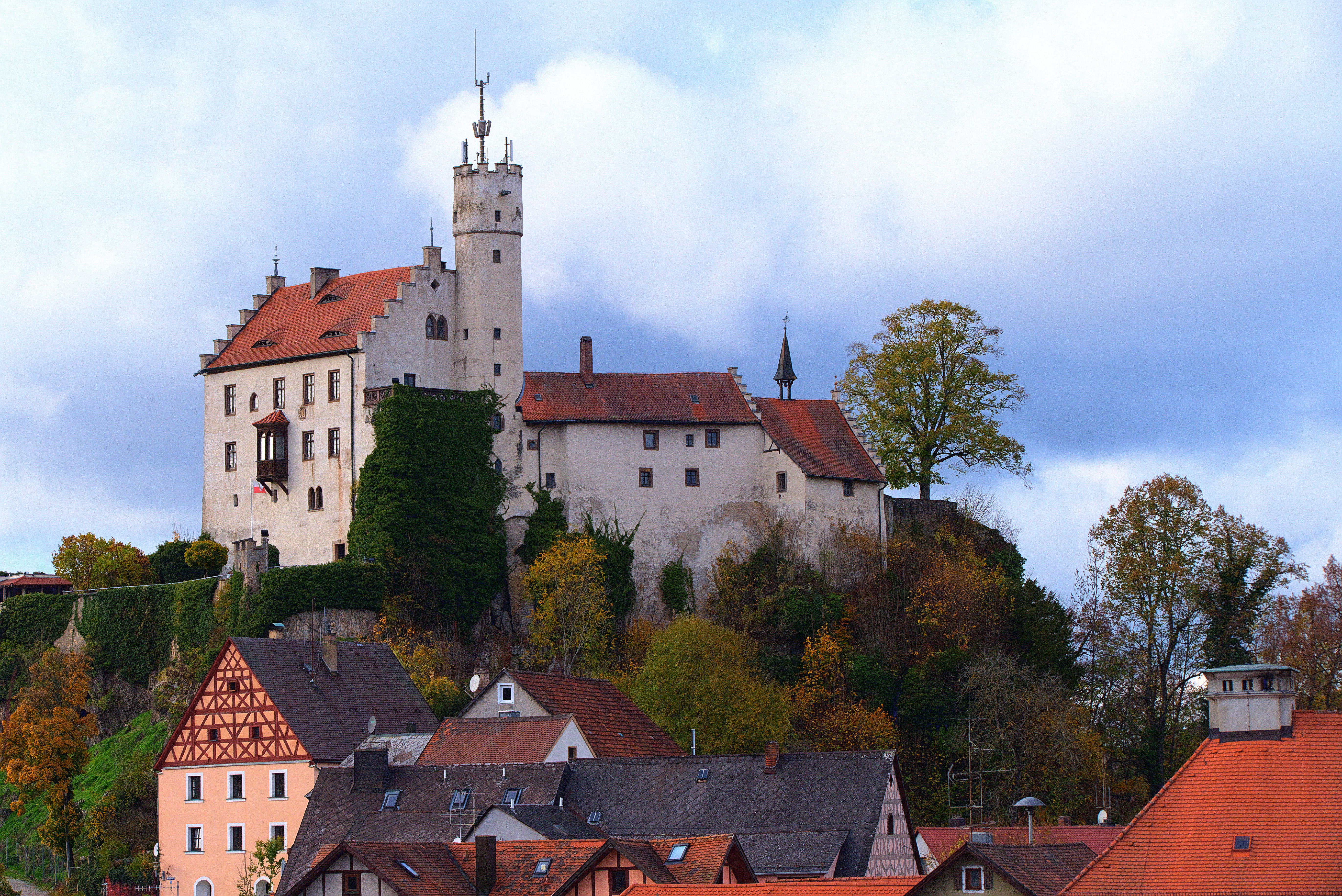
Gößweinstein Castle
Castle History
Rising from a dramatic limestone outcrop in Franconian Switzerland, this striking fortress dominates the surrounding valleys with austere authority. Gößweinstein Castle's foundations date to the 11th century, when the site was first fortified to control trade routes and regional movement. The castle became closely linked to the Prince-Bishops of Bamberg, who used it as a stronghold of both spiritual and temporal power. Over the centuries, successive expansions strengthened its walls and towers to meet evolving military threats. Sheer cliffs on multiple sides provided natural defenses that reduced the need for extensive outer fortifications. Within its walls, administrative buildings and living quarters reflected its role as a regional seat of governance. The stronghold witnessed numerous regional conflicts but avoided total destruction. During the late Middle Ages, it functioned as a secure refuge during times of unrest. As gunpowder warfare advanced, the castle's defensive importance slowly declined. Rather than falling into neglect, it remained in use as an administrative center. In the 18th century, parts of the complex were adapted to more comfortable residential purposes. Romantic-era fascination with medieval ruins later renewed interest in its preservation. Restoration efforts stabilized key structures while preserving its rugged character. The surrounding village grew in its shadow, shaping local identity. From its heights, the castle still offers expansive views across the Franconian landscape. Standing firm against time and stone, Gößweinstein Castle endures as a powerful symbol of medieval authority fused with dramatic natural terrain.