

< Back
Rosenberg Castle
Castle History
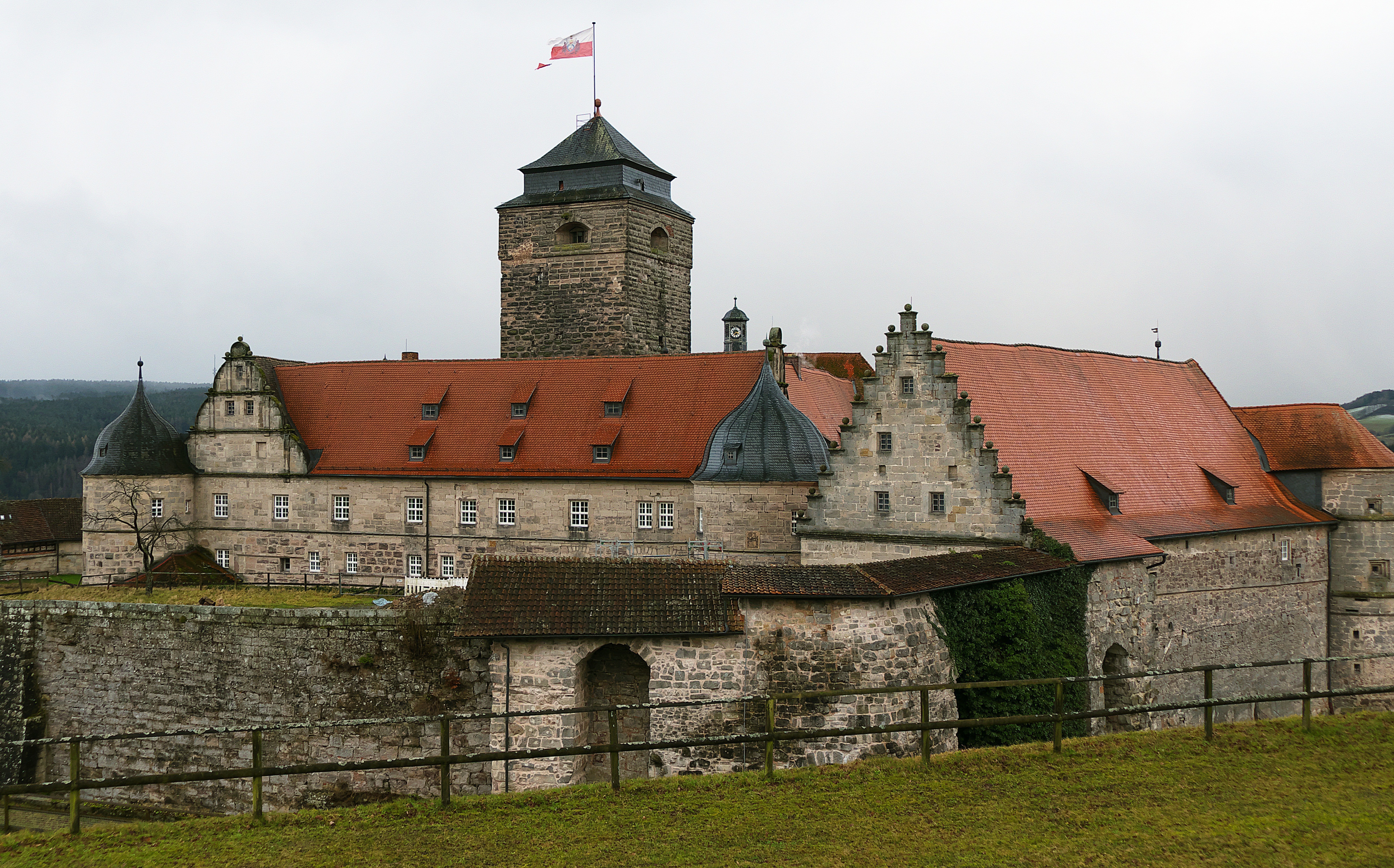
Dominating the skyline above the town of Kronach, this vast fortress represents one of Germany's most impressive examples of defensive military architecture. Rosenberg Castle's origins lie in the Middle Ages, when a smaller castle first guarded the territory of the Prince-Bishops of Bamberg. As warfare evolved, the site was repeatedly expanded into a massive hilltop fortress rather than a simple noble residence. During the 16th and 17th centuries, extensive bastions, ramparts, and underground passages were added to counter artillery warfare. The fortress was designed as a self-contained stronghold capable of withstanding long sieges. It famously never fell to enemy forces, despite numerous conflicts sweeping through the region. During the Thirty Years' War, it served as a critical refuge for soldiers and civilians alike. Its commanding position allowed defenders to control roads and river crossings below. Unlike many medieval castles, comfort was secondary to strategic endurance and firepower. Barracks, storehouses, and powder magazines filled much of the interior space. After its military importance declined, the fortress avoided demolition due to its scale and solidity. In later centuries, parts of the complex were used for administrative and storage purposes. Restoration efforts preserved its layered defenses rather than returning it to a romanticized medieval form. The immense walls and angular bastions still clearly demonstrate early modern military engineering principles. From its heights, sweeping views reveal why the location was considered nearly impregnable. Standing firm after centuries of war and change, Rosenberg Castle remains a powerful symbol of resilience, authority, and strategic ingenuity.