

< Back
Merseburg Castle
Castle History
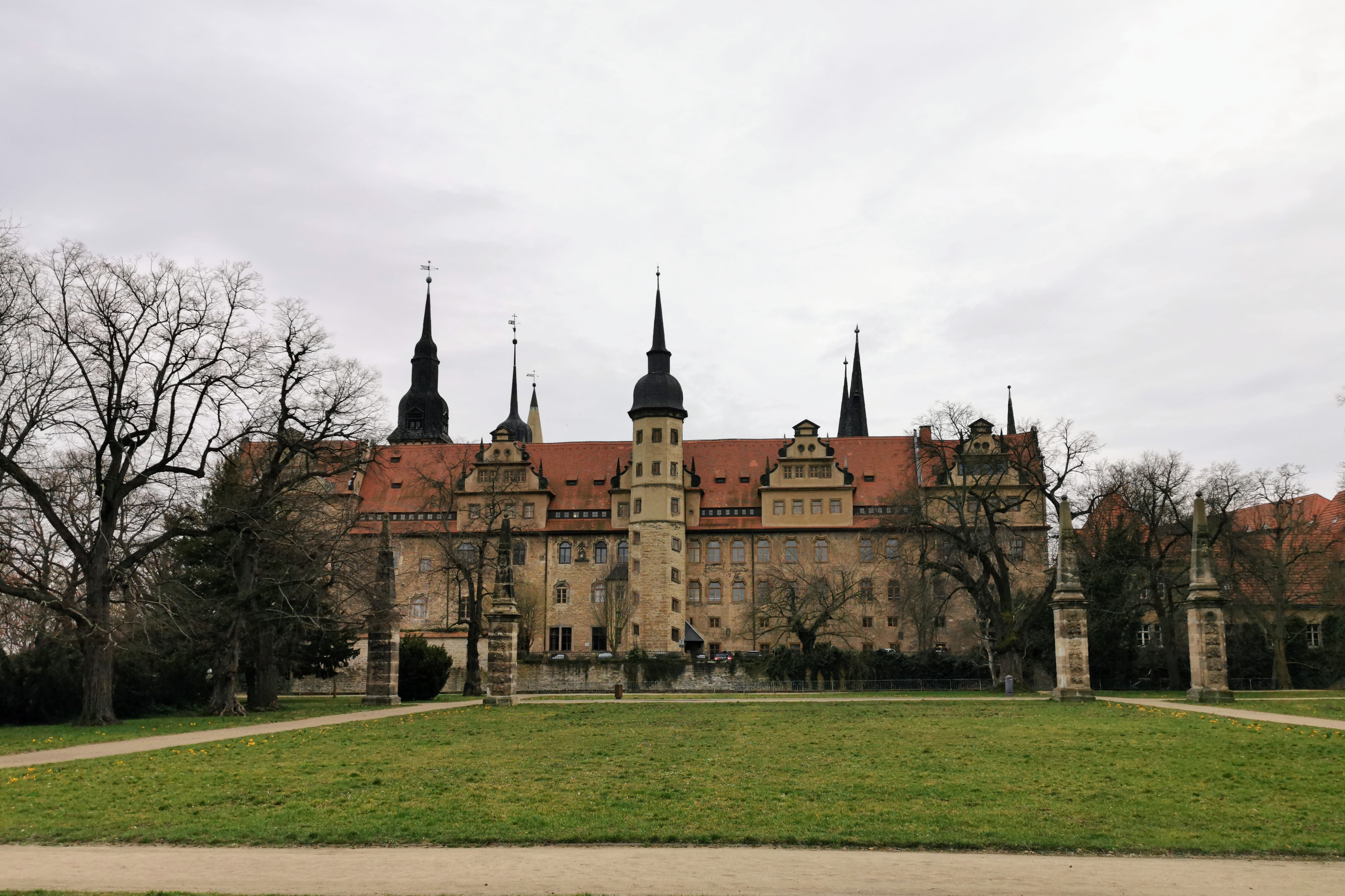
Rising above the Saale River, this imposing stronghold has shaped the skyline of Merseburg for more than a thousand years. Its origins reach back to the early Middle Ages, when the site became a strategic and spiritual center within the emerging German realm. An imperial palace once stood here, hosting emperors of the Holy Roman Empire and anchoring royal authority in the region. The adjacent cathedral, consecrated in the 11th century, cemented the castle's role as both a political and ecclesiastical powerhouse. Merseburg gained particular fame through the Merseburg Incantations, rare pagan-Christian texts that survived within the bishopric's scholarly tradition. Over centuries, fortifications were expanded and reshaped to answer shifting military technologies and political pressures. Renaissance rebuilding transformed the medieval complex into a refined residence for the prince-bishops of Merseburg. Decorative façades and orderly courtyards replaced earlier austerity, signaling confidence rather than constant defense. The Thirty Years' War tested the complex, as armies moved through the region and power structures fractured. Later secularization stripped the bishopric of authority, folding the castle into new state systems. Despite these upheavals, the structure retained its symbolic weight as a seat of governance and learning. Today, museums and cultural institutions animate its halls with history rather than courtly ritual. The view from Merseburg Castle's towers still commands the river valley, echoing centuries of watchfulness. Standing within its walls, one senses how sacred duty, imperial ambition, and scholarship once converged in a single place.