

< Back
Rochsburg Castle
Castle History
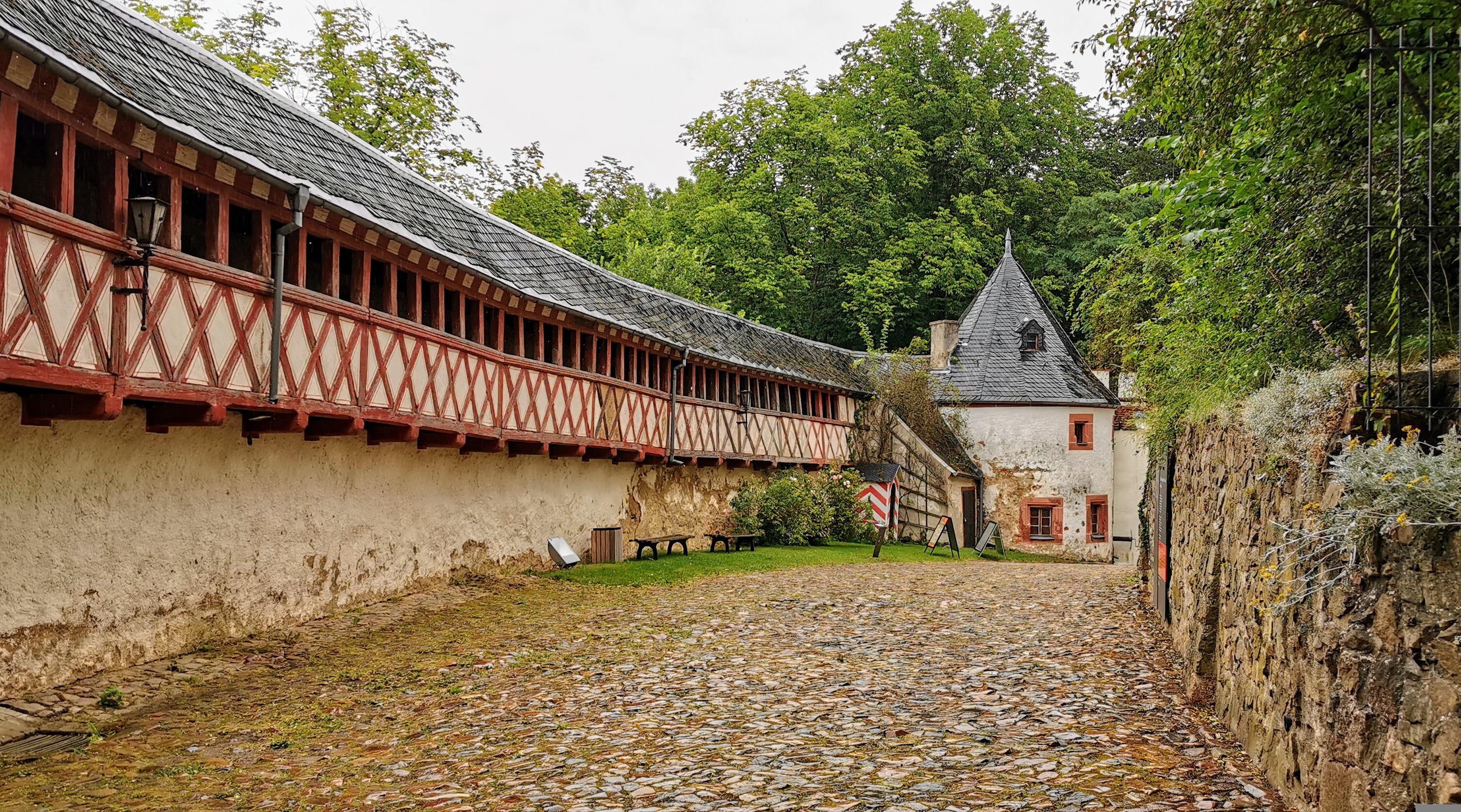
Perched high above the Zwickauer Mulde River, this Saxon stronghold has watched trade routes, armies, and centuries of change flow quietly beneath its walls. Rochsburg Castle's origins stretch back to the 12th century, when a defensive fortress was raised to secure regional power and protect vital crossings in central Germany. Over time the site became closely tied to the Wettin dynasty, whose ambitions shaped much of Saxony's political and architectural history. During the Renaissance, defensive severity softened slightly as residential comfort and representative spaces became more important to its noble owners. Strategic importance slowly gave way to administrative use, and parts of the complex were adapted for storage, governance, and later incarceration. For several centuries, prisoners were held within its walls, lending the castle a darker chapter that contrasts sharply with its noble beginnings. Despite these harsher roles, much of the medieval fabric survived, protected by its massive construction and continuous occupation. In the 19th and early 20th centuries, growing historical awareness sparked efforts to preserve the site rather than exploit it purely for utility. Restoration work carefully balanced authenticity with stability, ensuring that scars from fires and alterations remained readable rather than erased. Today the structure serves as a museum, allowing visitors to trace Saxon history through rooms that once echoed with power, fear, and ceremony. Exhibitions now replace weapons and chains, transforming spaces of confinement into places of education and reflection. The castle's long continuity of use makes it a rare architectural witness to shifting ideas of power, punishment, and preservation. Standing quietly above the river, Rochsburg Castle endures as a reminder that history is not a single story, but a layered accumulation of human choices over time.