


< Back
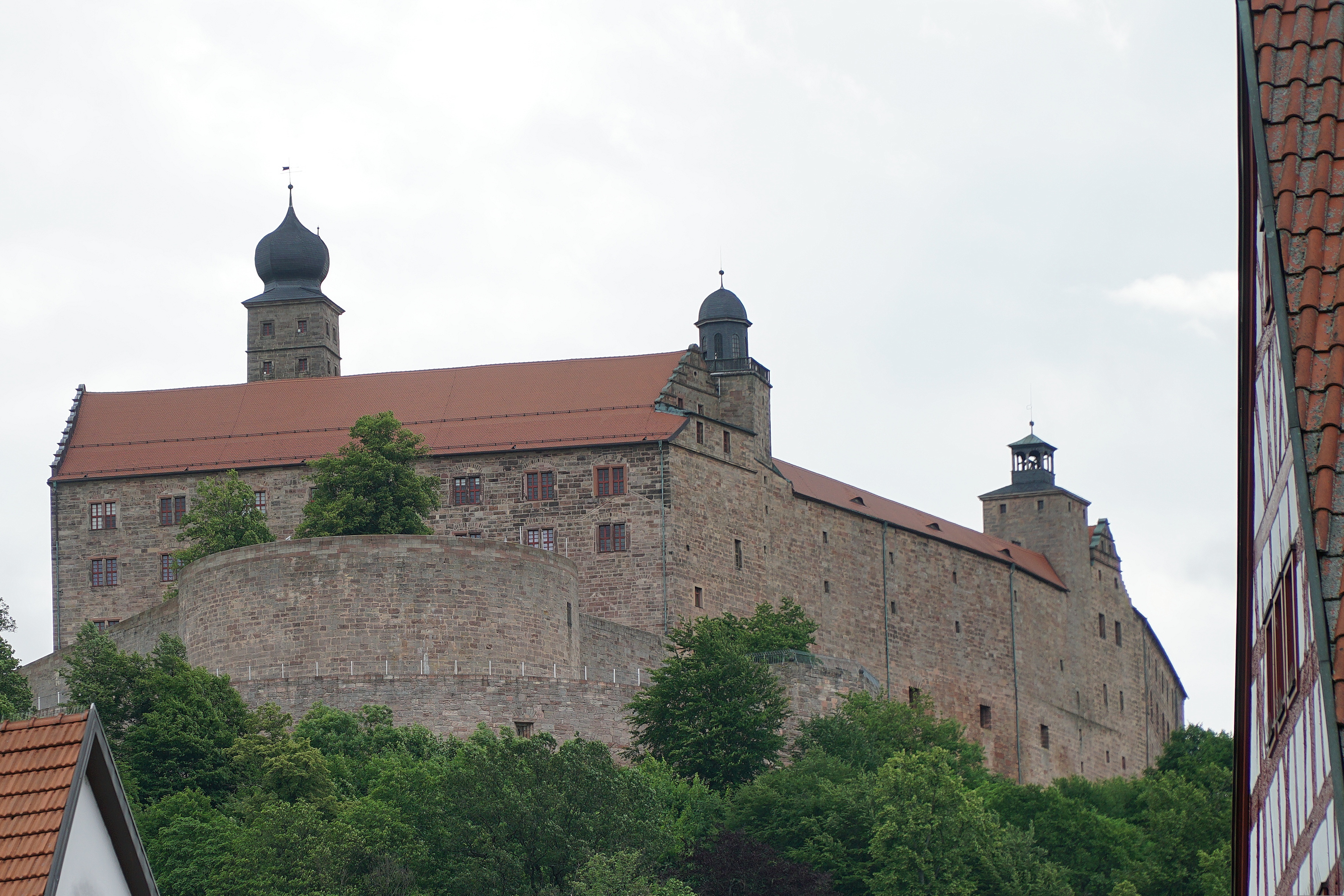
Plassenburg Castle
Castle History
Dominating the town of Kulmbach from a commanding hilltop, this massive fortress has shaped regional power for centuries. Plassenburg Castle's earliest fortifications date to the Middle Ages, when it served as a strategic seat for the Hohenzollern burgraves of Nuremberg. The castle became the administrative and military heart of Upper Franconia, controlling trade routes and political life. Repeated conflicts forced constant rebuilding, gradually transforming a medieval stronghold into a Renaissance fortress. During the 16th century, its defenses were modernized with bastions and thick walls designed to withstand artillery fire. The castle played a central role in the Second Margrave War, suffering destruction yet again amid regional turmoil. Each reconstruction made the complex larger and more sophisticated, reflecting evolving military science. Within its walls, noble residences stood alongside arsenals, granaries, and administrative offices. Despite its strength, the fortress eventually lost its strategic importance as warfare and governance changed. In the 19th century, the site found new purpose as a military prison, including the incarceration of political dissidents. Later, it was transformed into a museum complex, preserving both its architecture and layered history. Today, several museums occupy the fortress, covering themes from regional history to tin soldiers and medieval life. Plassenburg Castle's immense courtyards and ramparts reveal the sheer scale of early modern fortress engineering. From its heights, sweeping views connect the site visually to the territory it once ruled. The fortress endures as a symbol of resilience, repeatedly rebuilt to meet the demands of power, war, and memory.