

< Back
Hartland Abbey
Castle History
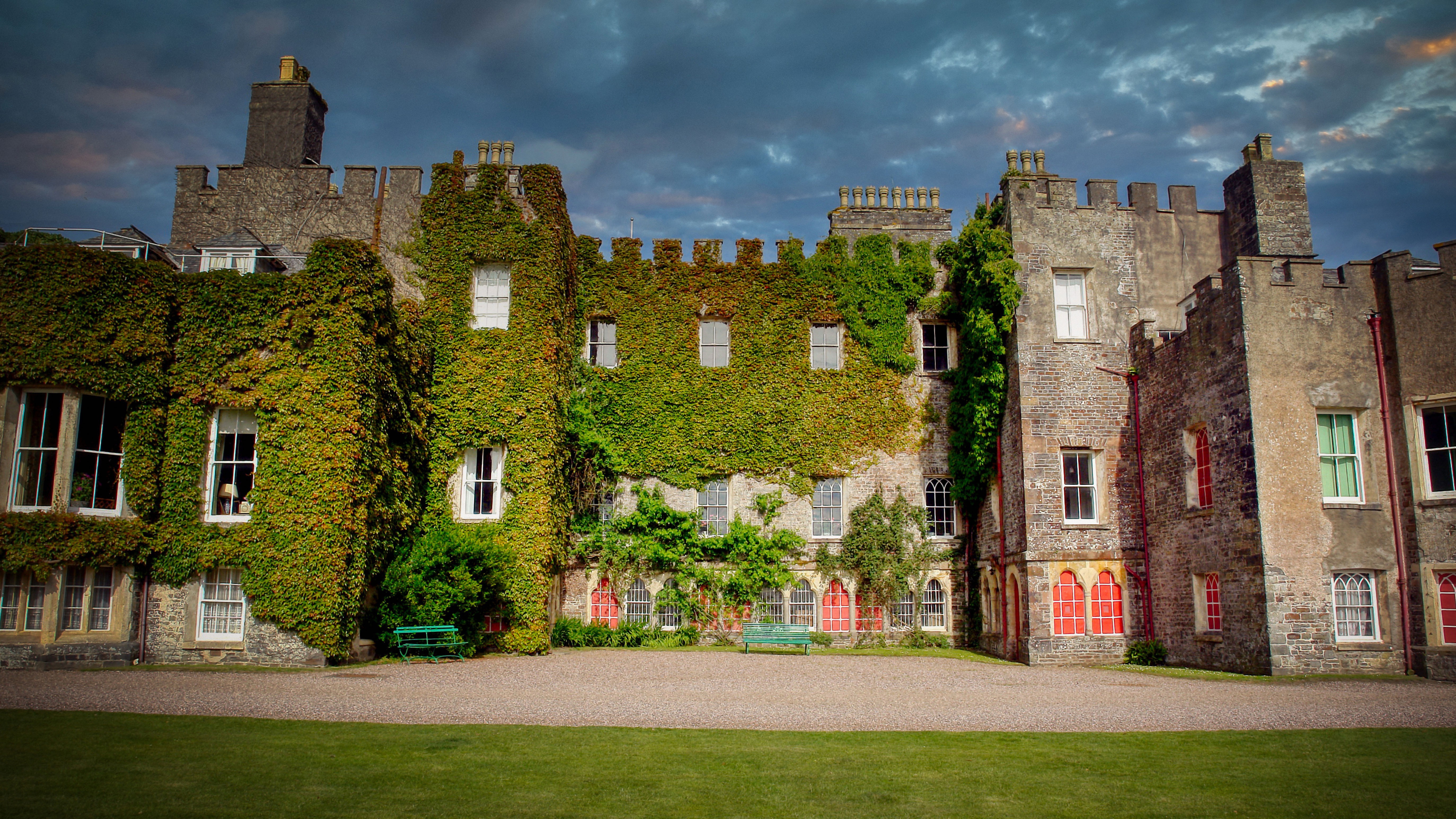
Hartland Abbey rests in a secluded Devon valley, where wooded hills and winding streams give it an atmosphere far removed from England's great cities. The site began its life in the 12th century as an Augustinian monastery, founded by the powerful Giffard family during a surge of medieval religious building. Its remote position near the rugged Atlantic coast made it both spiritually contemplative and physically isolated. Life at the abbey followed a strict religious rhythm until the upheaval of the Dissolution of the Monasteries under Henry VIII. Rather than falling into ruin, the complex was transformed into a private house, an unusually smooth transition compared to many dissolved abbeys. Successive owners reshaped the buildings, blending medieval stonework with later domestic architecture. Much of the abbey's charm lies in this layered history, where cloisters quietly became corridors and monastic spaces evolved into family rooms. The surrounding estate retained its agricultural roots, linking the house closely to the land that once supported the monks. Hartland Abbey is notable for having been continuously inhabited for centuries, avoiding the abandonment that befell many religious sites. Its interiors preserve a mix of historic features and lived-in warmth rather than museum-like formality. The gardens and woodland walks reflect centuries of careful stewardship rather than grand formal landscaping. Literary and artistic figures have been drawn to its solitude, finding inspiration in its calm and continuity. The abbey remains privately owned, maintaining a rare balance between preservation and everyday life. Today, Hartland Abbey stands as a living example of how England's religious past quietly folded into its domestic present, leaving history embedded in daily use rather than frozen in stone.