


< Back
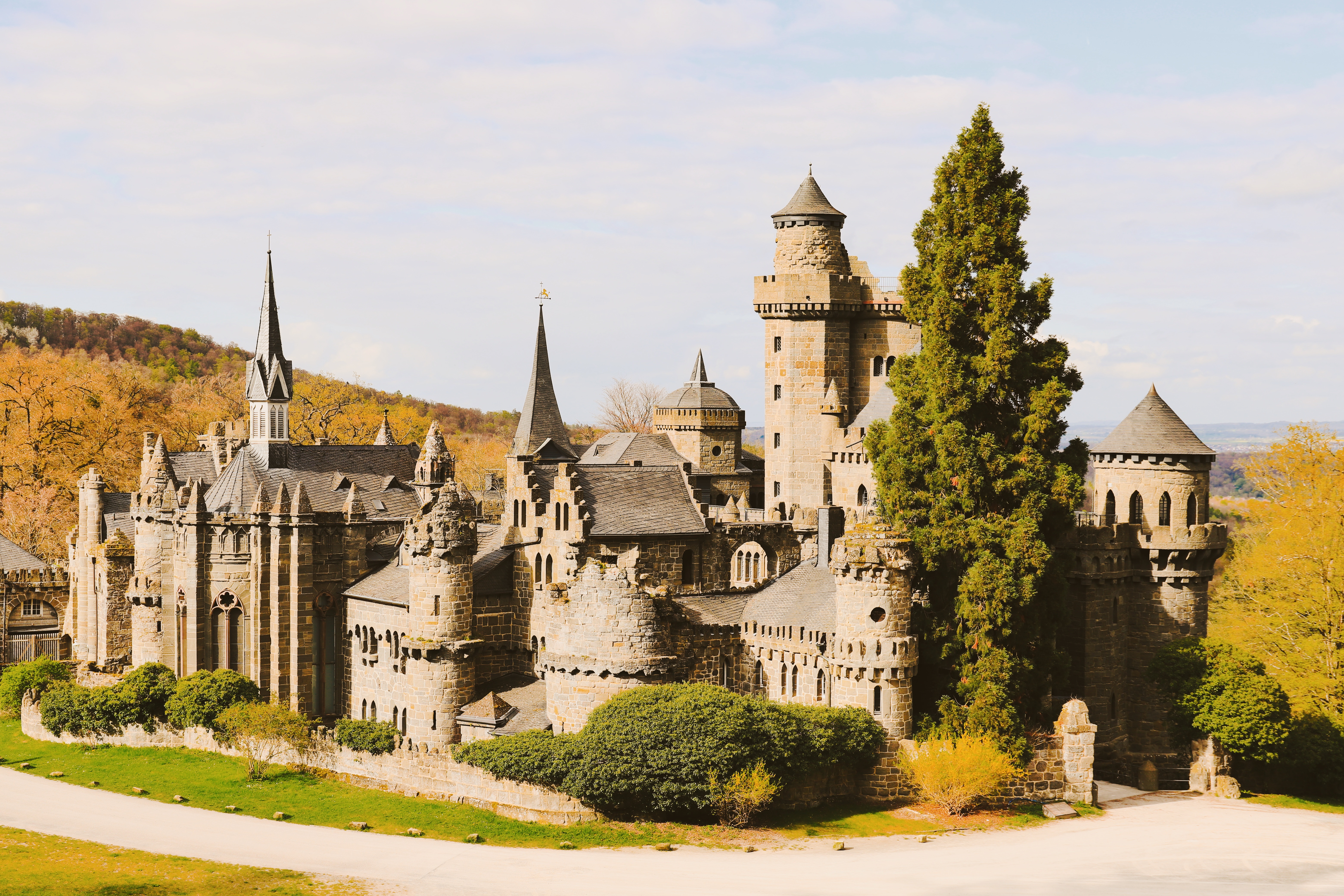
Löwenburg Castle
Castle History
Löwenburg Castle stands on a wooded hill in Kassel as one of Europe's most convincing medieval illusions. Despite its ancient appearance, it was built in the late 18th century for Landgrave Wilhelm IX as a deliberately romantic "ruin." The castle was designed to evoke chivalry, lost dynasties, and the melancholy beauty of decay that fascinated the Enlightenment elite. Architecturally, it blends Gothic towers, battlements, and crumbling walls with carefully engineered theatricality. Unlike many follies, the interior was fully functional, complete with living quarters and an impressive armory. This armory became one of the most significant collections of medieval-style weapons in Germany. The surrounding Bergpark Wilhelmshöhe was shaped to heighten the drama, using winding paths and sudden vistas. Visitors were meant to feel as if they had stumbled upon a forgotten fortress from a vanished age. The illusion was so successful that many early travelers believed the castle was genuinely medieval. During World War II, bombing damaged parts of the structure, ironically making it more of a "real" ruin. Subsequent restorations preserved both its original romantic intent and its wartime scars. Löwenburg played an important role in the early Gothic Revival, influencing later castle reconstructions across Europe. Its creation reflects a moment when imagination and history blended freely in aristocratic culture. Today, the castle stands as a monument not to medieval warfare, but to humanity's enduring desire to reinvent the past.