

< Back
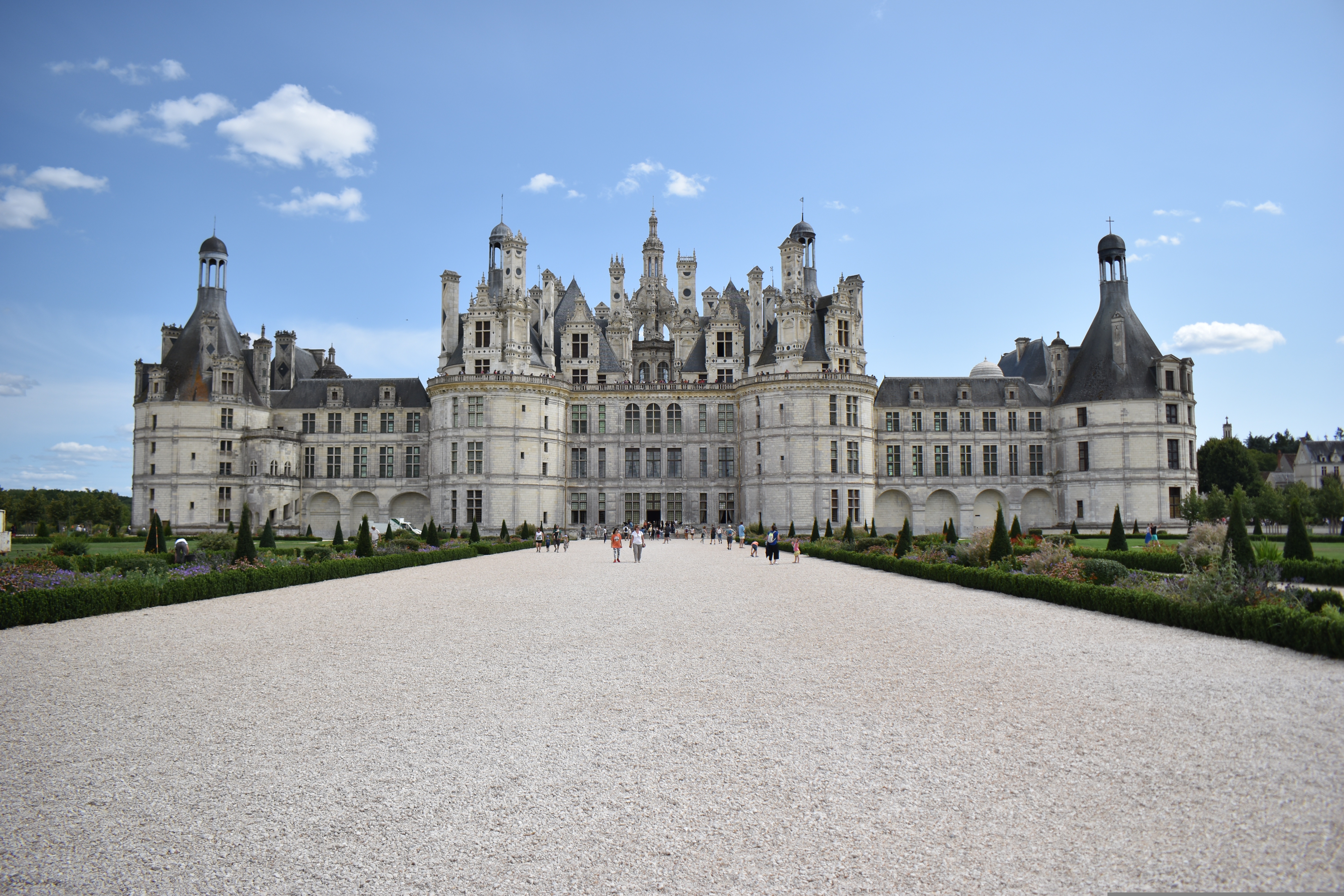
Château de Chambord
Castle History
Rising from the forests of the Loire Valley, Château de Chambord looks less like a residence and more like a dream sketched by an architect with limitless ambition. Construction began in 1519 under King Francis I, who envisioned a hunting lodge that would also proclaim royal power and Renaissance sophistication. The design blends medieval defensive forms with Italian Renaissance elegance, creating a structure that feels both fortress-like and fantastical. Leonardo da Vinci is widely believed to have influenced its plans, particularly the ingenious double-helix staircase at the castle's heart. That staircase allows two people to ascend and descend without ever meeting, a piece of architectural theater centuries ahead of its time. More than 400 rooms, 80 staircases, and hundreds of chimneys make the château one of the largest and most complex in France. Despite its scale, Francis I reportedly spent only a few weeks there in total. The vast roofline, bristling with towers, lanterns, and chimneys, resembles a stone city rising above the palace itself. Chambord was never truly finished, as shifting royal priorities drained attention and funds. During the reign of Louis XIV, it was occasionally used for grand court entertainments and theatrical spectacles. The surrounding estate functioned as an enormous enclosed hunting park, still the largest walled forest in Europe. During World War II, priceless artworks from the Louvre were hidden there for safekeeping. Restoration in the modern era has revealed the bold experimental spirit behind its design. Today, the château stands as a monument to Renaissance imagination, where engineering, art, and royal ego collided on an epic scale.