

< Back
Glenveagh Castle
Castle History
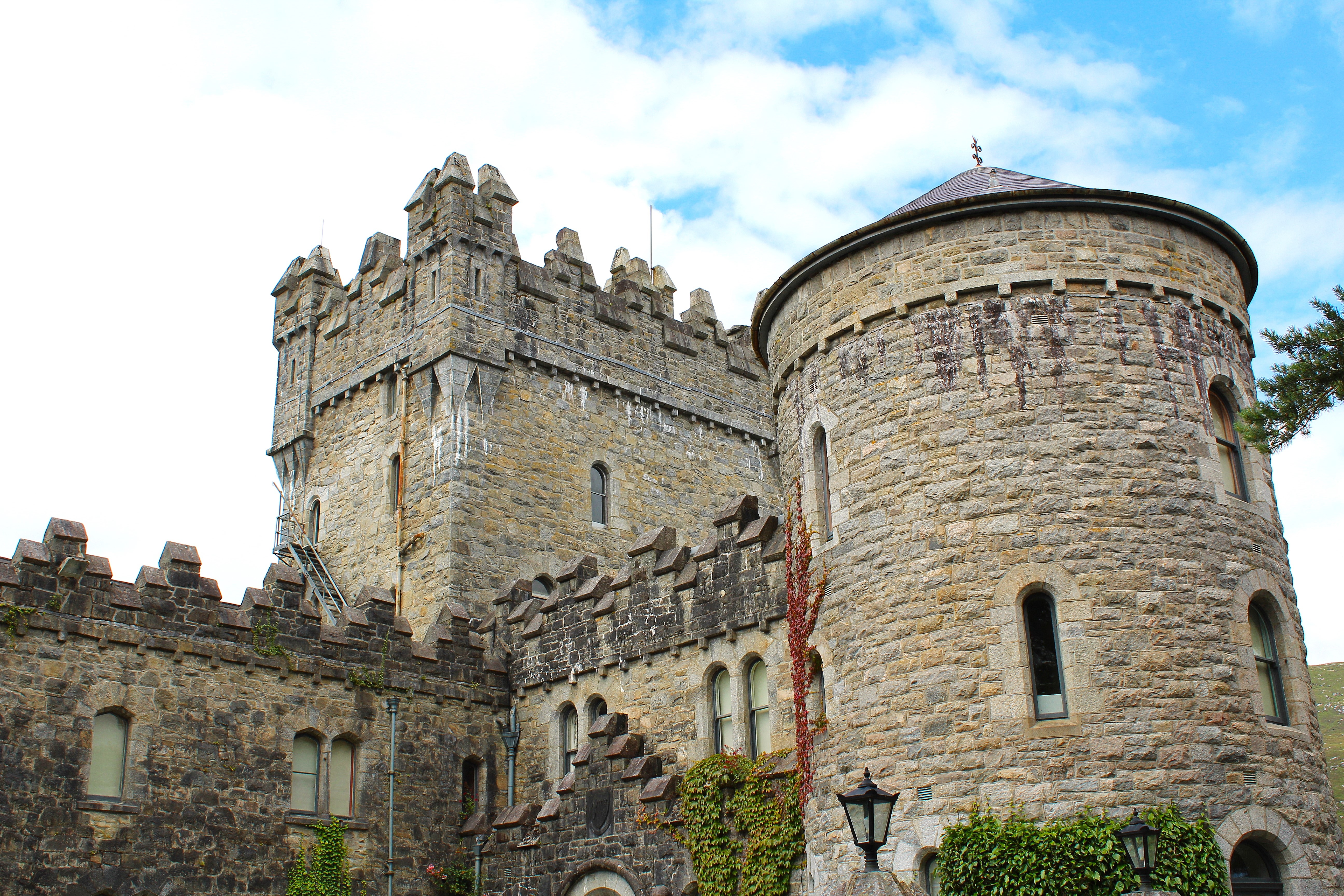
Rising from the wild heart of Donegal, Glenveagh Castle appears less like a medieval stronghold and more like a romantic vision dropped into a mountain valley. Construction began in the 1860s for Captain John George Adair, a wealthy landowner whose legacy remains controversial due to the infamous Derryveagh evictions. The castle was designed in a Scottish Baronial style, deliberately echoing older Highland fortresses rather than Ireland's native medieval castles. Its location beside Lough Veagh was chosen for drama, isolation, and a sense of absolute control over the surrounding landscape. Despite its fairy-tale appearance, the building reflects Victorian tastes for comfort, symmetry, and status rather than defense. Later ownership by American heiress Hester McNeill brought major expansions and refinement to the interiors. The surrounding gardens are among the most celebrated in Ireland, thriving improbably in a harsh Atlantic climate. Exotic plants from around the world were cultivated using clever sheltering walls and microclimates. Glenveagh eventually became a symbol of transformation when it was donated to the Irish state in 1984. It now forms the centerpiece of Glenveagh National Park, the second largest national park in Ireland. The castle's remote setting has made it a favored location for films, photography, and folklore-rich storytelling. Stag herds still roam the surrounding mountains, reinforcing the estate's original sporting purpose. Unlike many Irish castles, it was never ruined by war or abandonment. Instead, its history reflects changing ideas about land ownership, power, and preservation. Today, Glenveagh stands as a curious blend of beauty and unease, where breathtaking scenery and difficult history quietly coexist.