


< Back
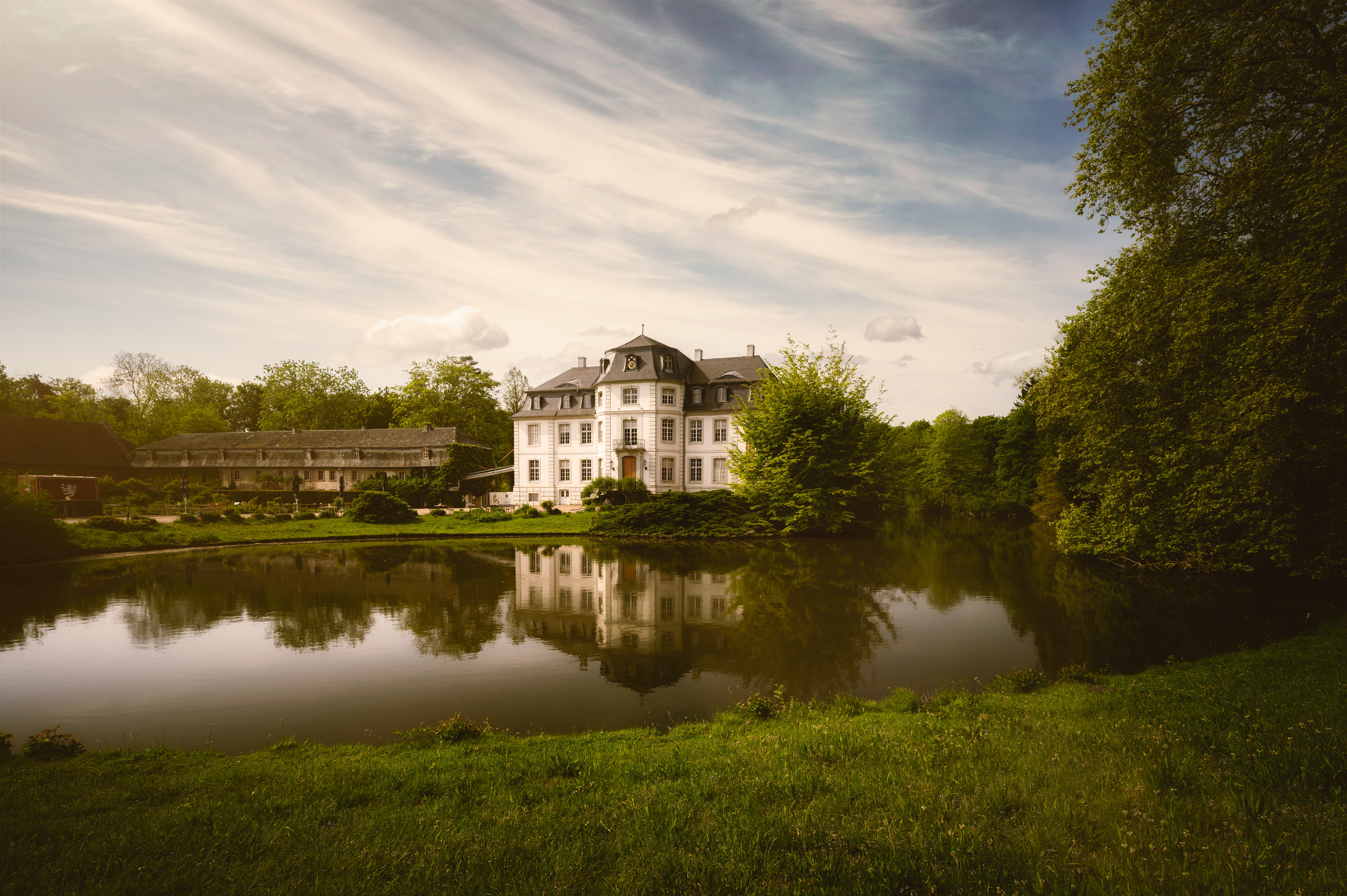
Türnich Castle
Castle History
Set amid landscaped parkland near Kerpen, Türnich Castle is a refined example of a Rhineland water castle with deep aristocratic roots. Its origins reach back to the Middle Ages, when a fortified manor stood on the site surrounded by defensive moats. The estate came into prominence under the noble von Schaesberg family, who reshaped it into a Baroque residence in the 18th century. Elegant façades and symmetrical wings replaced much of the earlier fortifications, reflecting changing tastes and reduced military needs. Despite its transformation, the surrounding water features preserved the castle's classic moated character. The interiors were designed for courtly life, with representative halls and salons intended for gatherings and administration. Türnich Castle became closely tied to regional governance and aristocratic culture in the Rhineland. Its parkland was carefully laid out with avenues, gardens, and agricultural lands forming a unified estate. Unlike many castles damaged by war, the complex survived largely intact into modern times. In recent decades, the castle has gained recognition for sustainable land use and ecological restoration projects on its grounds. The estate today combines historical preservation with organic farming and environmental education. This blend of heritage and modern stewardship makes it unusual among German noble residences. The castle frequently hosts cultural events, exhibitions, and public programs that connect past and present. Türnich Castle stands as a living example of how a historic aristocratic seat can adapt while honoring centuries of history.