

< Back
Benrath Castle
Castle History
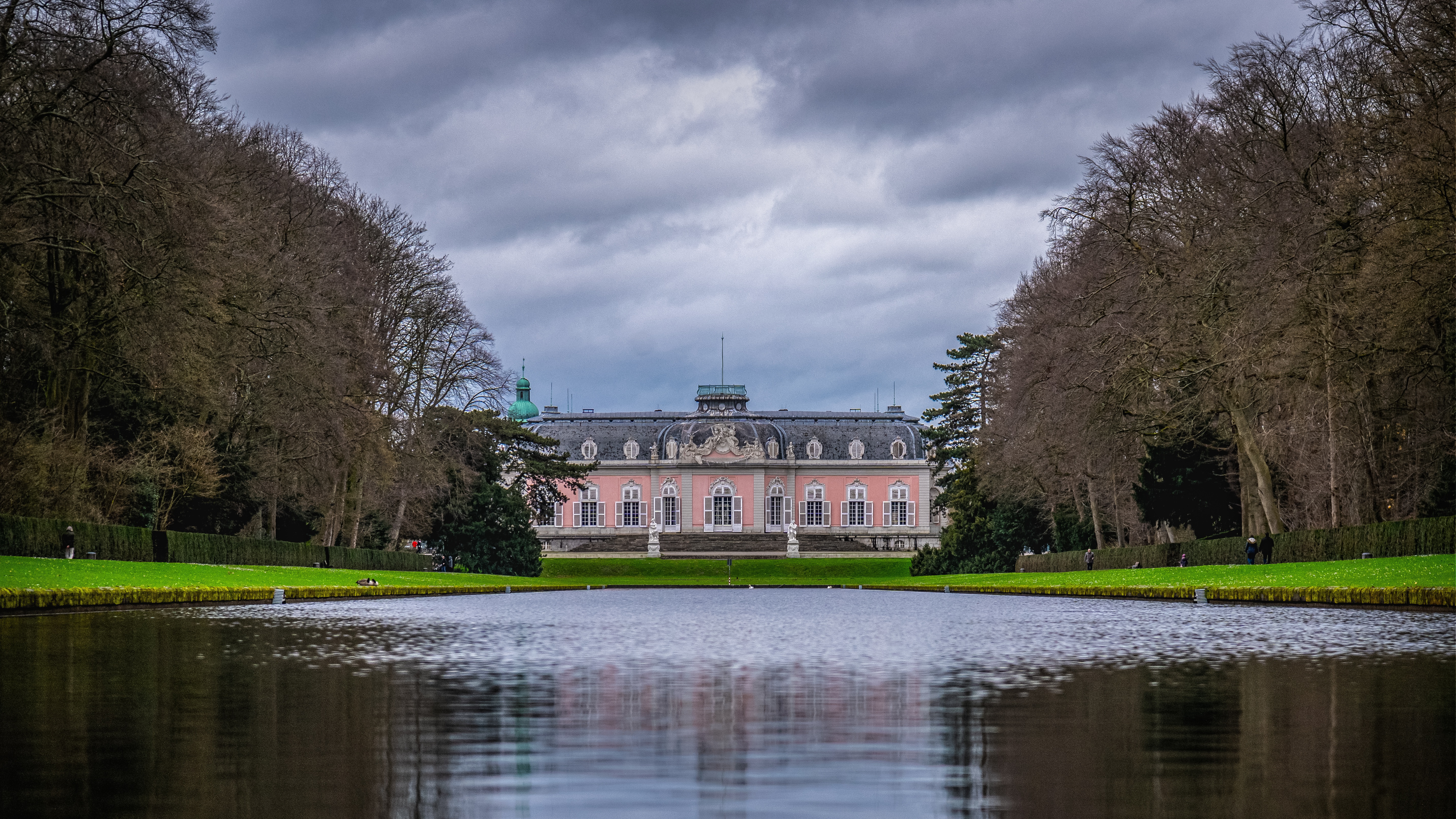
Benrath Castle, just south of Düsseldorf, is a pastel-pink Rococo dream that looks less like a fortress and more like a confection designed by an 18th-century poet with a ruler. It was built between 1755 and 1771 as a pleasure palace for Elector Karl Theodor of the Palatinate, who wanted elegance, symmetry, and leisure rather than cannons and battlements. The castle's perfectly balanced design reflects Enlightenment ideals, with every room mirrored across a central axis like a philosophical argument made of stucco. Its architecture blurs the line between palace and pavilion, emphasizing light, openness, and ornamental grace. The surrounding park was laid out as a French formal garden on one side and an English landscape garden on the other, staging a quiet debate between order and nature. Inside, the grand staircase and ornate salons were designed for theatrical entrances and refined social rituals. Benrath was never meant for long-term residence, but for curated moments of pleasure, conversation, and display. The castle contains rare surviving Rococo interiors, including intricate parquet floors and lavish ceiling paintings. Today it houses museums dedicated to European garden art and natural history, giving the palace an educational second life. Its color palette—soft pink walls with white detailing—was carefully chosen to enhance the play of sunlight. Despite its delicate appearance, the structure has endured wars, regime changes, and centuries of Rhine weather. Benrath Castle is considered one of the most important Rococo buildings in Germany. The palace's design subtly reflects the social hierarchies of its time, with separate wings for men and women. Standing at Benrath, you don't feel defended by walls; you feel invited into an idea of beauty that believed elegance itself could civilize the world.