

< Back
Dyck Castle
Castle History
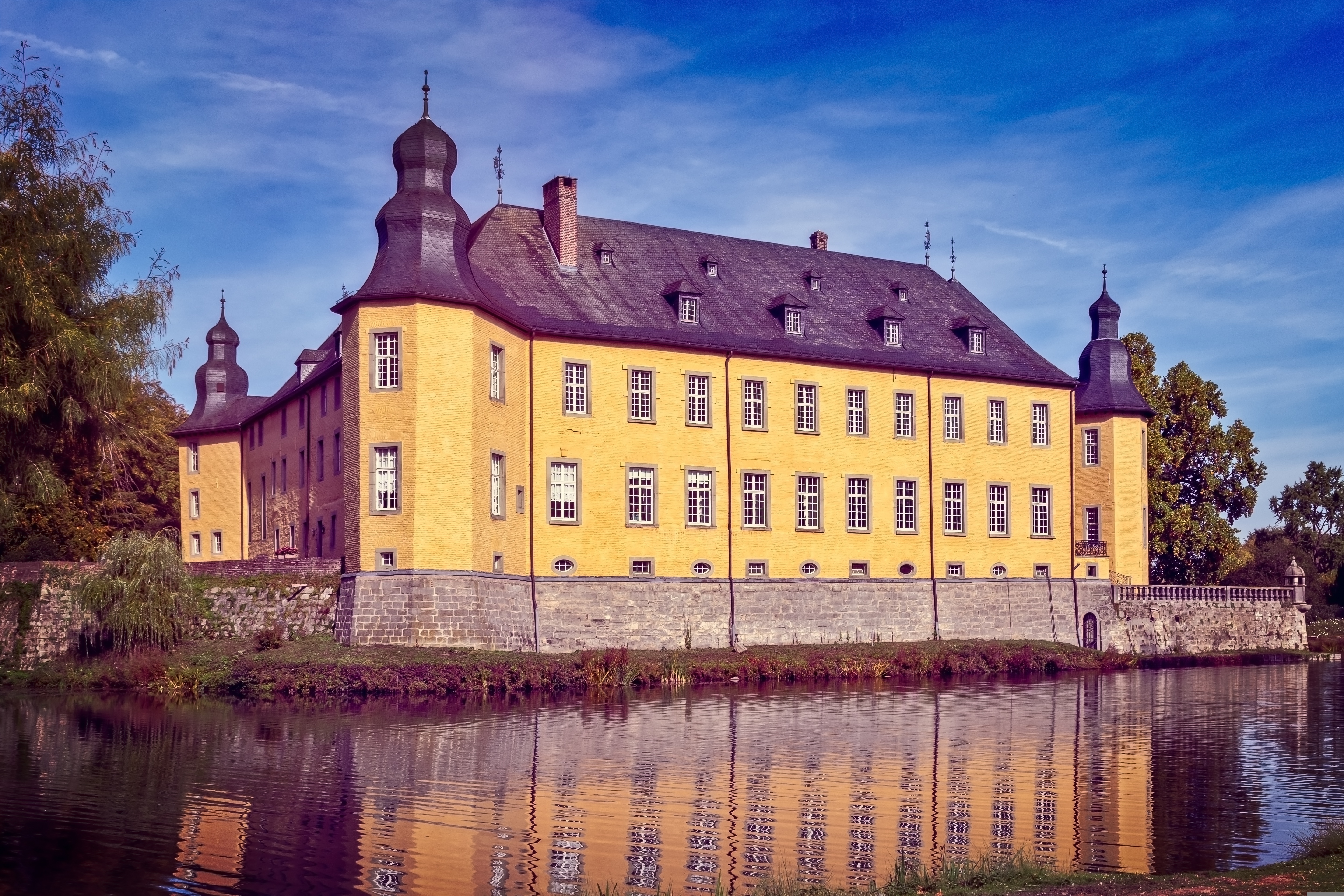
Surrounded by wide moats and formal gardens, this striking water castle stands as one of the most elegant aristocratic residences in the Rhineland. Dyck Castle's origins reach back to the late 11th century, when a fortified manor was established on marshy land for defense and prestige. Over generations, the castle evolved from a medieval stronghold into a refined Baroque palace. The influential Salm-Reifferscheidt family shaped much of its appearance and cultural legacy. Lavish renovations in the 17th and 18th centuries introduced ornate façades, grand staircases, and symmetrical courtyards. Unlike many German castles, it escaped major wartime destruction, preserving much of its historic fabric. The surrounding landscape was redesigned in the English style, creating sweeping parklands and long sightlines. Water remains a defining feature, with reflections of towers and walls mirrored in the encircling moats. The castle became a center of noble life, hosting receptions, hunts, and political gatherings. In the 20th century, it transitioned from a private residence into a public cultural landmark. Today, the estate is famous for hosting large-scale garden shows and international exhibitions. Its blend of medieval foundations and Baroque elegance makes it architecturally distinctive. Dyck Castle also plays a role in preserving regional art, horticulture, and history. Seasonal events bring new life to the grounds throughout the year. As a result, it stands not only as a monument of nobility but as a living cultural landscape.