

< Back
Brühl Castle
Castle History
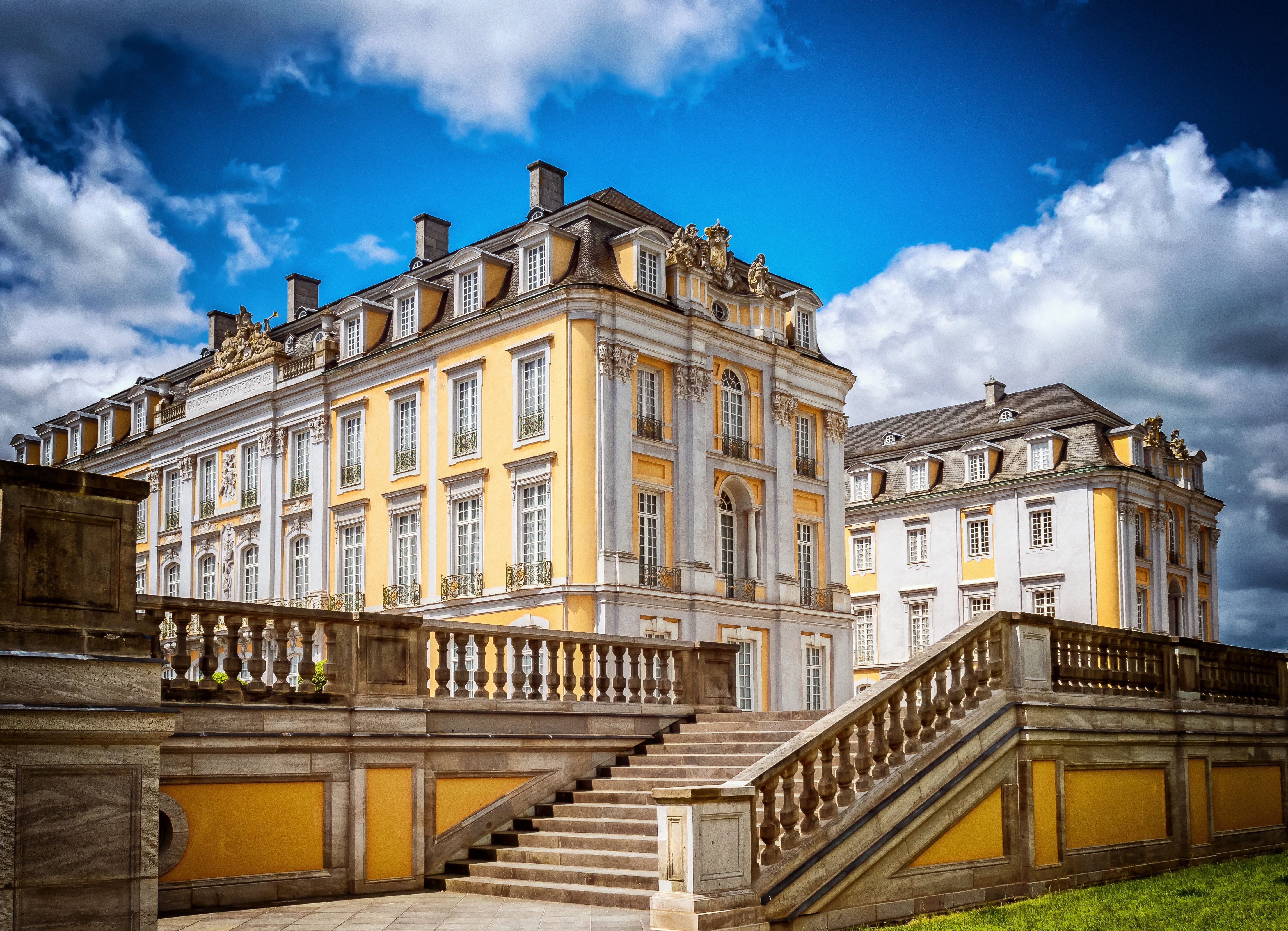
Brühl Castle, or Schloss Augustusburg, rises majestically near Cologne as one of Germany's finest examples of Baroque and Rococo architecture. It was commissioned in the early 18th century by Archbishop-Elector Clemens August of Cologne as a symbol of both political power and refined taste. The castle was designed by renowned architects Johann Conrad Schlaun and François de Cuvilliés, blending German precision with French elegance. Its grand staircases, sweeping façades, and ornate interiors reflect the opulence of the ecclesiastical princes of the Holy Roman Empire. The palace was accompanied by Schloss Falkenlust, a hunting lodge nestled nearby in the surrounding parklands. Over the centuries, the palace became not just a residence but a stage for political and cultural life in the region. Its interiors feature lavish stucco work, frescoes, and delicate gilding that convey both power and artistry. During World War II, the castle suffered damage but was carefully restored to preserve its original Baroque splendor. In 1984, UNESCO recognized Augustusburg and Falkenlust as a World Heritage Site for their outstanding architecture and historical significance. The castle's combination of military practicality and decorative grandeur illustrates the dual role of princely residences in the Holy Roman Empire. Brühl Castle has hosted numerous state events and cultural exhibitions, keeping it relevant to modern audiences. Its towers and terraces offer sweeping views of the Rhine Valley, reinforcing the palace's symbolic dominance over the landscape. Walking through its halls, visitors feel the delicate tension between earthly power and aesthetic beauty that defines Baroque architecture. Brühl Castle endures as a testament to the ambition of its creators, a place where politics, art, and nature converge in harmonious grandeur.