


< Back
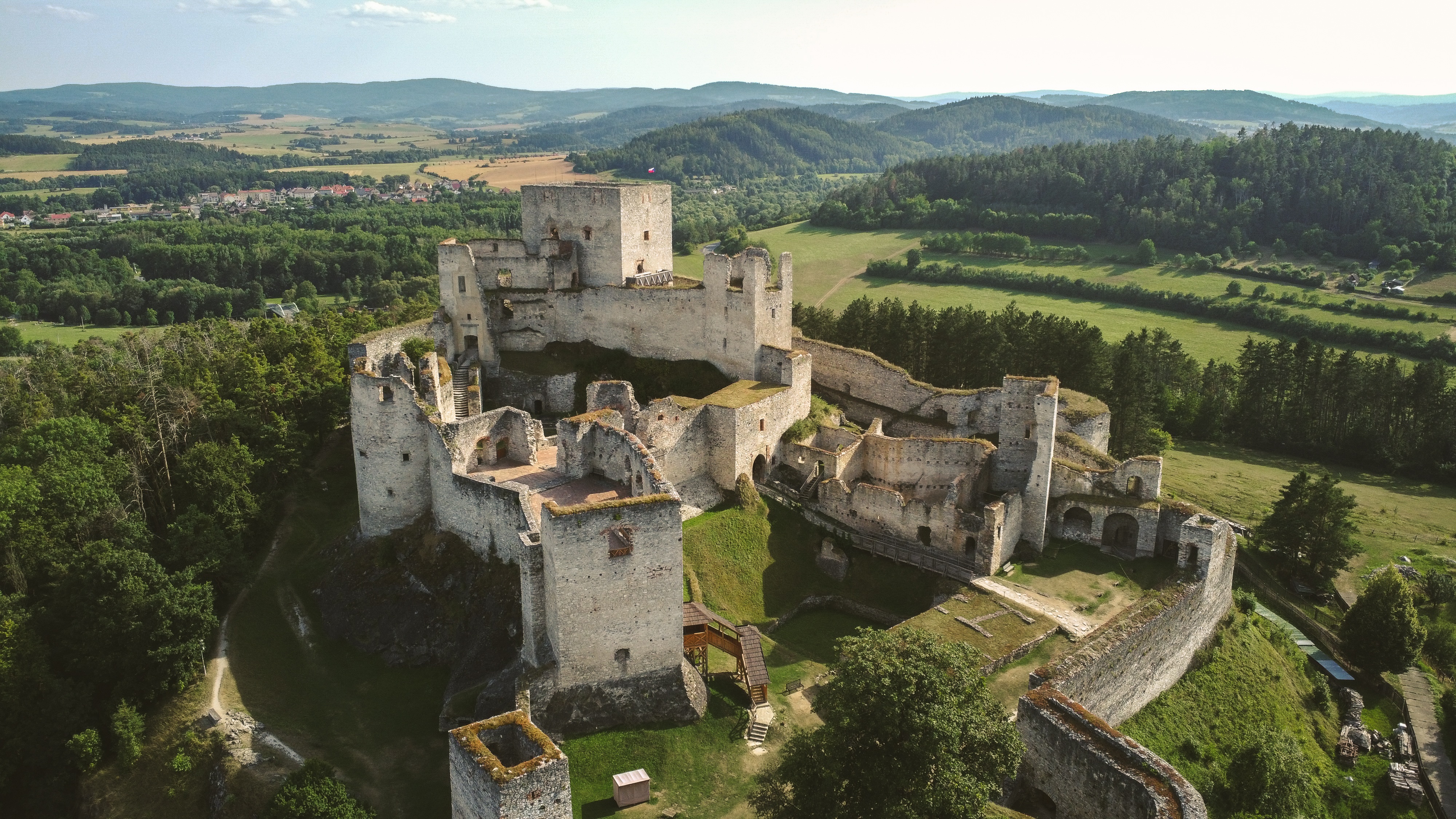
Rábí Castle
Castle History
Rábí Castle towers over the Otava River valley in Czechia, claiming the title of the largest castle ruin in the country. Its origins date back to the early 13th century, when it was built as a defensive stronghold to guard trade routes and protect the surrounding region. Perched on a steep hill, the castle's position made it nearly impregnable to medieval attackers. Thick stone walls, massive towers, and multiple gates were designed to withstand prolonged sieges. Over the centuries, Rábí Castle was expanded into a sprawling fortress, reflecting both military necessity and the ambitions of its noble owners. It survived numerous conflicts, including attacks during the Hussite Wars in the 15th century, when it was besieged but never fully captured. The castle's labyrinth of courtyards, bastions, and stairways demonstrates the strategic sophistication of medieval fortifications. Rábí also functioned as a residence, with living quarters, chapels, and storage spaces integrated into its defensive design. Its ruins today still convey the scale and power of the original complex, giving visitors a vivid sense of medieval life. Legends of treasure and secret passages have grown around the castle, adding to its aura of mystery. The castle played a key role in regional politics, serving as a stronghold for local lords and as a symbol of authority. Its location offers panoramic views of the Bohemian countryside, making it both a military lookout and a scenic landmark. Rábí Castle's architecture illustrates the evolution of fortifications from early medieval keeps to sprawling defensive complexes. Today, it is a popular site for tourists and history enthusiasts, who can walk its walls and explore its extensive ruins, imagining the lives of knights, nobles, and soldiers who once inhabited it.