

< Back
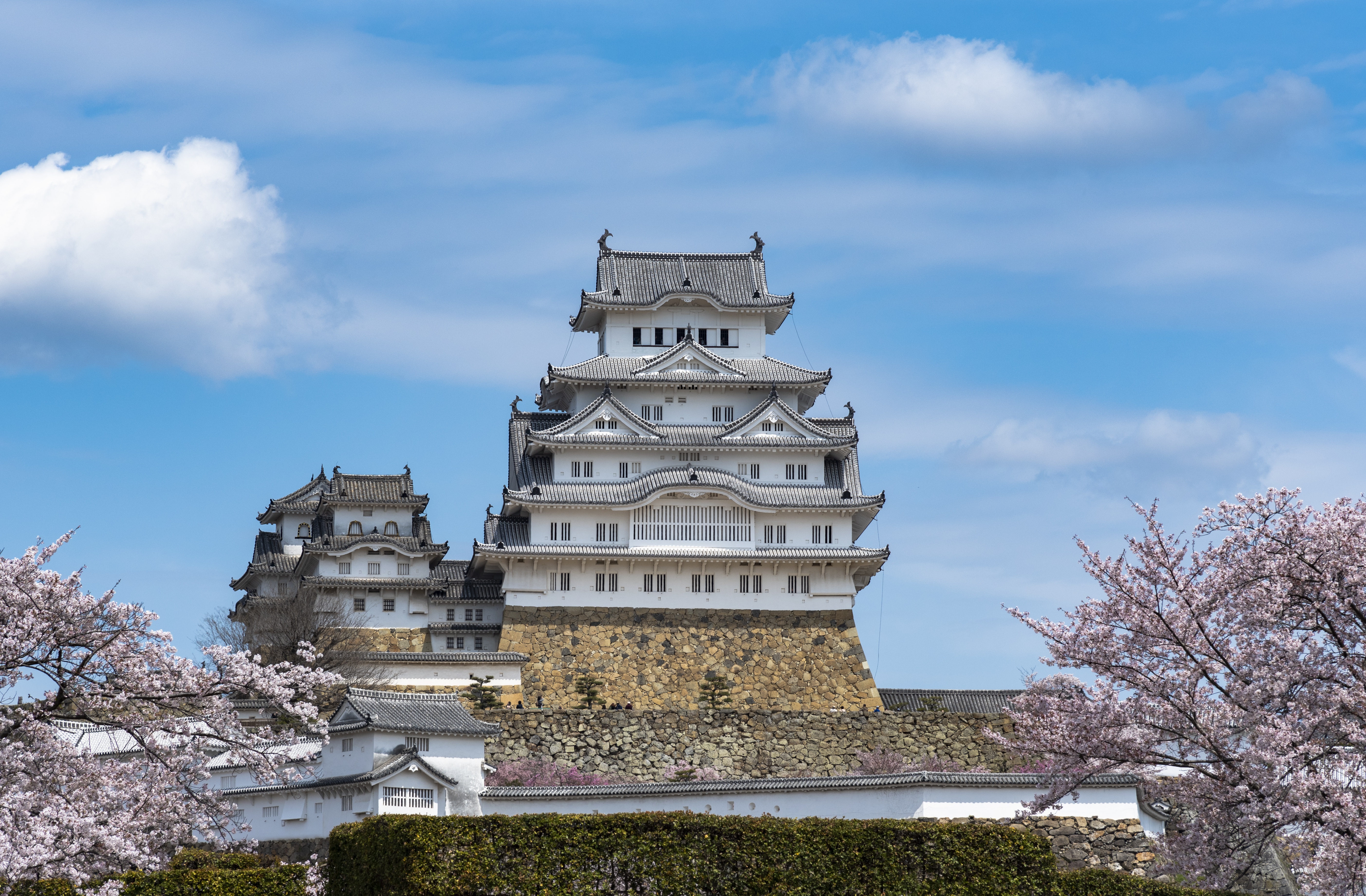
Himeji Castle
Castle History
Often called the "White Heron" for its soaring white walls and graceful silhouette, Himeji Castle is one of the most iconic castles in Japan. Its origins date back to the 14th century, when a modest fortification was first built on the site to defend the region. The current structure was largely completed in 1609 under the supervision of Ikeda Terumasa, following decades of expansion and redesign. The castle complex includes over 80 buildings connected by winding paths, gates, and courtyards, creating a labyrinth designed to confuse invaders. Strategically, Himeji was positioned on a hill to control the surrounding plains and to oversee important trade and military routes. Its clever defensive features include angled walls, hidden loopholes for archers, and narrow corridors that force attackers into bottlenecks. Despite Japan's turbulent history of wars and sieges, Himeji Castle has never been destroyed by warfare, making it remarkably well-preserved. During the Meiji Restoration, when many feudal castles were dismantled, Himeji survived due to its cultural significance and local advocacy. In 1993, UNESCO designated it a World Heritage Site, recognizing its architectural brilliance and historical importance. The castle has inspired countless artists, filmmakers, and writers, symbolizing both the power of feudal Japan and its aesthetic refinement. Visitors today can explore its massive wooden interiors, climb steep staircases, and gaze across the surrounding city and countryside. Himeji Castle remains a working symbol of history, demonstrating the fusion of military strategy, architectural ingenuity, and artistic vision. Its enduring presence reminds the world that castles are not only fortresses but also monuments to human creativity, resilience, and cultural identity.