

< Back
Caerlaverock Castle
Castle History
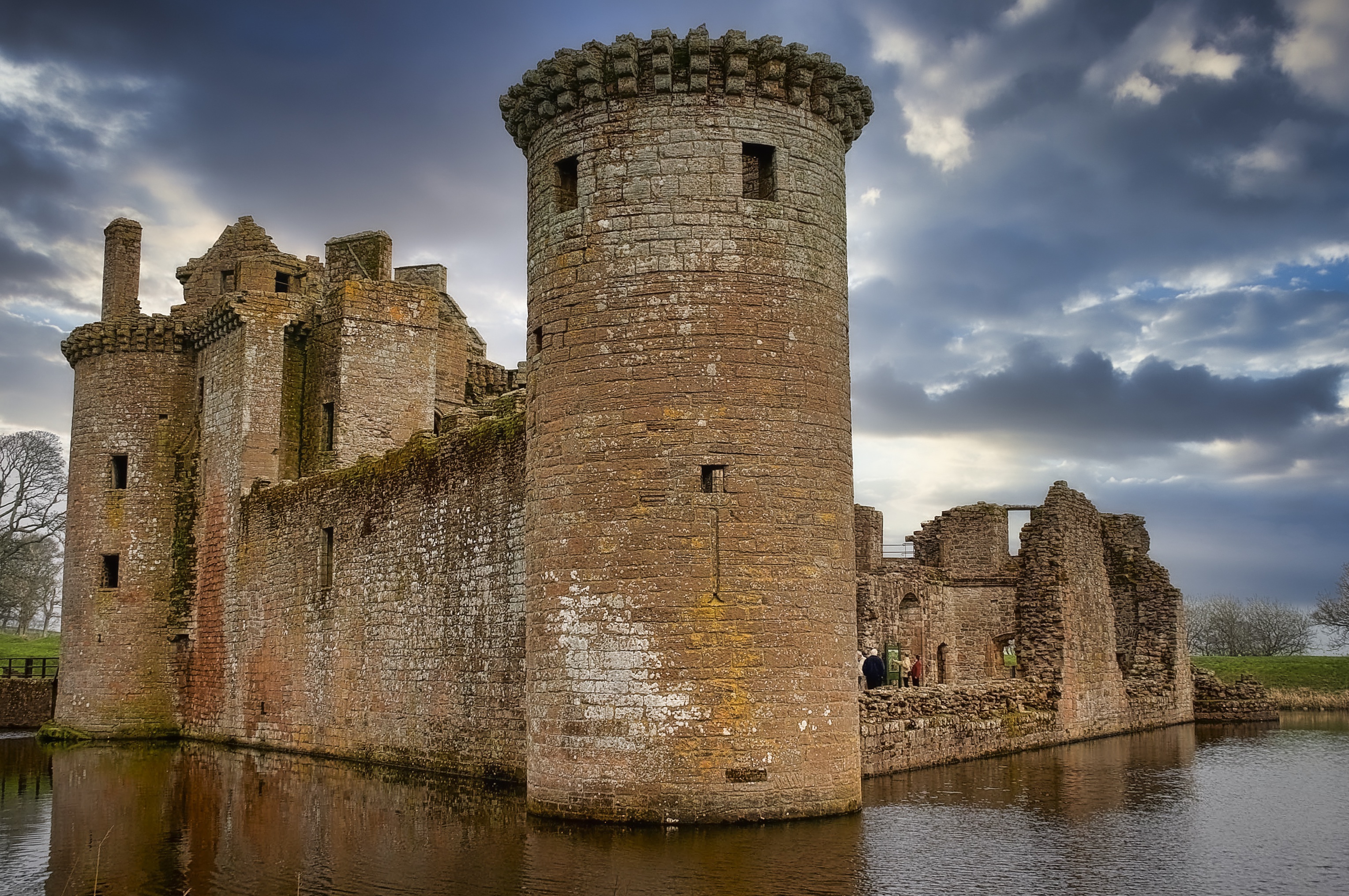
Caerlaverock Castle stands on the flat marshlands of Dumfries and Galloway, its striking triangular shape making it unlike any other castle in Scotland. Built in the late 13th century by the Maxwell family, the castle was designed with both elegance and defense in mind. Its three massive corner towers and wide moat created a formidable yet symmetrical fortress. Caerlaverock famously features in a medieval poem that recorded the 1300 siege led by King Edward I of England. During that siege, the castle was surrendered rather than destroyed, a rare outcome in medieval warfare. The Maxwells later rebuilt and strengthened the castle, adapting it to changing military technologies. Unlike many Scottish castles perched on cliffs, Caerlaverock's defenses relied on geometry and water. The castle was repeatedly damaged and restored during the turbulent wars between Scotland and England. Its curtain walls and gatehouse show careful planning rather than improvised fortification. Later artillery advancements eventually rendered the castle militarily obsolete. By the 17th century, Caerlaverock had been abandoned as a residence. Today, its red sandstone ruins retain remarkable clarity of form. The surrounding wetlands amplify its isolated, almost surreal presence. Caerlaverock Castle remains a vivid lesson in how mathematical design, poetry, and warfare once converged in medieval Scotland. Seen from above, its precise triangular layout feels less like a ruin and more like a deliberate geometric idea left behind by the Middle Ages.