

< Back
Egeskov Castle
Castle History
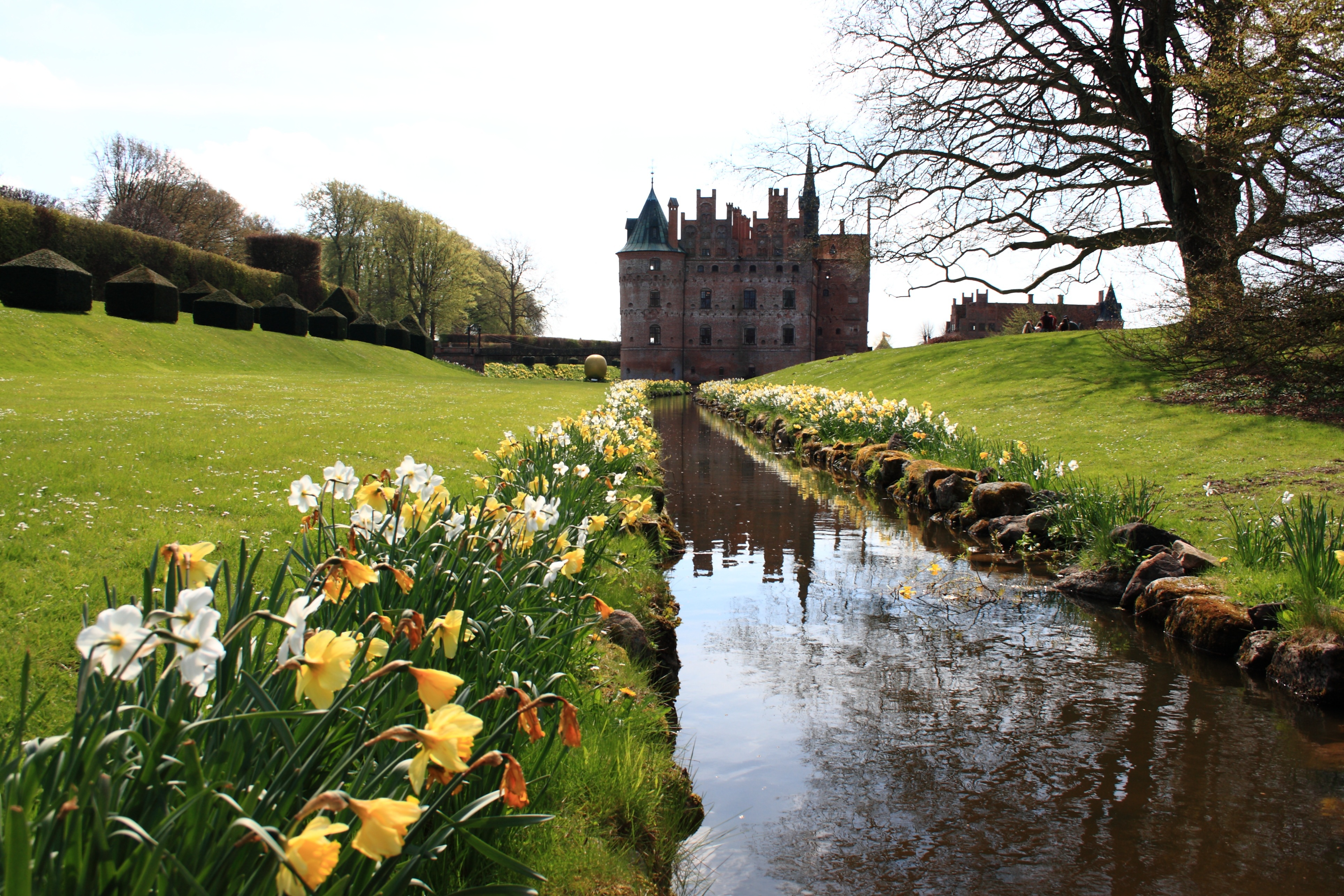
Rising from the still waters of a broad moat, this fairytale-like stronghold is one of Europe's best-preserved Renaissance castles. Egeskov Castle was completed in 1554 by Frands Brockenhuus during a turbulent period of civil unrest in Denmark. The structure was ingeniously built on thousands of oak piles driven into a former lakebed for stability. Rather than a single block, it consists of two long buildings joined by a thick central wall for added defense. This unusual design allowed defenders to retreat and fight even if part of the castle were breached. Gun ports, arrow slits, and defensive corridors reveal that elegance never replaced caution. Despite its military precautions, the castle was also designed as a noble residence with refined interiors. Lavish halls and chambers reflected Renaissance tastes and aristocratic comfort. The surrounding moat served both as protection and as a dramatic visual statement of power. Over the centuries, the castle remained continuously inhabited, sparing it the decay suffered by many fortresses. Baroque gardens were later added, transforming the landscape into a formal display of wealth and order. Shifting political stability gradually rendered its defenses obsolete. In the 19th and 20th centuries, careful restoration preserved both structure and setting. The estate expanded to include parks, museums, and exhibitions. Today, it offers insight into noble life spanning nearly five centuries. Standing intact above reflective waters, Egeskov Castle remains a rare fusion of medieval caution and Renaissance refinement.