


< Back
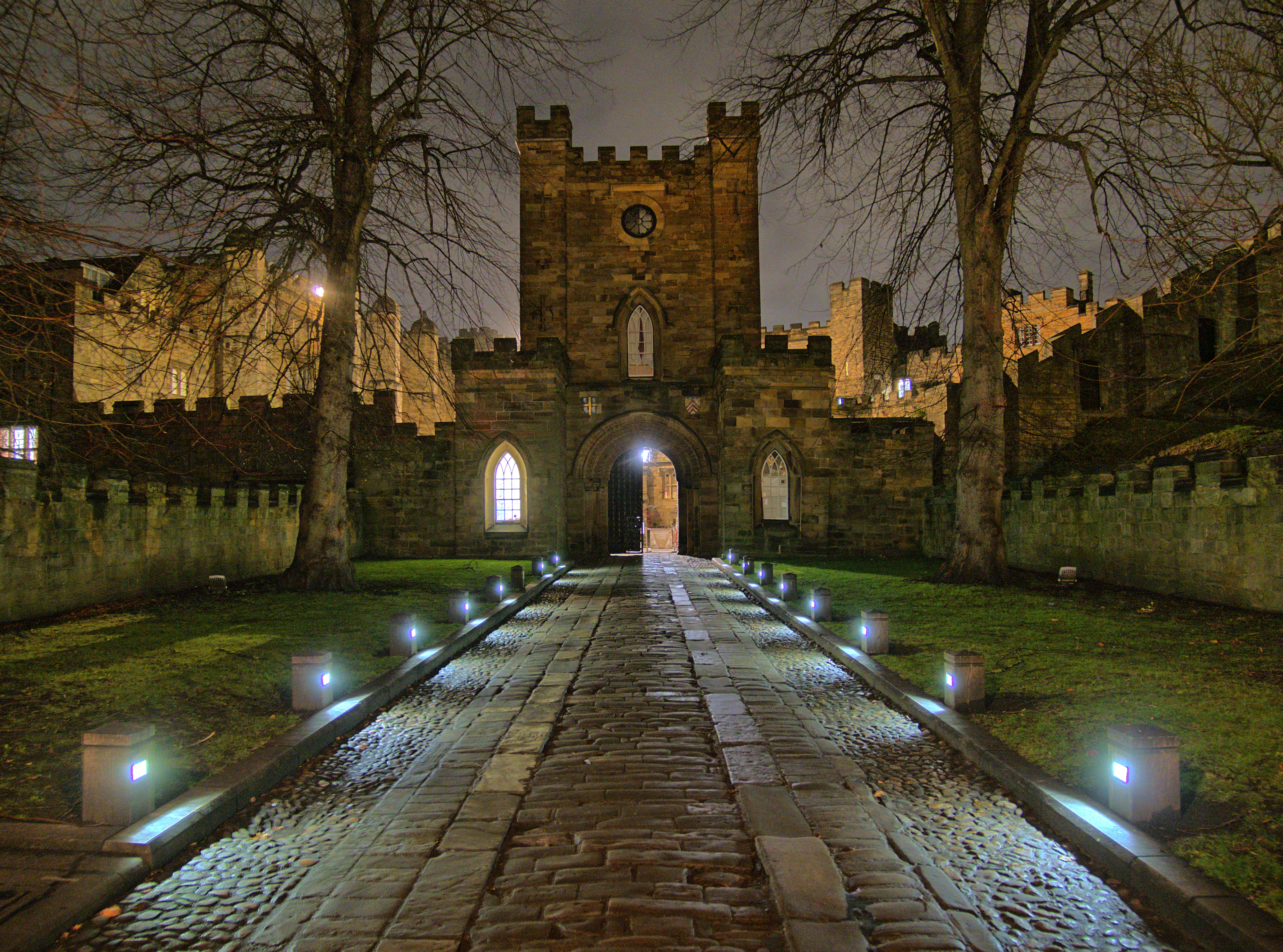
Durham Castle
Castle History
Perched on a promontory above the River Wear, Durham Castle dominates the city with a blend of Norman strength and scholarly presence. Built in 1072 by Bishop William of St. Calais, it was originally intended to assert Norman authority over the rebellious North of England. Its massive stone keep remains one of the finest examples of Norman military architecture in the country. The castle was not only a fortress but also the residence of the Prince-Bishops, who held both secular and ecclesiastical power. Strategically located, the castle guarded the northern frontier against Scottish invasions for centuries. Over time, defensive battlements were softened by expansions that added residential comfort and administrative spaces. The Great Hall, with its vaulted ceiling and massive fireplace, reflects the medieval synthesis of power and domesticity. Durham Castle has been continuously occupied for over 900 years, an extraordinary continuity in English history. In 1837, it became part of Durham University, one of the oldest universities in England, integrating scholarship into its ancient walls. Its stone towers and curtain walls have witnessed coronations, sieges, and centuries of political maneuvering. The castle sits opposite Durham Cathedral, together forming a UNESCO World Heritage Site that exemplifies Norman mastery of architecture and landscape. Visitors today can explore the rooms once inhabited by Prince-Bishops, including libraries, chapels, and student accommodations. Legends of hidden tunnels and secret passages add mystery to the historic stone corridors. The castle's hilltop position offers sweeping views of the city, the river, and the surrounding Northumbrian landscape. Durham Castle endures as a remarkable fusion of military might, religious authority, and academic tradition, embodying nearly a millennium of English history.