


< Back
Richmond Castle
Castle History
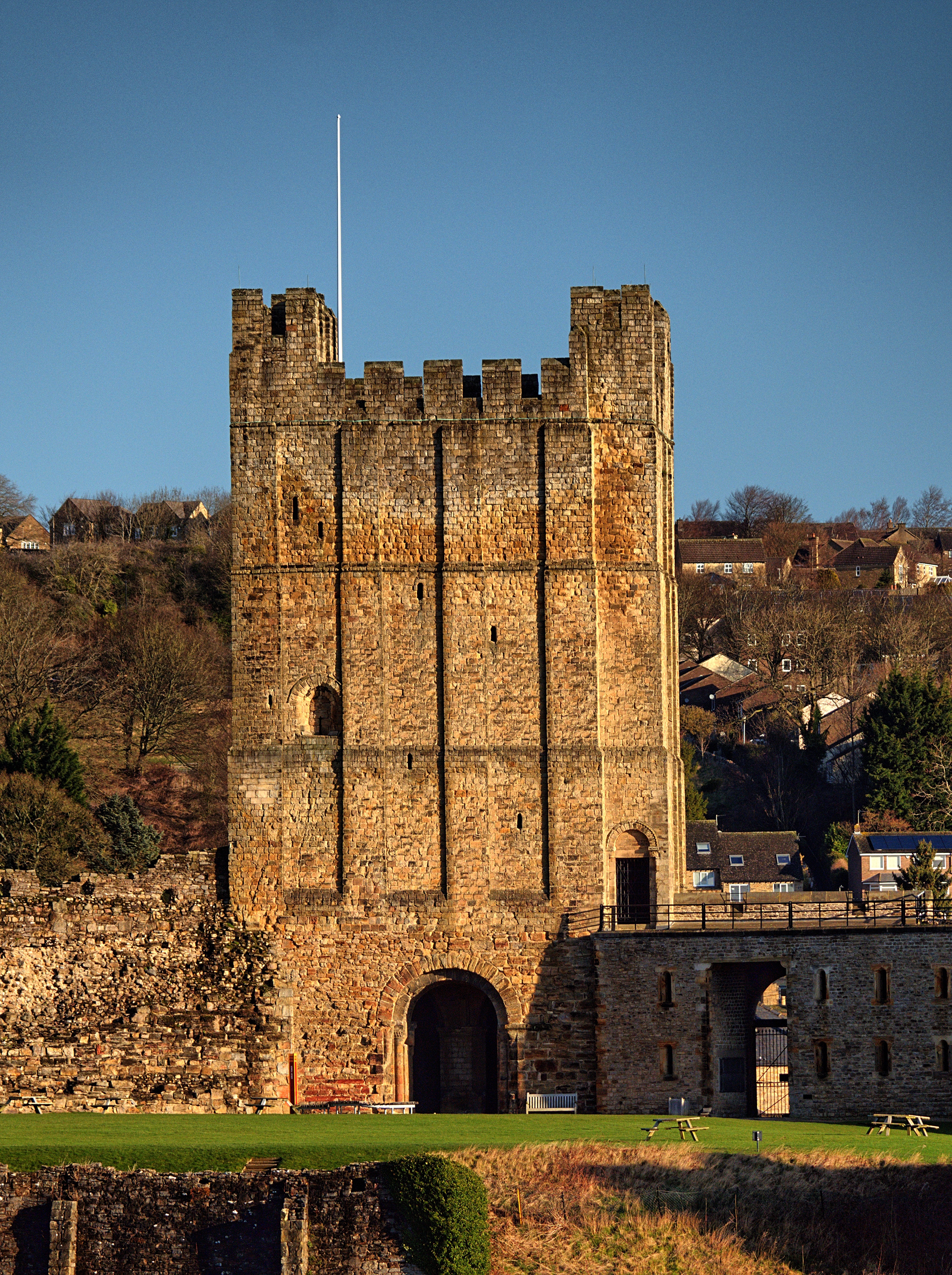
Richmond Castle rises above the River Swale in North Yorkshire, its pale stone walls commanding the surrounding landscape. It was founded in 1071 by Alan Rufus, a Breton noble and close ally of William the Conqueror. The castle was built to secure Norman control over northern England after the Conquest. Its massive Norman keep is one of the oldest surviving stone keeps in the country. Richmond's location allowed it to dominate both the town below and important routes through Swaledale. Over time, the castle expanded from a military stronghold into a residence for powerful lords. The Great Hall and Scolland's Hall reveal how early Norman elites combined authority with domestic life. Unlike many castles, Richmond was rarely besieged, suggesting its presence alone was often deterrent enough. During the Middle Ages, it served as the administrative center of the Honour of Richmond, a vast feudal estate. In later centuries, parts of the castle were repurposed for military use, including as barracks. During World War I, the castle housed conscientious objectors, some of whom left graffiti still visible today. This unexpected layer of history adds a deeply human dimension to the site. The castle's austere architecture reflects early Norman priorities of strength and permanence. Its survival in relatively complete form offers rare insight into post-Conquest castle building. Richmond Castle stands as a place where Norman ambition, medieval governance, and modern conscience intersect within the same enduring walls.