


< Back
Dunstanburgh Castle
Castle History
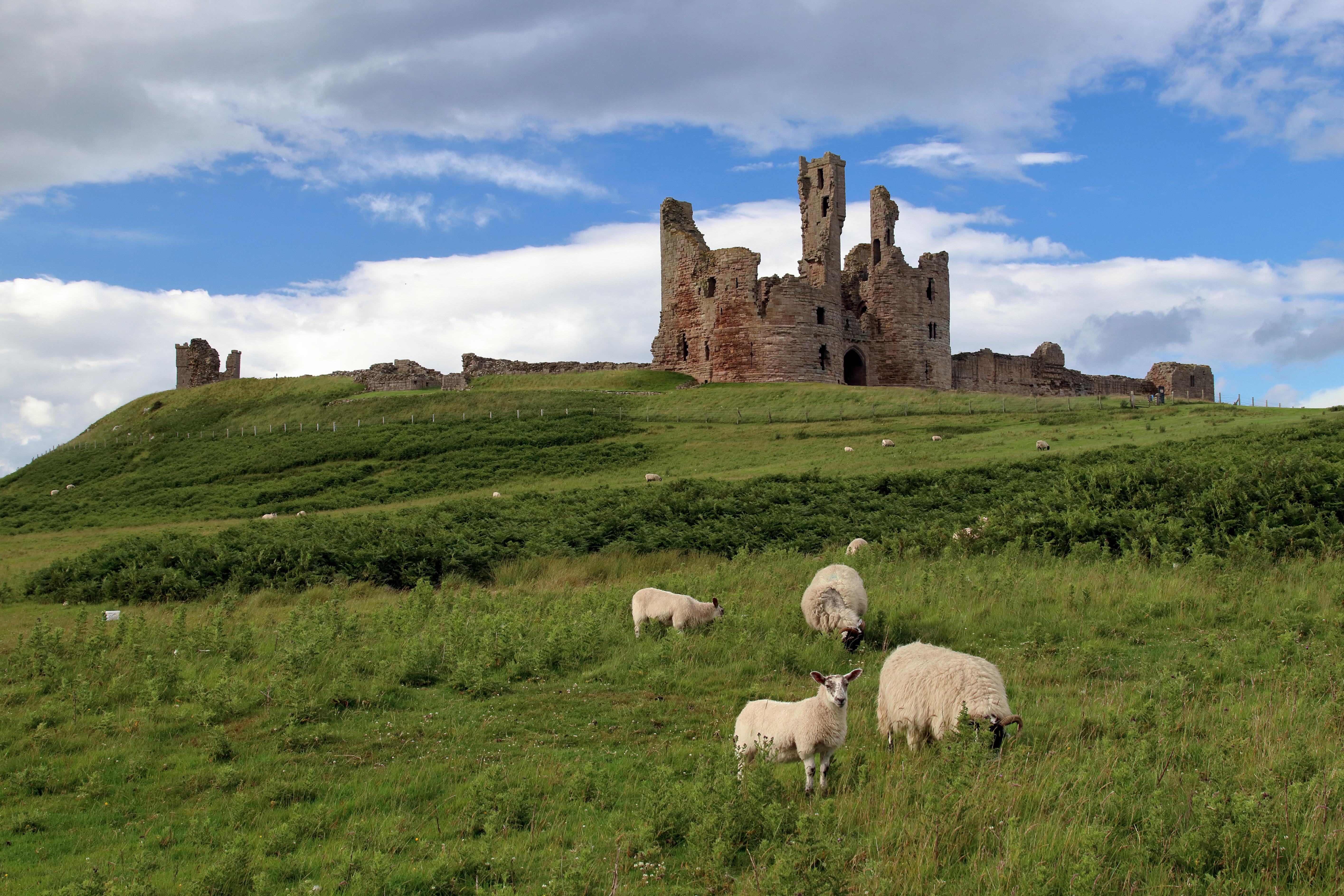
Dunstanburgh Castle sprawls dramatically along the Northumberland coast, its dark stone walls facing the restless North Sea. It was built in the early 14th century by Thomas, Earl of Lancaster, a powerful and rebellious cousin of King Edward II. The castle was intended as both a fortress and a statement of defiance against royal authority. Its enormous gatehouse is one of the largest in England, emphasizing intimidation as much as defense. Dunstanburgh's remote location gave it natural protection from landward attacks. The surrounding sea cliffs added an extra layer of security while creating a striking visual presence. During the Wars of the Roses, the castle changed hands several times between rival factions. It endured sieges that damaged its defenses and accelerated its decline. After the medieval period, its strategic importance faded as warfare evolved. The castle was never fully modernized, leaving its medieval character largely intact. Local stone gave the structure its dark, weathered appearance, blending it into the coastal landscape. The ruins stretch across a vast area, hinting at the castle's former scale and ambition. Winds, salt air, and centuries of neglect have sculpted the remaining walls into dramatic forms. The site offers sweeping views of the sea, the Farne Islands, and the surrounding countryside. Dunstanburgh Castle stands today as a haunting fusion of political rebellion, military power, and raw coastal beauty. At sunset, the ruins seem to glow against the sea, turning the castle into a lonely monument to ambition slowly reclaimed by wind and tide.