


< Back
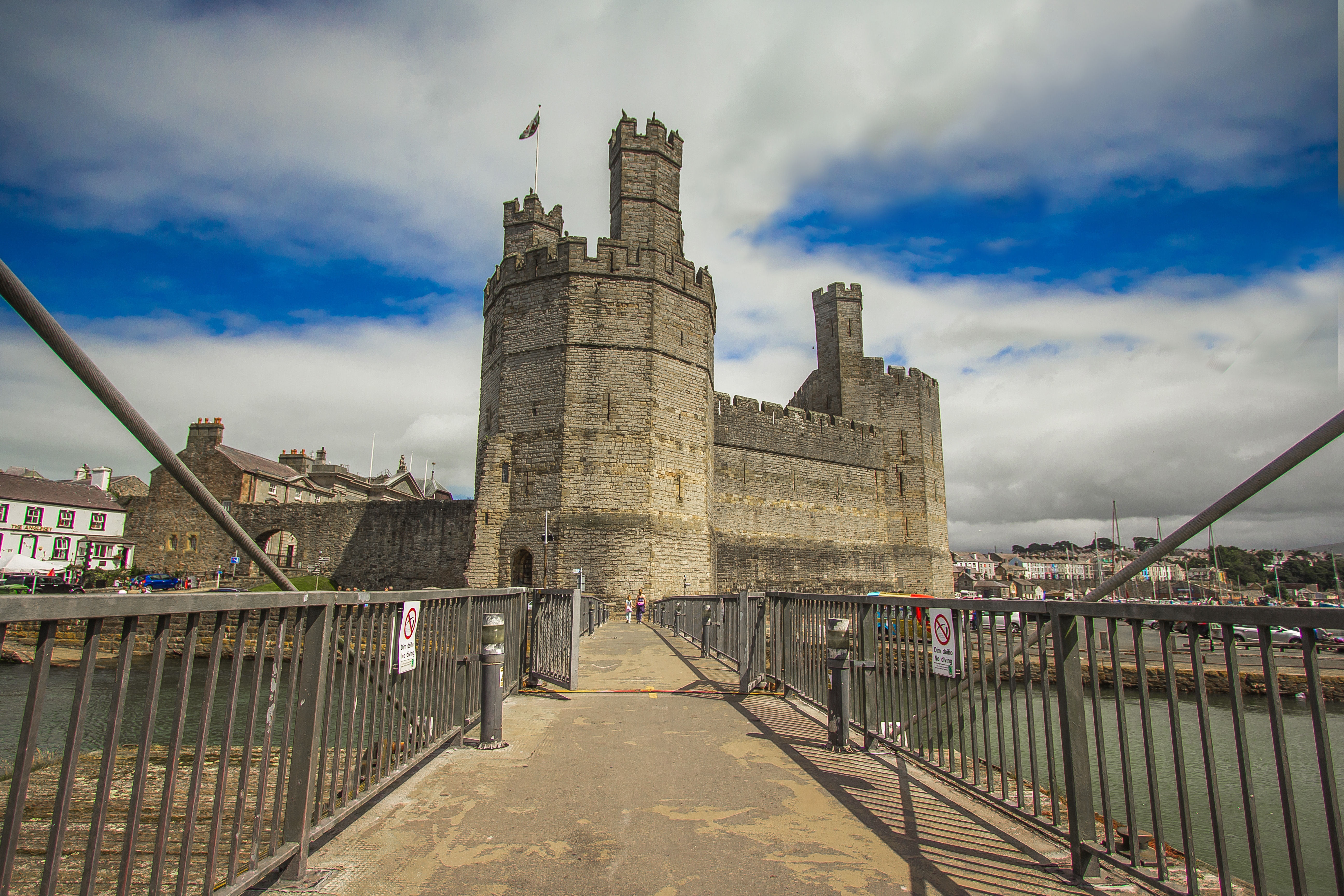
Caernarforn Castle
Castle History
Caernarforn Castle rises dramatically from the banks of the River Seiont, its polygonal towers and massive walls symbolizing both strength and royal authority. It was constructed by Edward I of England between 1283 and 1330 as part of his campaign to conquer and pacify Wales. The castle was designed by the master architect James of St. George, who brought advanced military engineering from Savoy. Its concentric layout, massive walls, and imposing towers made it one of the most formidable fortresses of medieval Britain. Caernarforn Castle was intended not only as a military stronghold but also as a seat of English power and royal presence in North Wales. The castle's polygonal towers and banded stonework were designed to echo imperial Roman architecture, linking Edward I to historic authority. It served as the site of the investiture of the Prince of Wales, a tradition that continues in ceremonial form to this day. During the Welsh revolt led by Madog ap Llywelyn in 1294-1295, the castle successfully resisted siege, demonstrating its defensive strength. Its massive gatehouse and barbican were engineered to slow attackers and channel them into vulnerable positions. The interior contains residential apartments, a great hall, and chapels, showing that the castle was as much a palace as a fortress. Over centuries, it remained a symbol of conquest, loyalty, and royal ambition, rather than a frequently contested battlefield. Caernarforn's walls and towers have inspired architects worldwide and are considered some of the finest examples of medieval military architecture. Today, the castle is part of a UNESCO World Heritage Site alongside other Edwardian castles in Wales. Caernarforn Castle endures as a monumental reminder of the intersection between war, politics, and ceremony in medieval Welsh and English history.