

< Back
Harlech Castle
Castle History
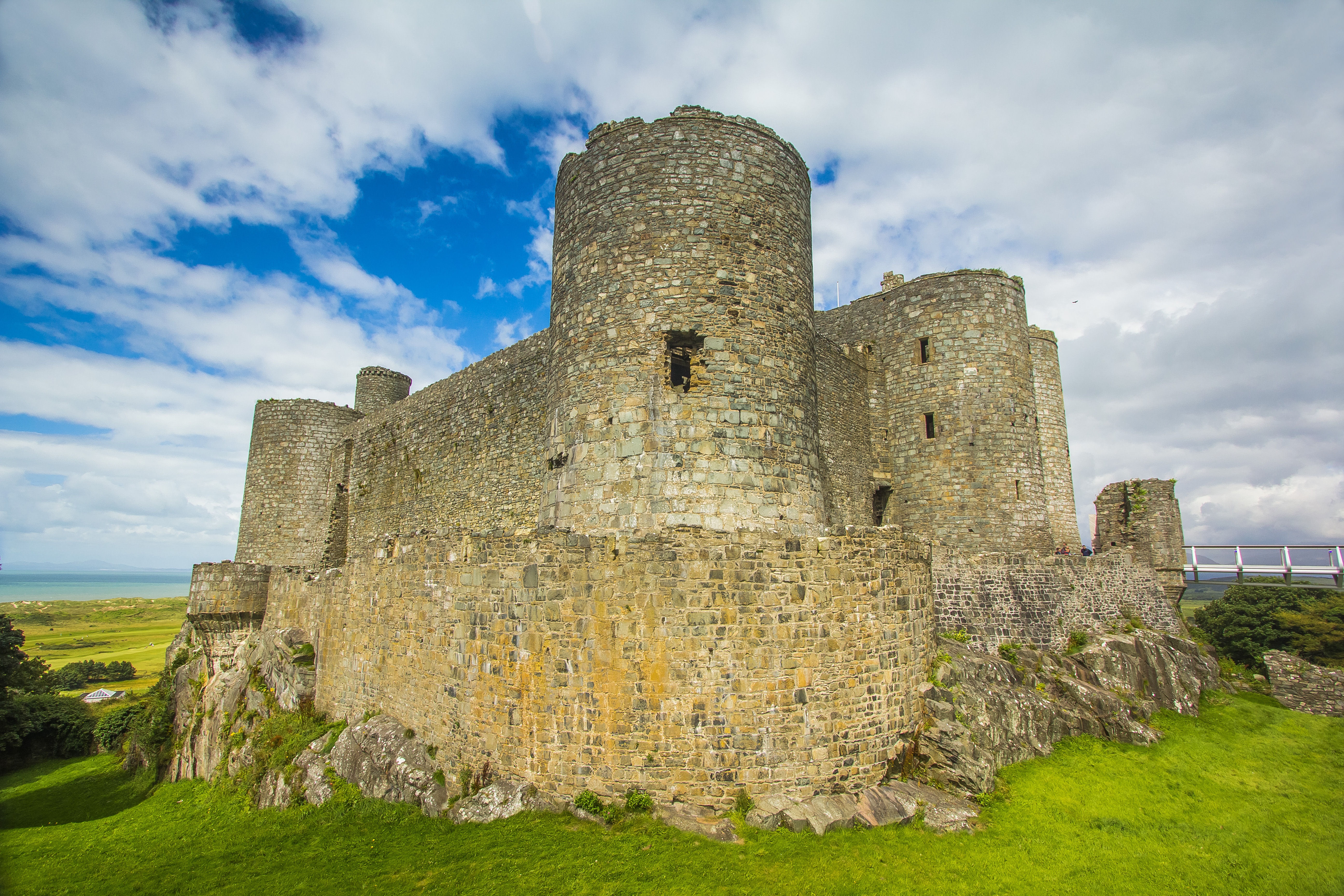
Perched on a rocky outcrop overlooking Tremadog Bay, Harlech dominates the surrounding landscape with a sense of austere majesty. It was built between 1282 and 1289 by order of King Edward I during his campaign to subdue Wales. Designed by master architect James of Saint George, the castle exemplifies the pinnacle of Edwardian military engineering. Its concentric walls, massive gatehouse, and tall towers made it nearly impregnable to medieval siege tactics. Harlech served as a key stronghold in Edward I's "iron ring" of castles, intended to secure English control over North Wales. During the revolt of Madog ap Llywelyn in 1294-1295, the castle successfully withstood a prolonged siege, highlighting its defensive strength. Its location atop a steep hill provided commanding views of the sea and surrounding countryside, enhancing both defense and communication. The castle later played a significant role during the Wars of the Roses, changing hands between Lancastrians and Yorkists. In the 15th century, it famously held out for seven years during the Wars of the Roses, earning a reputation as a nearly unbreachable fortress. The castle's walls enclose living quarters, chapels, and storage areas, revealing how military and domestic needs coexisted. Harlech's design influenced fortifications across Europe, combining functionality with imposing visual symbolism. Legends of ghosts and soldiers who endured its long sieges add an air of mystery to the ruins. Today, the castle is part of a UNESCO World Heritage Site, attracting visitors eager to explore its towering walls and historic halls. Harlech stands as a striking testament to medieval ambition, military ingenuity, and the turbulent history of Wales.