

< Back
Hohenschwangau Castle
Castle History
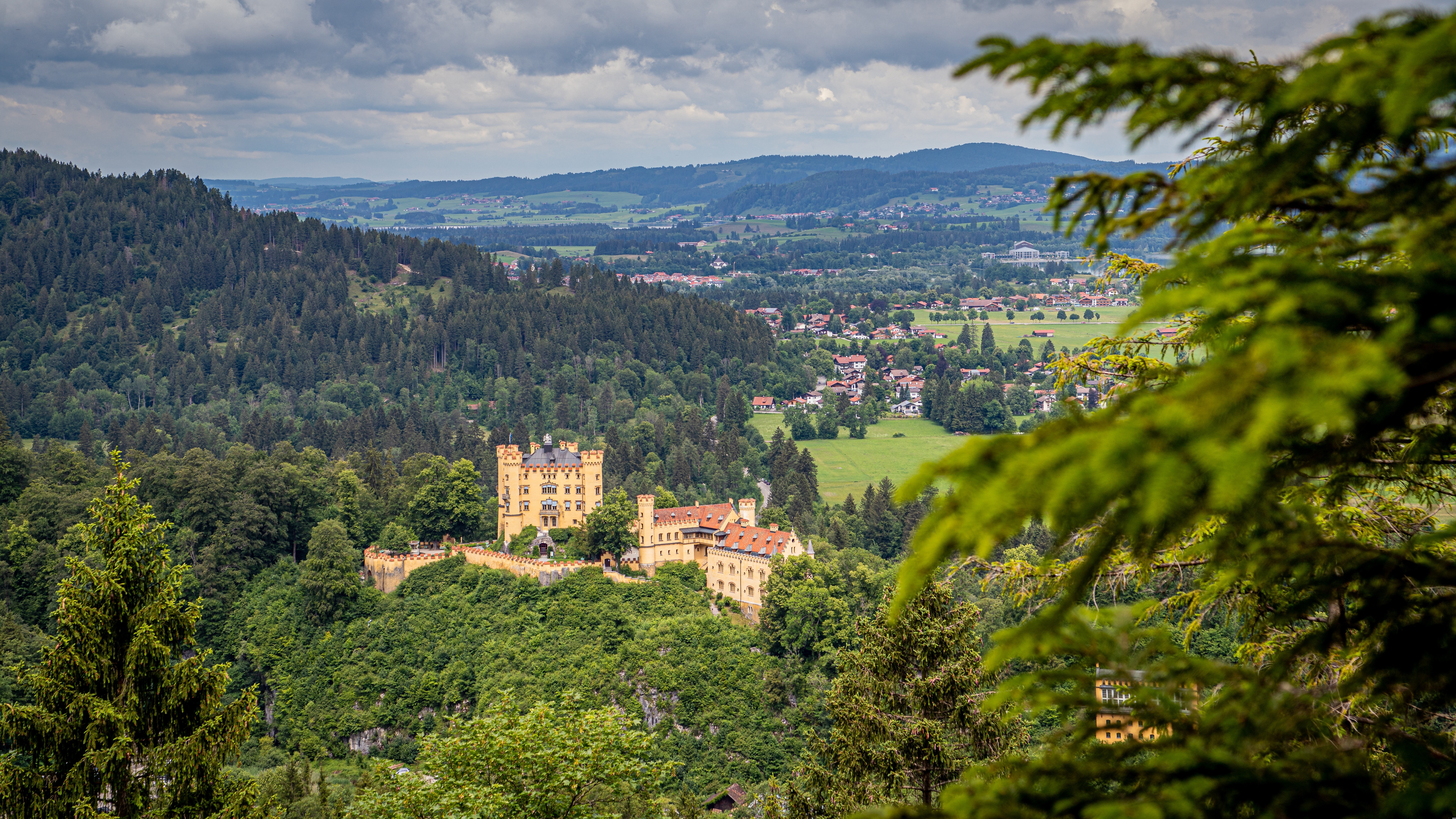
Nestled among the Bavarian Alps, Hohenschwangau Castle is a golden-yellow jewel overlooking the serene lakes of Schwangau. Its origins trace back to the 12th century, when a fortress known as Schwanstein first occupied the site. By the early 19th century, the medieval structure had fallen into ruin after centuries of conflict and neglect. Crown Prince Maximilian of Bavaria, later King Maximilian II, acquired the ruins in 1832 and began an ambitious reconstruction. He transformed the site into a romantic, neo-Gothic residence inspired by medieval chivalry and Germanic legend. The castle's interior was richly decorated with murals depicting swan knights, heroic sagas, and scenes from German folklore. Hohenschwangau became the childhood home of King Ludwig II, who spent much of his youth wandering its forests and dreaming of fairy-tale palaces. The landscape around the castle greatly influenced Ludwig, later inspiring his creation of nearby Neuschwanstein. During Maximilian's reign, Hohenschwangau served as a summer retreat for the royal family and a place for political gatherings. After Maximilian's death, Queen Marie continued to reside there, maintaining the castle as a royal residence. Throughout the late 19th and early 20th centuries, the castle welcomed numerous distinguished guests and European nobility. Despite the upheavals of the World Wars, Hohenschwangau remained remarkably well preserved. Today, visitors can explore its lavish rooms, royal chambers, and murals that reveal the dreams and inspirations of Bavaria's monarchs. Hohenschwangau Castle stands as a romantically charged symbol of Bavarian history, royal imagination, and the legends woven into the surrounding mountains.