


< Back
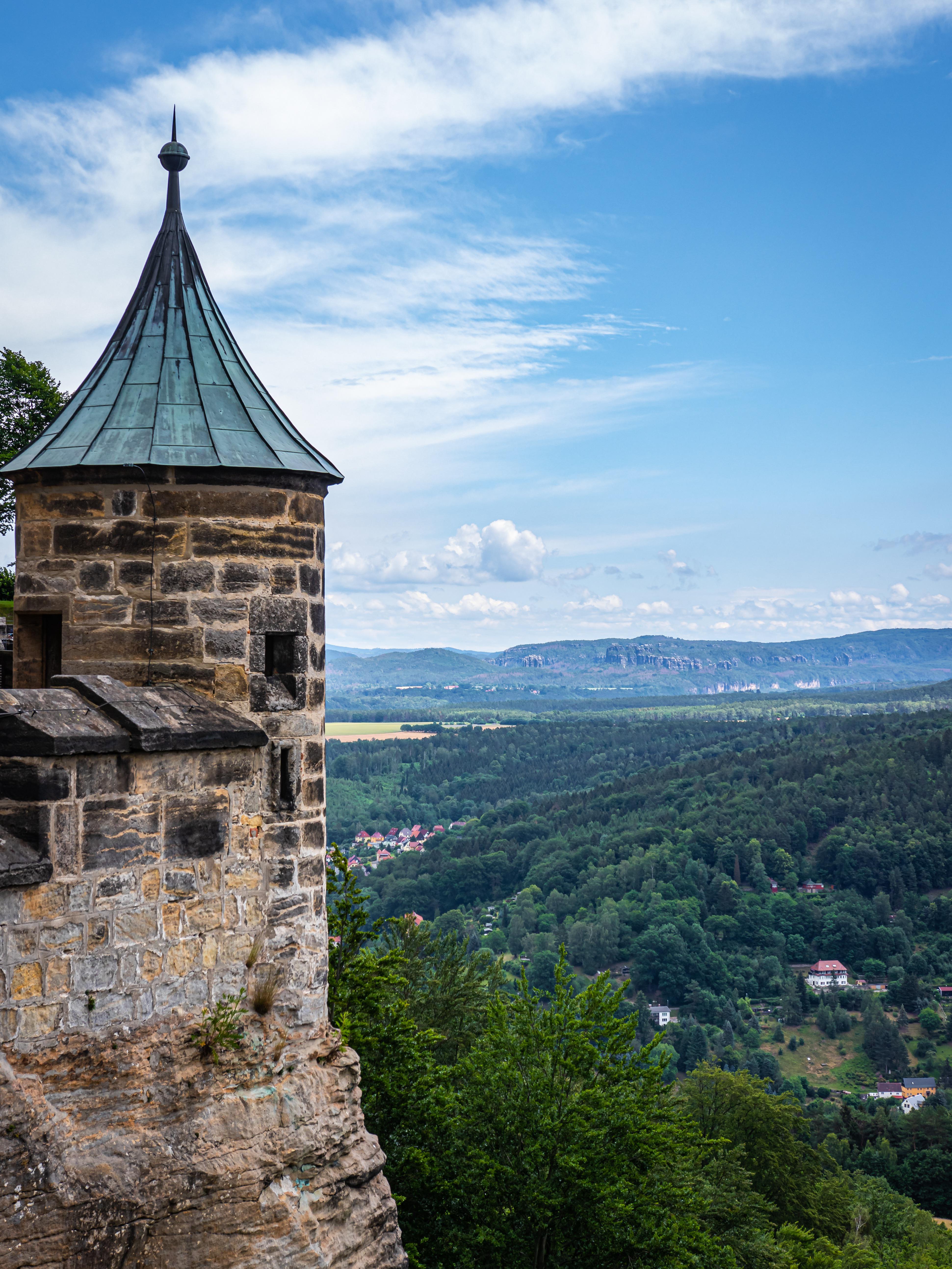
Königstein Castle
Castle History
Rising dramatically above the Elbe River on a vast sandstone plateau, this immense stronghold commands one of the most breathtaking natural defenses in Europe. Königstein Castle's origins trace back to the 13th century, when the site was first fortified to control trade routes through what is now Saxon Switzerland. Over time, the fortress evolved from a medieval castle into one of the largest hilltop fortifications on the continent. The sheer scale of its walls, stretching nearly two kilometers in circumference, reflects centuries of military ambition and engineering confidence. Unlike many castles, it was never successfully taken by force, earning a reputation for near-mythical impregnability. Successive Saxon rulers expanded the complex, adding bastions, barracks, armories, and deep wells to ensure long-term self-sufficiency during sieges. One well, plunging more than 150 meters into the rock, ranks among the deepest castle wells in Europe. During the Renaissance and Baroque periods, military architecture here adapted to the growing threat of artillery rather than knights with ladders. The fortress also served less glamorous roles, functioning at times as a state prison for political dissidents and prisoners of war. Napoleonic wars reshaped its strategic relevance, yet its walls still stood untouched by direct conquest. Later, the site was used as a military training ground and storage facility, quietly aging into history. The surrounding landscape, all jagged cliffs and misty forests, adds to the fortress's air of untouchable permanence. Today, visitors walk through massive gates and across open courtyards that once echoed with soldiers' boots and cannon fire. Poised between raw geology and human ambition, Königstein Castle remains a monumental reminder that geography can be history's greatest ally.