


< Back
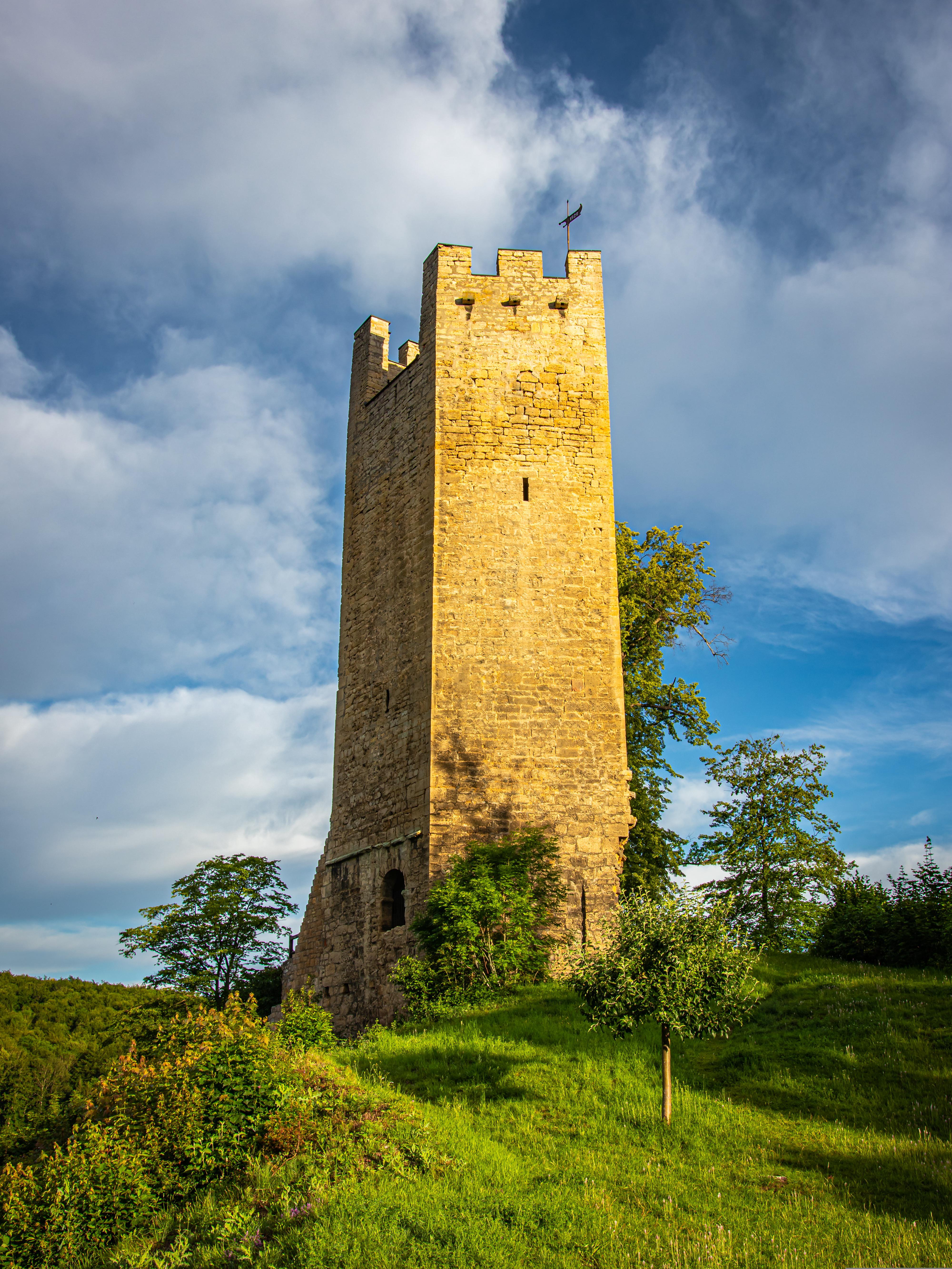
Tautenburg Castle
Castle History
Rising on a wooded hill above the Saale Valley in Thuringia, this now-ruined fortress once commanded an important medieval landscape. Tautenburg Castle was founded in the 12th century, likely by the powerful Wettin dynasty, to secure territorial influence in central Germany. The castle's elevated position allowed control over nearby routes connecting Saxony and Thuringia. Strong stone walls and towers reflected its original role as a military and administrative center. Over time, it evolved from a defensive stronghold into a noble residence and hunting retreat. Its owners expanded the complex with residential buildings that emphasized comfort as much as protection. During the late Middle Ages, the castle became associated with regional governance rather than constant warfare. The Thirty Years' War brought devastation to the area, and the castle suffered damage from which it never fully recovered. By the 17th century, it was largely abandoned and gradually fell into ruin. Unlike castles rebuilt in later styles, Tautenburg remained frozen in decay, preserving its medieval footprint. The surviving walls and foundations still reveal the layout of courtyards, towers, and living quarters. Romantic-era artists and travelers later admired the ruins as symbols of a vanished feudal world. Local legends grew around the site, blending history with folklore and imagination. Today, the ruins offer panoramic views of forests and rolling countryside, rewarding visitors who climb the hill. Tautenburg Castle endures as a quiet reminder of shifting power, where strategic necessity once shaped stone and now yields to time and landscape.