

< Back
Nordkirchen Castle
Castle History
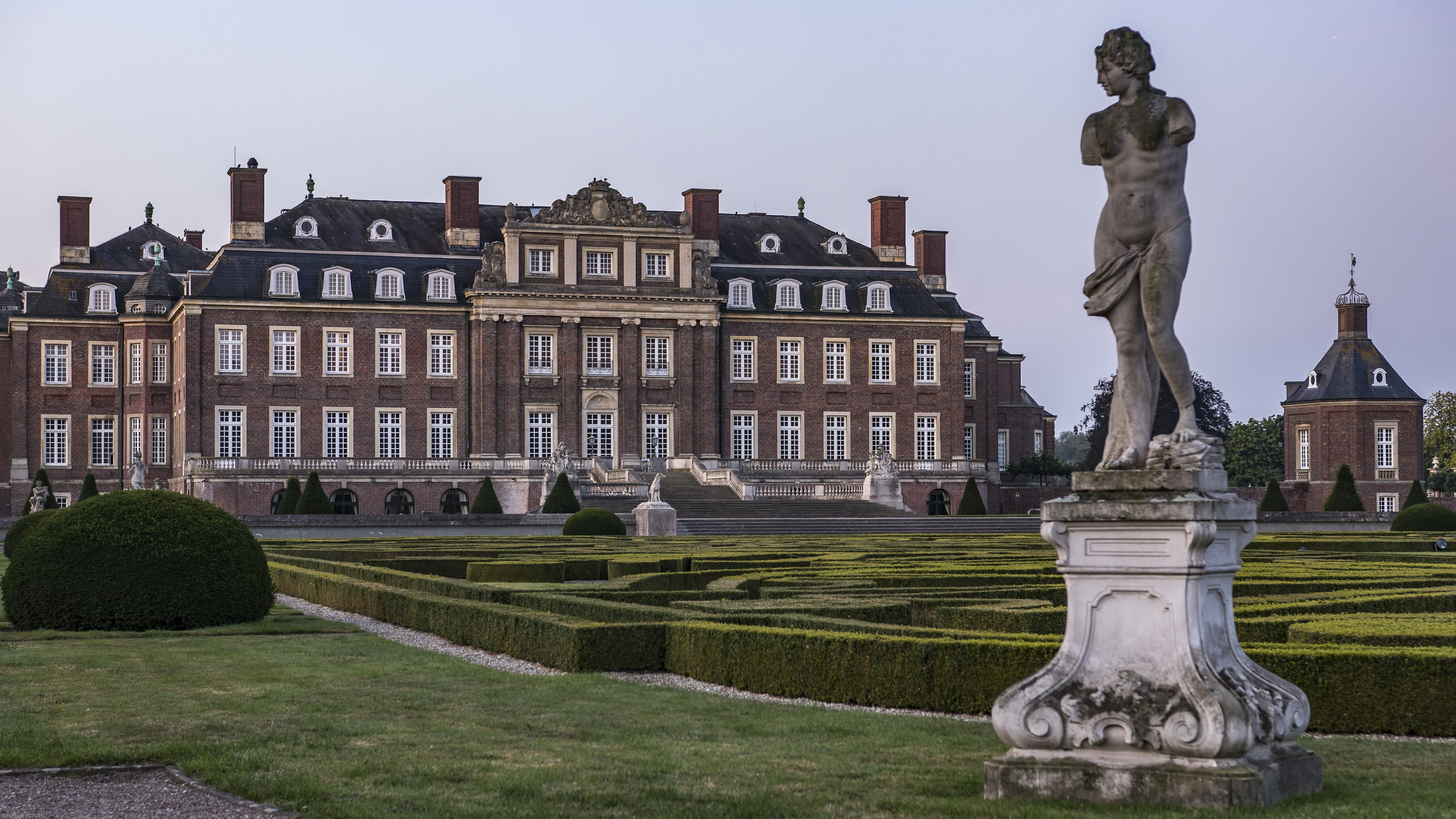
Often called the "Versailles of Westphalia," Nordkirchen Castle rises from a vast network of canals and formal gardens in North Rhine-Westphalia. Construction began in the early 18th century for Prince-Bishop Friedrich Christian von Plettenberg, reflecting the height of Baroque ambition. The palace was designed as a statement of power rather than a military fortress. Its symmetrical layout, grand courtyards, and elaborate façades showcase refined Baroque architecture. Water plays a central role in the design, with moats and canals framing the building like a reflective stage. The surrounding gardens were carefully planned to extend the architecture into the landscape. Inside, ornate staircases, richly decorated halls, and ceremonial rooms emphasized status and spectacle. Unlike medieval castles, Nordkirchen was built for comfort, ceremony, and display. Over the centuries, the estate passed through various noble hands while largely retaining its original form. The castle survived wars and political upheaval with relatively little damage. In the 20th century, it found new life as an educational and administrative center. Today, it houses parts of the University of Applied Sciences for Finance of North Rhine-Westphalia. Visitors can walk the gardens and admire the palace's reflections in the surrounding water. The scale of the complex makes it one of the largest moated castles in Germany. Nordkirchen stands as a striking example of how aristocratic power in Germany shifted from fortified strongholds to theatrical palaces. Its mirror-like canals turn the entire complex into a carefully composed illusion, where architecture, water, and authority seem to float together in deliberate harmony.