


< Back
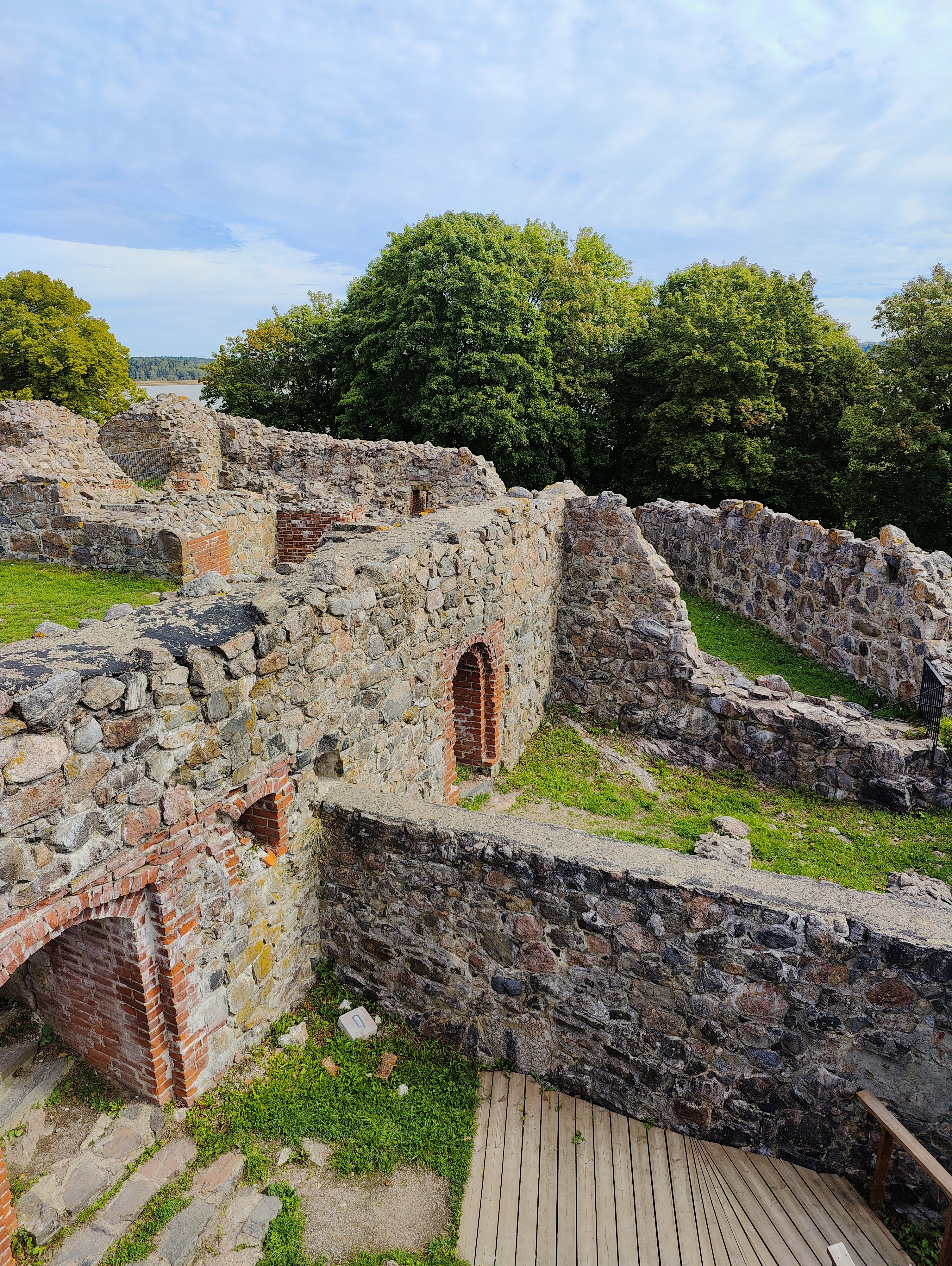
Kuusisto Castle
Castle History
Perched on a small island near the town of Kaarina, Kuusisto Castle once stood as a powerful symbol of ecclesiastical authority in medieval Finland. Its construction began in the late 13th century under the direction of the Bishop of Turku, intended to serve both as a fortress and a bishop's residence. The castle's strategic location allowed control over the surrounding waterways and trade routes leading to the Baltic Sea. Built primarily of stone, Kuusisto was designed to withstand both military attacks and the harsh Nordic climate. Over the centuries, it became a center of religious power, administration, and regional governance for the Catholic Church in Finland. During the 15th and 16th centuries, the castle was expanded with towers, curtain walls, and defensive bastions to strengthen its position. It played a role in conflicts between the Swedish crown and local nobility, reflecting Finland's status as part of the Swedish realm. The Reformation in the 16th century weakened the power of the church, leaving Kuusisto vulnerable to political upheaval. In 1528, forces loyal to the Swedish crown partially destroyed the castle, marking the beginning of its decline. By the 17th century, the castle had fallen into ruin, its stones gradually repurposed for other local buildings. Despite its decay, the remaining walls and foundations reveal the castle's original layout and impressive scale. Archaeological excavations have uncovered artifacts that shed light on medieval life, from domestic tools to weaponry. The site's isolation on an island adds to its dramatic presence and highlights its original defensive advantage. Today, Kuusisto Castle stands as a romantic ruin, attracting visitors fascinated by Finland's medieval past. The castle remains a symbol of the shifting tides of religious, political, and military power in Northern Europe during the Middle Ages.